Jo'burg is decaying.
Things were good, but the city is declining and slowly losing its charm.
Welcome back to Jo'burg, but don't be surprised if things are worse than the last time you were here.
During the first 24 hours of my most recent trip to Jo'burg, I heard these sentiments repeated several times. Not exactly what you want to hear when you arrive at your vacation destination, but I wasn't deterred.
One of my plans was to explore a side of Jo'burg I hadn't previously ventured into: the dynamic art scene.
A few days in, I headed to Rosebank to begin my artistic exploration, but not before having a mouth-watering meal. Saigon Suzy, a quirky, family-run Asian restaurant, was located across the road from the gallery I had meant to visit. Inside, oil-paper umbrellas hung from the ceiling, a maneki-neko watched over customers, and the walls displayed images of women in Southeast Asian attire, alongside classic pop and rock lyrics.
I ordered a passion fruit boba cocktail with a splash of vodka that I couldn't quite taste, along with duck pancakes, dumplings, and phở—simple yet exquisite. My dessert was a fortune cookie, the menu warning: "get terrible advice or win the lottery." I cracked it open, hoping for some insights into my upcoming gallery hopping, but got only: "Reislinag yuo can raed thsi fnurote ckooie wlil be teh hihgiht of yuor dya!" Amused and bemused, I walked across the street to Goodman Gallery.
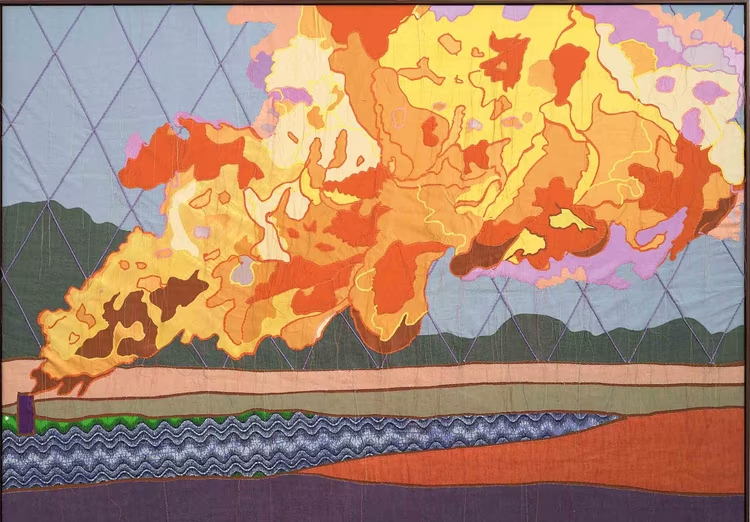
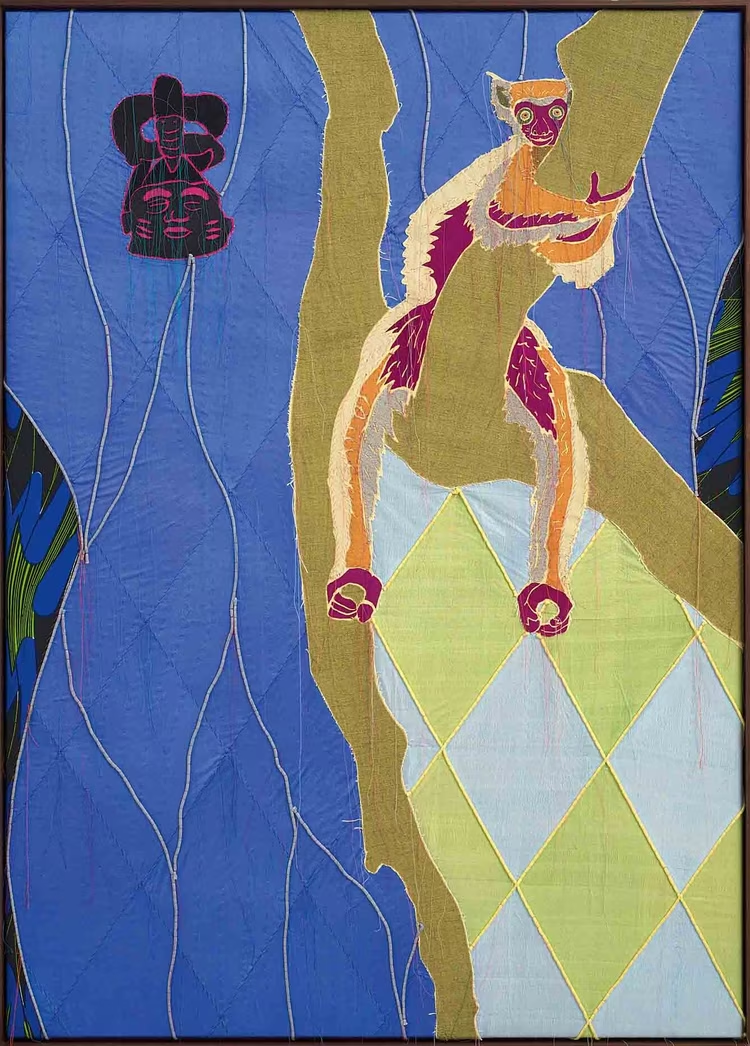
The sleek, modern white building had caught my eye on several occasions since I arrived. At the time of my visit, there was an exhibition of works by Yinka Shonibare called Earth Pictures, which explored how industrialisation and colonialism have impacted Africa's natural resources and contributed to climate change on the continent. Quilts intricately stitched by Shonibare depicted dystopian landscapes scarred by over-exploitation, alongside reimagined ancestral masks painted with batik-inspired patterns.
Ashley, the gallery assistant, walked me through the exhibit and led me into the print room, where some of Shonibare's sold works, now removed from display, were stored. She also obliged my request to take some photos of me (for the 'gram, of course), before I wandered through the sculpture garden and returned to my Airbnb to reflect on the day and spend a quiet evening recharging from my adventures.
The next morning, I found myself at the entrance of Gallery MOMO in Parktown North. Founded in 2002 by Monna Mokoena, it was Johannesburg's first black-owned gallery. Stepping out of my Uber, I noticed a sign that read, "Mercedes parking only." A humorous touch from the founder that often gets visitors talking and a little confused.
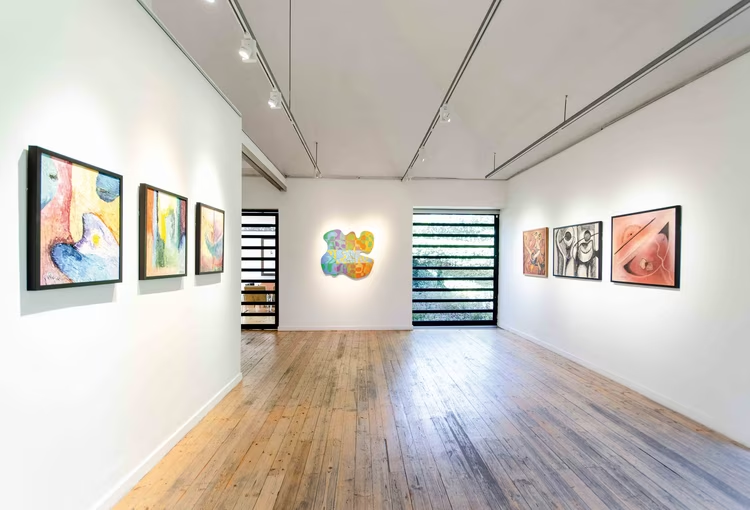
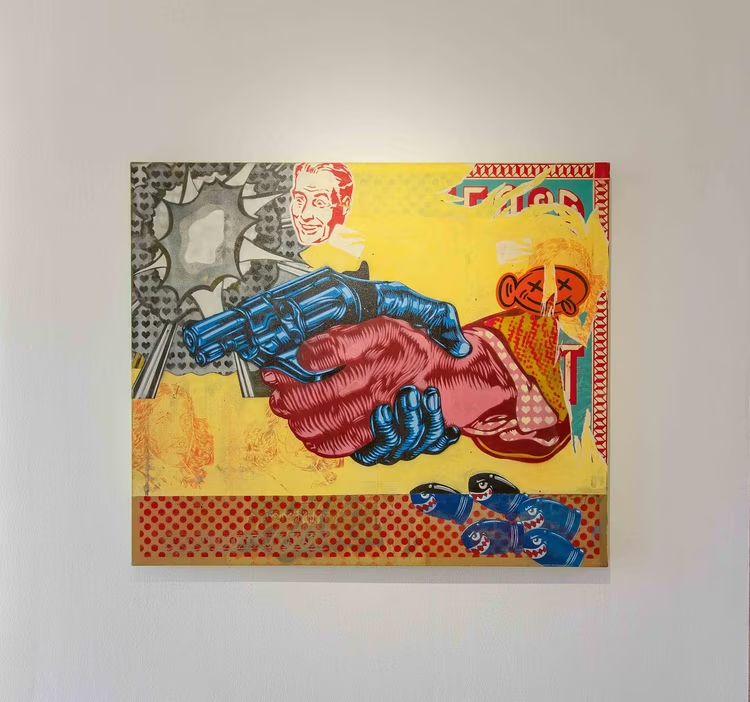
The assistant gallery curator, Cole, showed me around and explained the gallery's ethos, emphasising that Gallery MOMO values representation and often prioritises Black and diaspora voices among the diverse artists they exhibit. She added that Gallery MOMO is ultimately a contemporary gallery that supports the visibility of diverse narratives. This was evident in the eclectic exhibition, Cacophony of Narratives, which was on display at the time.
The exhibition featured the works of eight different artists, most of whom hailed from South Africa, including veteran artist and anti-apartheid activist Lefifi Tladi. It also featured Cameroonian artist Joel Mpah Dooh and Switzerland-based German-Nigerian artist Ransome Stanley. Decades and geographies apart, their works reflected the diverse and multifaceted nature of human experiences.
Gallery MOMO isn't simply about showing art for art's sake; they are committed to supporting artists in practical ways to help them make a living, through residencies, providing a platform to sustain their careers, and helping them participate in international art fairs where their work can reach new audiences.
I asked Cole about the neighbourhood and where I could explore beyond the gallery. Parktown North, Cole explained, thrives on arts and culture, from galleries to funky furniture studios to unique décor boutiques. She pointed them out one by one, starting across the road with Franz Gräbe Flower Couture, suppliers of the anthuriums I'd seen earlier at the gallery, and Ciro's Restaurant, with its sculptures, stunning chandeliers, murals by Nelson Makamo, and other artworks, including a William Kentridge print, Resist the Hour. This piece by Kentridge was part of his exploration of time and the human struggle against decay, which resonated with me, particularly given the local sentiments surrounding the city's decay.
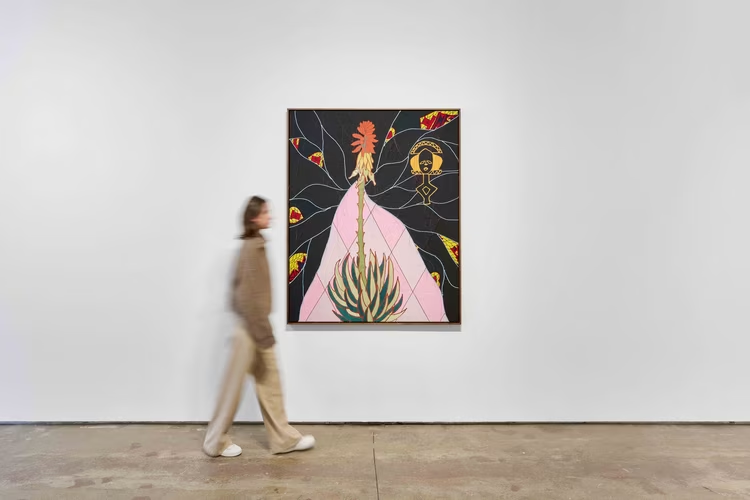
Just as I was ready to depart, the gallery's founder arrived. We discussed his motivation for opening Gallery MOMO, pan-Africanism, the Zambian art scene, and his visit to Zambia many years ago. When I mentioned that I planned to walk to a nearby gallery, Monna insisted that I first squeeze in sister galleries CIRCA and Everard Read, which are also close by. He took me in his car, which, coincidentally, isn't a Mercedes.
At Everard Read, South Africa's oldest commercial gallery, the standout piece for me was Mary Sibande's Sophie at the Opera Dressed in Mantso. Sophie, Sibande's long-time muse, wore a Victorian dress and maid's apron, eyes closed as she dreamed of possibilities beyond the stereotypical roles for women in post-apartheid South Africa—perhaps even conducting an orchestra. Sophie, this fashionably dressed statue, was a representation of the big, audacious dreams we have but may be too scared to verbalise, and for that reason, she lingered in my mind.
Eventually, I made it to the David Krut Gallery and Bookstore, its electric-blue façade a beacon on Jan Smuts Avenue. The garden itself was a work of art—bees buzzed around the flowers, lemons were ripe for the picking, mushrooms cultivated by the gallery flourished, a cuddly cat lounged in a flower pot, fountains added a quiet elegance, and there was a Mediterranean vibe to the architecture that was complemented by vibrant Mexican tiles. Inside, marketing manager Marque led me through Pebofatso Mokoena's Diamond Dust Apostrophes exhibition in the Checkerboard Room, born of a Namibian residency and realised with assistance from the David Krut Workshop. I asked Marque to show me one of his favourite pieces, and he happily strode over to what would be my second William Kentridge piece of the day, the famed Proof of Dutch Iris I, not a completed artwork but a work-in-progress, revealing the artist's thought process.
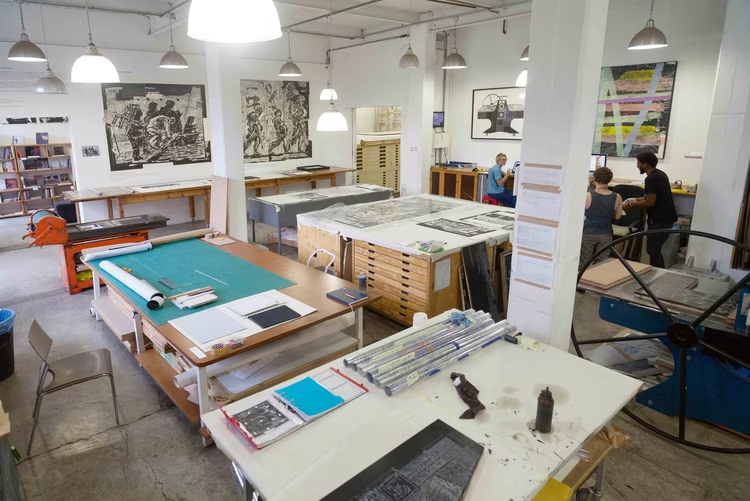
Marque, eager for me to fully understand the David Krut Projects ecosystem, urged me to visit their workshop in Maboneng—not far from my final stop, Wits Art Museum. I made it to the workshop and even to William Kentridge's studio the following day with Marque. That story, hopefully, is for another article.
Wits Art Museum (WAM) provided a reflective end to my journey. The interactive exhibition, 2020 Through the Eye of a Needle, marked five years since COVID-19 was declared a pandemic. Visitors were invited to draw portraits of loved ones lost to the pandemic, write about their experiences on a wall, or hang tribute cards in the gallery. Messages ranged from poignant ("I miss you, Mom, love Khani") to grateful ("Lockdown brought my family together") to conspiratorial ("COVID was just a way of eliminating people") and seemingly random ("I love you, Kanye").
My exploration of Jo'burg's art scene ended with an exhibition featuring dozens of quilts from the Mapula Embroidery Project, a collective of women in Winterveld and Hammanskraal who, over the past three decades, have stitched their communities' stories into cloth and been empowered to generate an income through art. They turned their needles to the pandemic, embroidering vivid records of grief, resilience and everyday life with COVID-19. Each quilt or 'COVID cloth' is a communal diary entry with memories of life during the pandemic sewn into it.
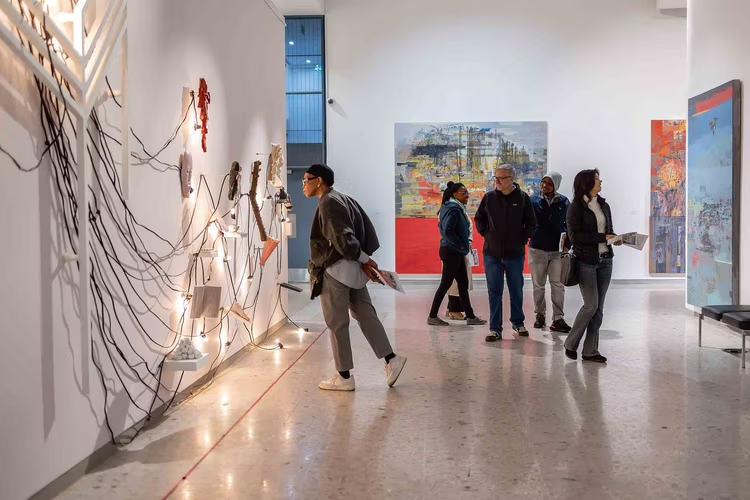
I felt like I had come full circle. I began my foray into Jo'burg's art scene viewing quilts created by Yinka Shonibare, and I now viewed quilts created by a group of women, who, though not household names, also tell their stories through a visual language.
WAM sits in Braamfontein, one of the parts of Jo'burg said to be in decline. As I said my goodbyes, I recalled something Marque mentioned during our conversation: "So many people say the city is in decline, but maybe it's not that. Maybe it's standing still for now. It will be revitalised again." Those words stayed with me. Despite the warnings on my first day, I left Jo'burg with no regrets. And if the art scene is anything to go by, the city's future is bright.