In the heart of southern Africa, where the Luapula River carves through ancient lands, a ceremony unfolds each July that bridges centuries. The Mutomboko, a spectacle of conquest, identity, and divine kingship, draws thousands to a small Zambian village where history refuses to remain in the past.
I.
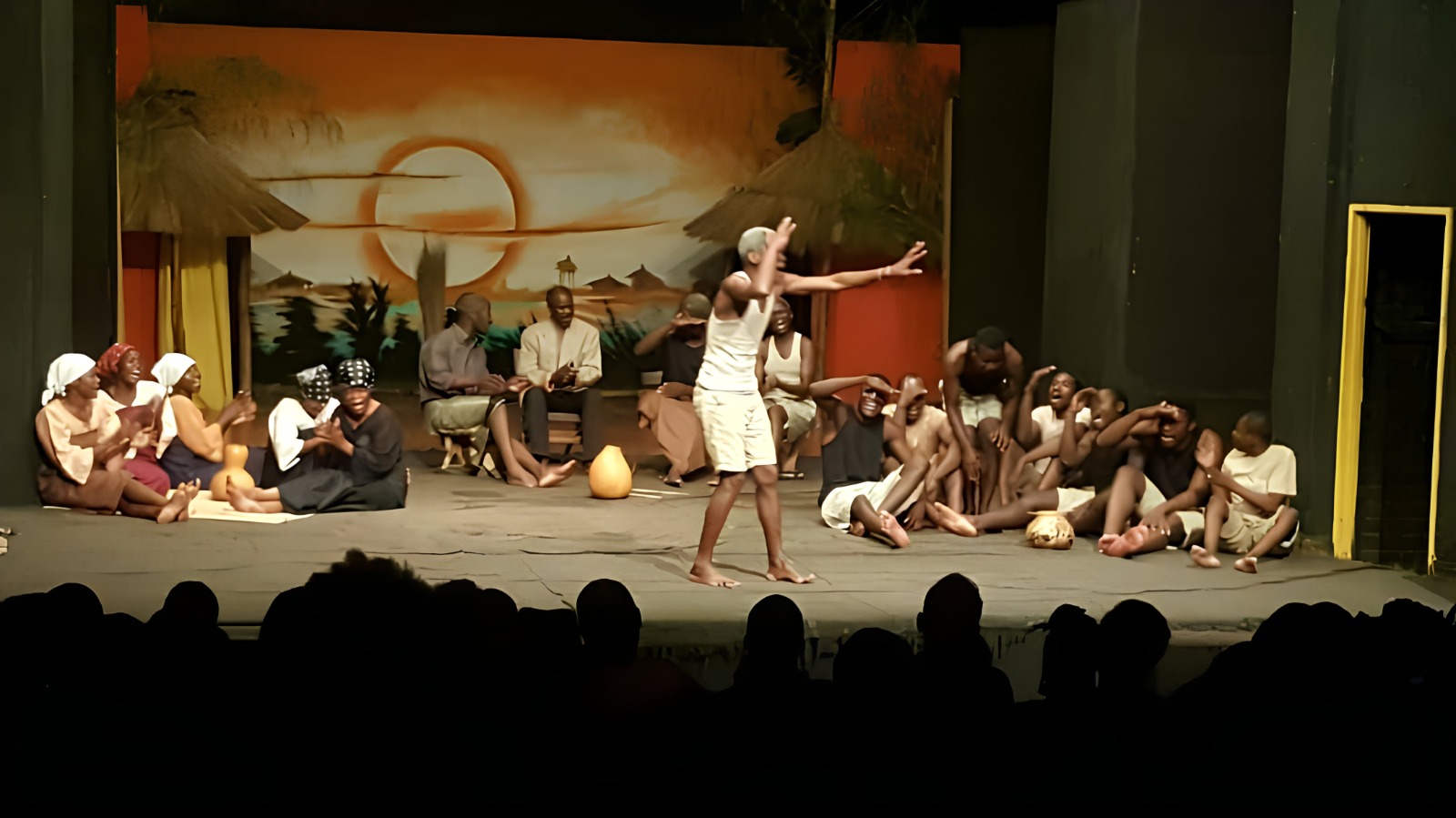
The breeze sweeps over shimmering grass as Ruweji, princess of the Lunda, stands in contemplation while attendants adorn her with ceremonial marriage jewellery and garments. She thinks of the man she has heard of but never met, a mighty Luba warrior. Despite her misgivings, duty calls. Strength and conquest are virtues both people admire, and this marriage to Chibinda Ilunga will create the greatest alliance the lands have ever seen. Together, they will raise their children into an army, a Luba-Lunda empire. From this alliance, a prince named Ng’anga Bilonde would expand the empire southward.

II.
Across an ocean of time and space, this warrior prince, Ng'anga Bilonde, grows restless. With his brothers, he has subdued kingdoms and claimed fealty from the neighbouring lands. But as the sun crowns another triumph on the battlefield, his eyes turn eastward. Word has arrived of easy conquests beyond the horizon. From his homeland in Kola, he knows the time to expand the empire is imminent.
On a cool morning, he gathers his fighting men, some Luba, some Lunda, some descendants of both lineages. They sweep east like ants, conquering polity after polity, until they reach Matanda, and turn southward towards the Luapula Valley. With his subjects, Mwata Bilonde establishes Mpembwe ya Keleka, the first royal seat of the Luba-Lunda, and crowns himself Mwata Kazembe I, king, 'husband of all,' the carer of his people.
III.
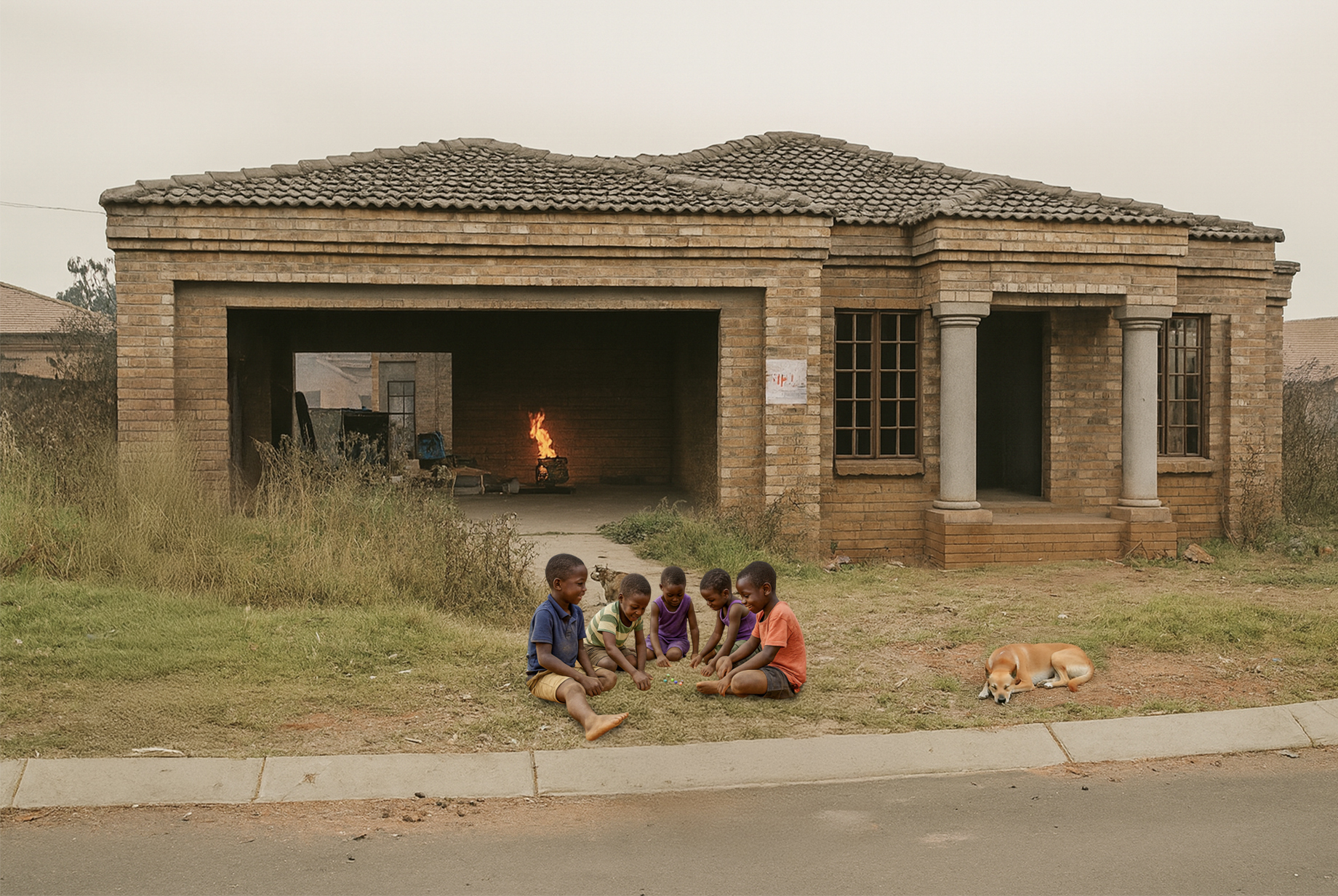
In a parallel timeline, a group of children play and re-enact a game; whether this encounter unfolded in the same way is a matter of space and time. They make up the story as they go along:
288 years had passed since Mwata Kazembe I. A man named Paul dressed for work as usual, grabbed his briefcase as usual and reported to work as usual. Today would be different, though; instead of his desk, his office would be the Zambian Agricultural and Commercial Show of 1998. What the man named Paul didn't know was that two members of the Traditional Hereditary Council were converging on the exact location. It was a busy time in Lusaka, and before the advent of the cellphone, tracking down Paul was like searching for a needle in a haystack.
As Paul chatted with his colleagues, two elderly men made their way through the crowd. They stopped before the cluster, eyeing the young man, a 36-year-old man of stature with sharp features. Paul opened his mouth in greeting, but his words hung in the air in astonishment as both men dropped to their knees, customarily clapping their hands three times, delivering the news: Paul Mpemba Kaniembo was now Mwata Kazembe XIX, king of the Luba-Lunda.
IV.
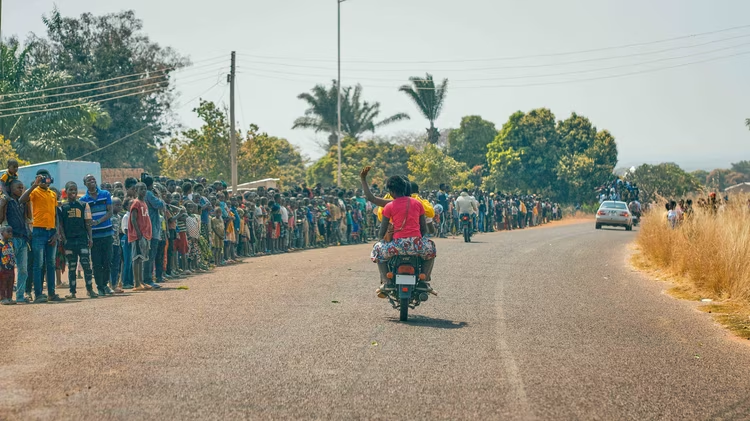
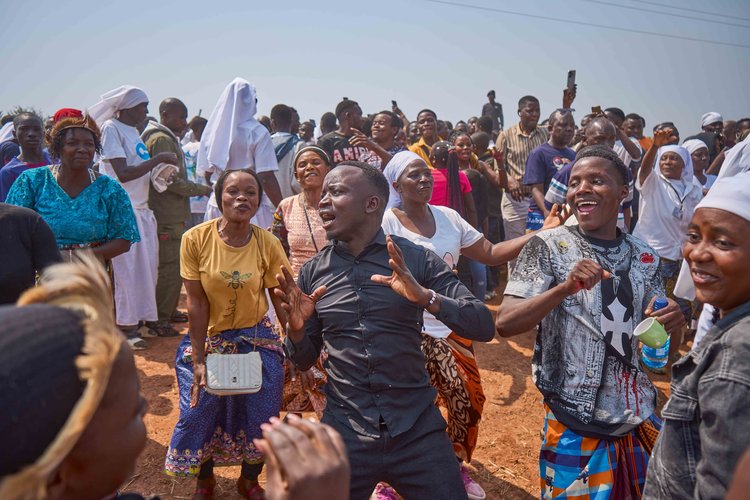
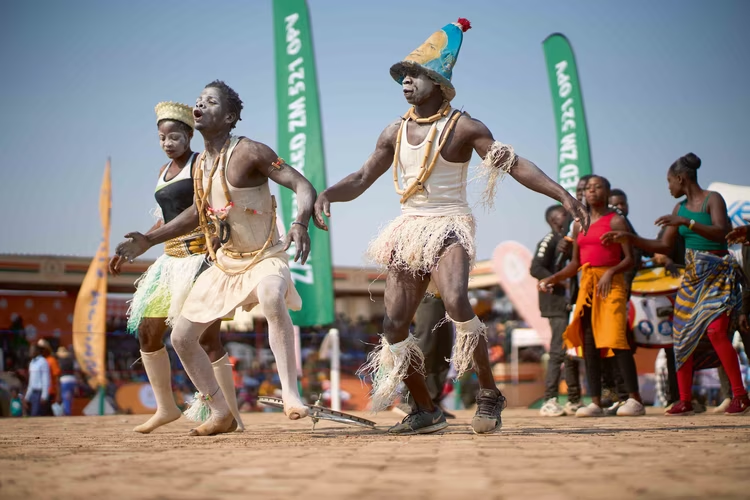
On the last weekend of July, thousands of people, including Lunda and Luba, sister tribes from Angola and the Democratic Republic of Congo, converge on the village of Mwansabombwe in Luapula Province for a spectacle that commemorates the great migration and conquests that brought the Luba-Lunda people to their homeland.
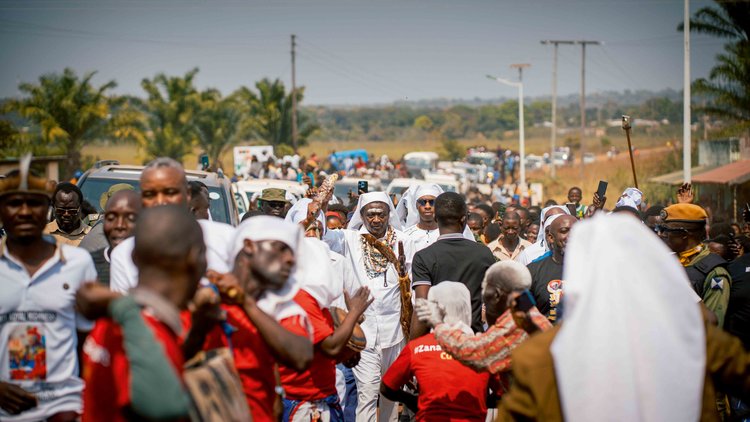
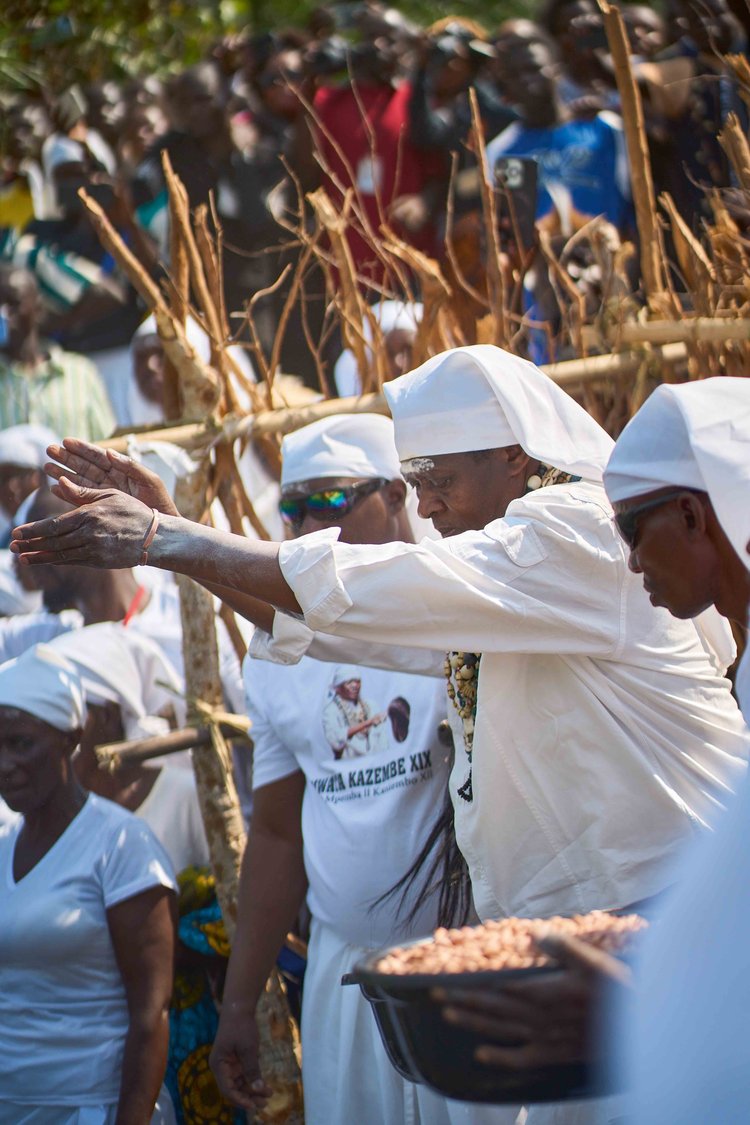
Twenty-seven years have passed since the man, also known as Mpemba, shed his name and became Mwata Kazembe. He rises early on this morning of remembrance. Surrounded by escorts and trailing crowds, he makes his way to kwaNakabutula, the sacred home of the ancestral spirits. A hush comes over the crowd as he crawls into the enclosure on his elbows, a sign of his unworthiness. Here, he confers with his ancestors through their custodians. Once the ancestors speak, he is smeared with ulupemba, a white powder that symbolises purity and the blessings of the ancestors. He emerges adorned in a white headdress and robes that blaze in the sun, emphasising his purity and divine sanction as king of the Luba-Lunda.
Purified, more rites await.
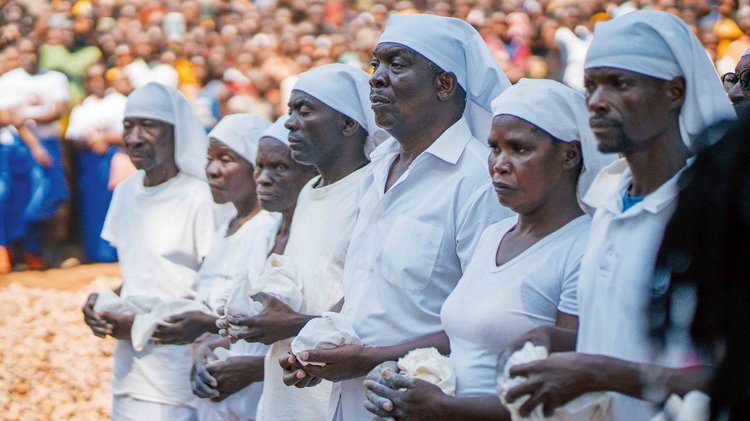
Along the dirt road, a line of solitary figures, the king-makers, watch his approach. Decked in white, they hold bags of ulupemba and offer one to Mwata Kazembe to cleanse himself. They are the keepers of all Luba-Lunda histories and ideologies; Mwata Kazembe is subject to them. At the Ng'ona River, he offers food and libations to the spirits of the warrior king brothers: Chinyata and Kasombola, who met their deaths by drowning in the Lualaba River in Congo.

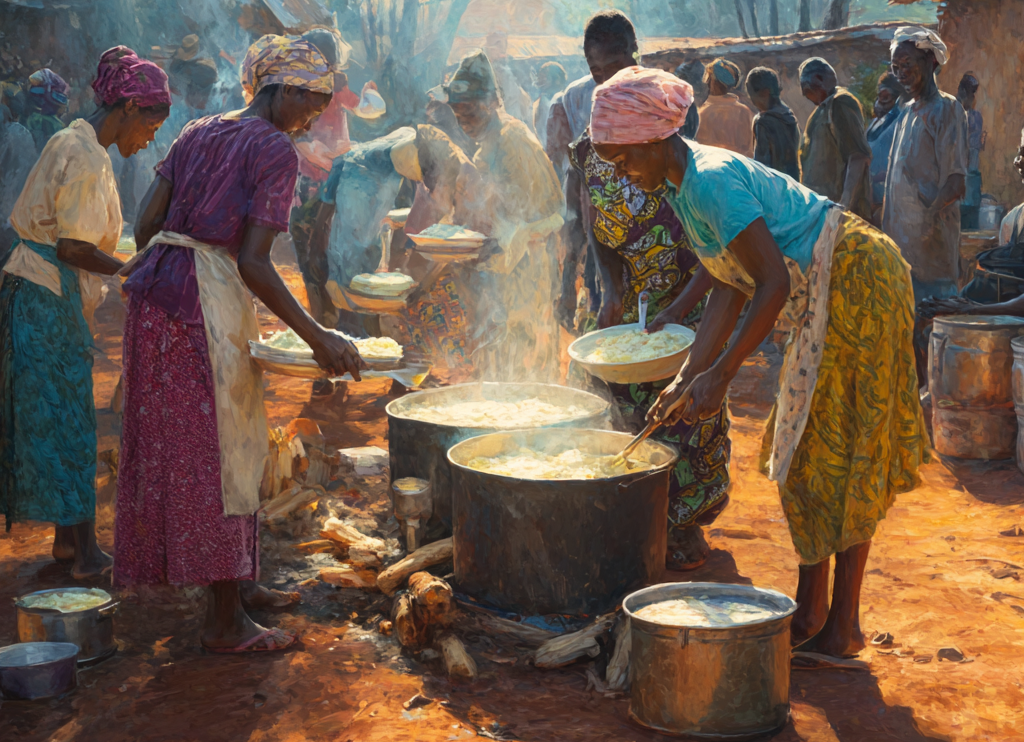
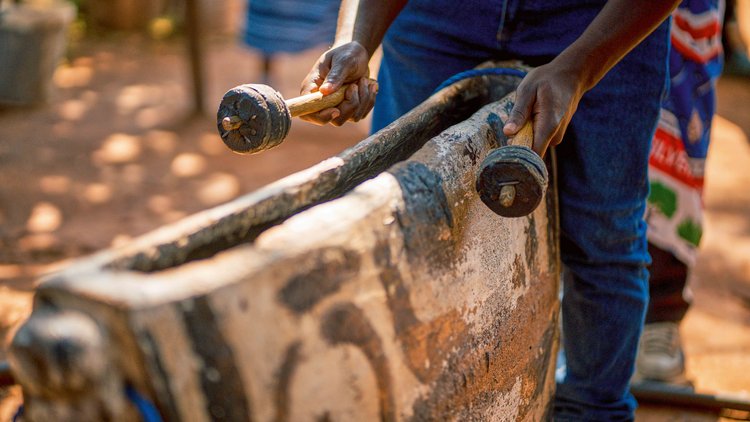
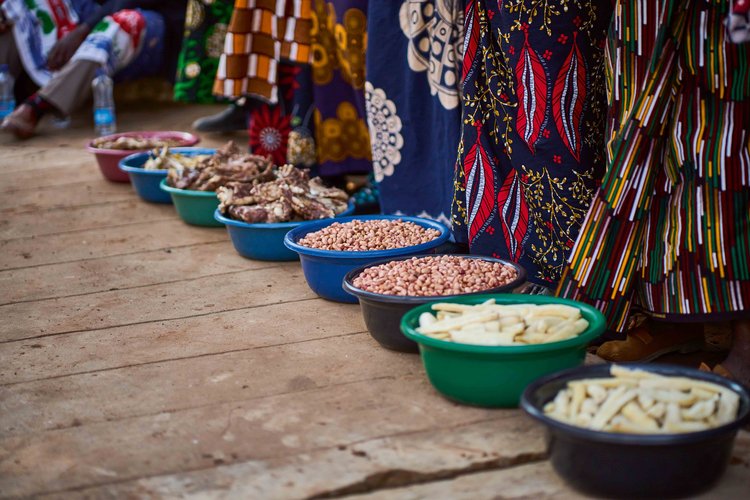
The preparation rites of the first day conclude with Mwata Kazembe's return to his royal palace to receive tributes from his subjects. Chiefs, headmen, and visitors present Mwata Kazembe with gifts, beginning with beer, goats, grain, and foodstuffs, which will form part of the feasting. As the sun slips below the horizon, singing, dancing, ululation and celebration continue into the night, and Mwata Kazembe retreats to his palace in preparations for the final and most important rite.
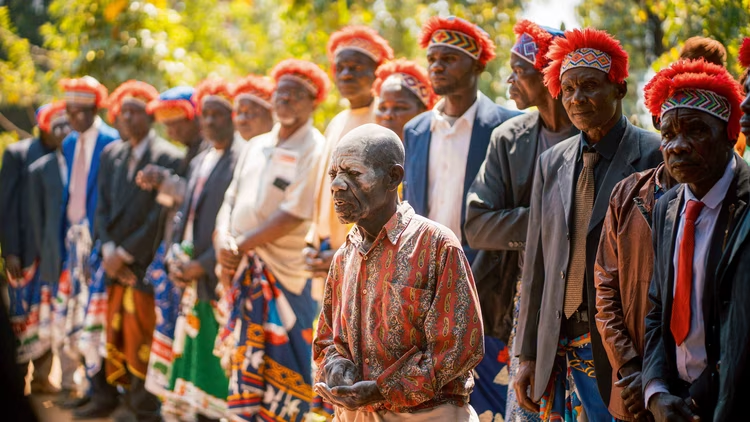
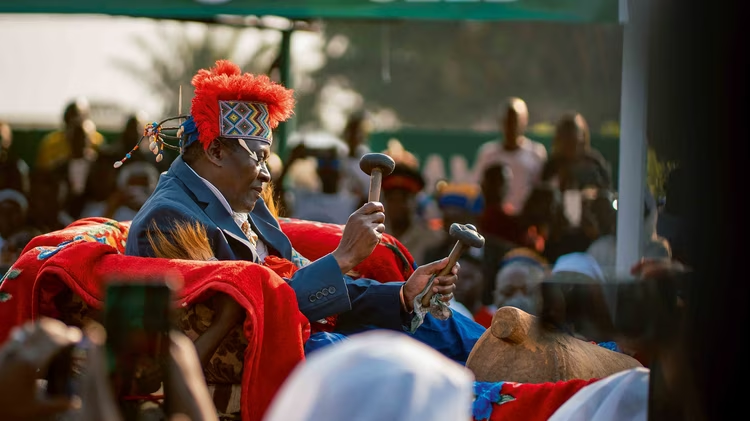
Dawn breaks with fever-pitch energy. The arena for the climax of the ceremony is cleansed through the sacrifice of a goat or chicken, sanctifying the path and the 'battlefield' as Mwata Kazembe 'retakes' his lands. To ululations and drumbeats, Mwata Kazembe appears, carried aloft on the muselo, the royal litter draped in zebra skins and borne by eight bearers dressed in red; they are Mwata Kazembe's protectors. Their red suits symbolise blood and their readiness for the battlefield as sworn warriors. Mwata Kazembe's appearance is striking; on his head is a beaded crown, trimmed with red feathers. He is escorted through the crowds as they sing, dance and celebrate the grand entrance of the king.
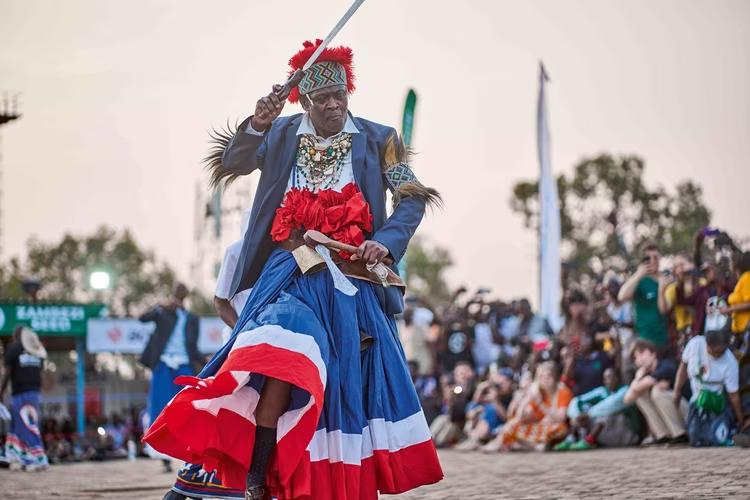
Dressed in umukanso, a voluminous skirt approximately 36 metres long, made of red, white, and blue cloth, Mwata Kazembe begins the victory dance. Initially, an attendant taunts him with weapons. Still, in a symbolic move, Mwata Kazembe snatches them forcefully, brandishing the mpoko (sword) and mbafi (axe), in triumph, the very weapons with which the Luba-Lunda carved their new kingdom. He stomps, leaps and swings the sword and axe in rhythm. Each step is practised, deliberate and imbued with meaning. Pointing north, he acknowledges the Luapula River, his forefathers' crossing point to come to this kingdom. Pointing east, west, and south, he reclaims the lands now under Luba-Lunda dominion. With a dramatic flourish, he thrusts his sword skyward and down into the earth: only God above and death below can subdue him.
As the sun begins to set, the ceremony comes to a close. In the final act, the Mwata Kazembe is lifted once more onto the muselo and carried from the arena to his palace. This marks the end of the Mutomboko. Having paced the land and reasserted his authority, Mwata Kazembe retreats to make final offerings at the shrine, closing his dialogue with the ancestors.
V.
Across an ocean of time, Ng'anga Bilonde's spear finds another conquest in the Luapula Valley. The warrior prince stands victorious yet again. He drives his spear deep into the fertile ground and gazes across the expanse that will become his kingdom. His descendants will not be subdued.