Remember when your grandmother told you not to sweep at night? Or that time your auntie gave you a proper telling-off for stepping over someone's legs? Growing up, we all heard these warnings, and most of us dismissed them as old-fashioned nonsense. But here's the thing: what if these so-called superstitions were actually our ancestors' way of keeping us safe, healthy, and socially aware?
Our ancestors weren't naive, but they observed the world around them, noticing patterns and finding ways to pass down survival knowledge that would stick.
Growing up in Zambia, you've probably heard them all. Don't whistle at night. Black cats are bad luck. Itchy palms mean money is on the way. Your grandmother said these things with such conviction that you never questioned them. But here's the interesting bit: most of these weren't random beliefs pulled out of thin air. They were survival tactics dressed up as supernatural warnings.
In many traditional societies, superstitions serve as a cultural toolkit for dealing with uncertainty, danger, and things that couldn't be easily explained. They gave people a sense of control and comfort, even when there isn’t a clear connection between the belief and what is actually happening. Think about it. If you tell a child, "Don't go outside at night because it's dangerous," they might forget. But if you say, "Don't go outside at night because the spirits will get you," suddenly they're paying very close attention.
Itchy Palms Bring Money
In many African communities, an itchy right palm was believed to signal incoming wealth or a gift, whilst an itchy left palm meant money or possessions would be lost. But was this really about predicting the future?

Not quite. The itchy palm belief likely served a different purpose: it encouraged optimism and hope during difficult times. When people were struggling financially, having something to look forward to, even if it was just a tingling sensation in their hand, gave them psychological comfort.
The belief also created instant cultural bonding, with people sharing their experiences and creating a sense of connection.
Black Cats are Bad Luck!
Black cats get a rough deal everywhere, but in Africa, the superstition took on its own unique flavour. Many Zambian and African communities view black cats with suspicion sometimes.
But where did this fear come from? Black cats are harder to see at dawn, dusk, and night. In rural areas without electricity, a black cat moving silently through the darkness could genuinely startle someone.
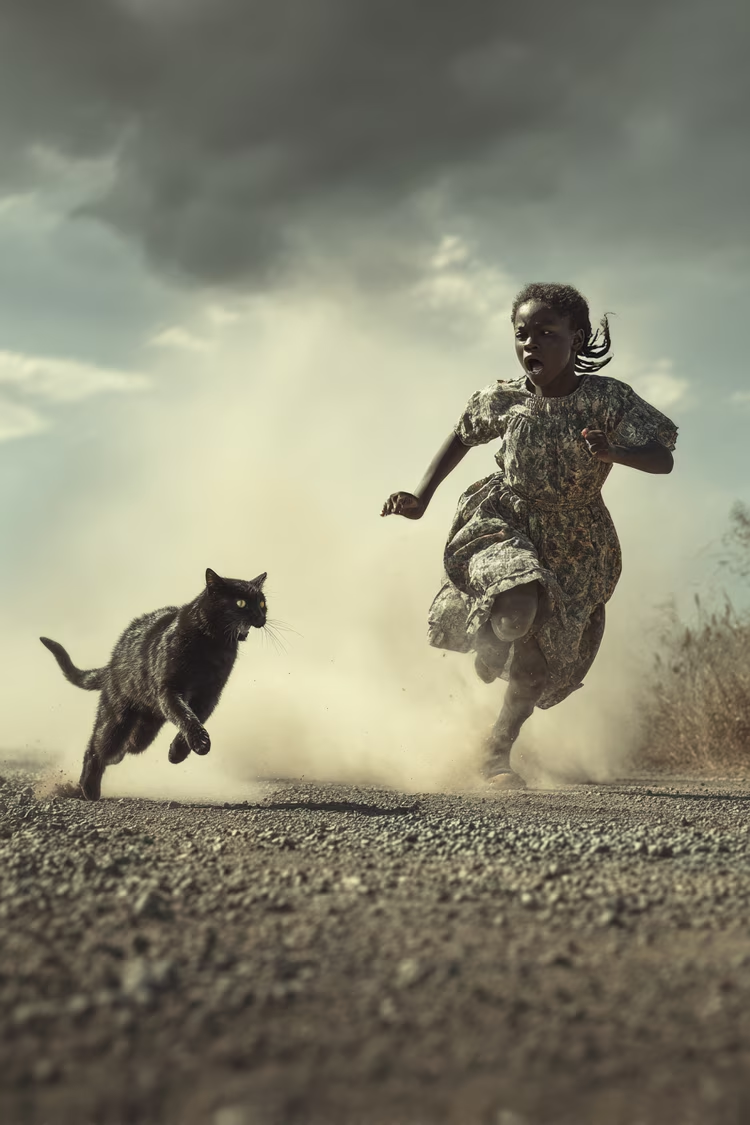
Over time, that natural fear evolved into superstition. The cat itself wasn't the problem; it was visibility and the human tendency to fear what we can't fully see.
Cooking While Menstruating
Here's where it gets really interesting. Many Zambian communities have strict rules about what women can and can't do whilst menstruating. They can’t cook for certain people, they have to avoid specific places, and there are all sorts of restrictions.
On the surface, this looks like pure superstition or even discrimination. But dig deeper, and you'll find something different. In traditional societies without modern healthcare, parents needed ways to monitor their daughters' reproductive health. These "taboos" around menstruation meant that mothers and female relatives always knew when a young woman was on her cycle.
If a girl's period were irregular, it would be noticed immediately. This early warning system helped families identify pregnancies early on. The superstition was actually a health-tracking mechanism disguised as a spiritual rule.
The cooking restriction had another benefit: it gave menstruating women a legitimate reason to rest during a physically uncomfortable time, without being seen as lazy or weak.
Sweeping and Throwing Rubbish After Dark
The belief that sweeping after 6 pm would bring bad luck meant people had to wait until morning to throw out rubbish. This might sound completely irrational until you consider the practical reality.
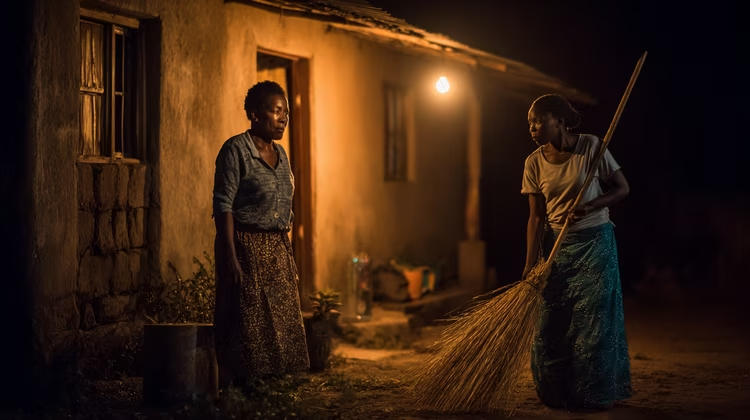
In the dark, you can't see what you're doing properly. Throwing rubbish outside after dark meant you couldn't see if dangerous creatures like snakes or scorpions had made themselves comfortable in the rubbish pile.
The superstition kept people from making nighttime trips outside with their hands full of rubbish, reducing the risk of accidents and animal encounters. It was basic safety dressed up as spiritual wisdom.
Traditional Zambian Beliefs vs Modern Science
So, where does this leave us today? We've got electricity, torches, hospitals, and scientific knowledge. Do these old superstitions still matter? Some absolutely don't. But the underlying principles, keeping children safe, monitoring health, and preventing accidents, are still relevant.
Traditional beliefs and superstitions continue to play a significant role in daily life and decision-making processes in many Zambian communities. The question isn't whether we should abandon these beliefs entirely, but rather whether we understand what they were really trying to teach us.