The power cuts. The signal drops. And life hits pause. So what are networks doing to keep Zambia connected?
When the lights go out, daily life grinds into a slower rhythm. Businesses slow down, and homes retreat into the familiar hum of generators, candles and mbaula (braziers). For households that can afford it, solar systems have become a lifeline during this period. But while families can keep a few lights on, keeping a nationwide network online requires industrial-scale power solutions, round-the-clock fuel supply chains, and major ongoing investment in backup systems and infrastructure upgrades.
It’s easy to blame your network provider when connection issues arise, but the real problem goes much deeper. Zambia's energy crisis, exacerbated by climate change's impact on hydropower, has created a perfect storm for connectivity, which relies on several factors working together—power, towers, fuel deliveries, and backup systems. One thing fails, and suddenly you can’t send that mobile money payment or finish your video call.
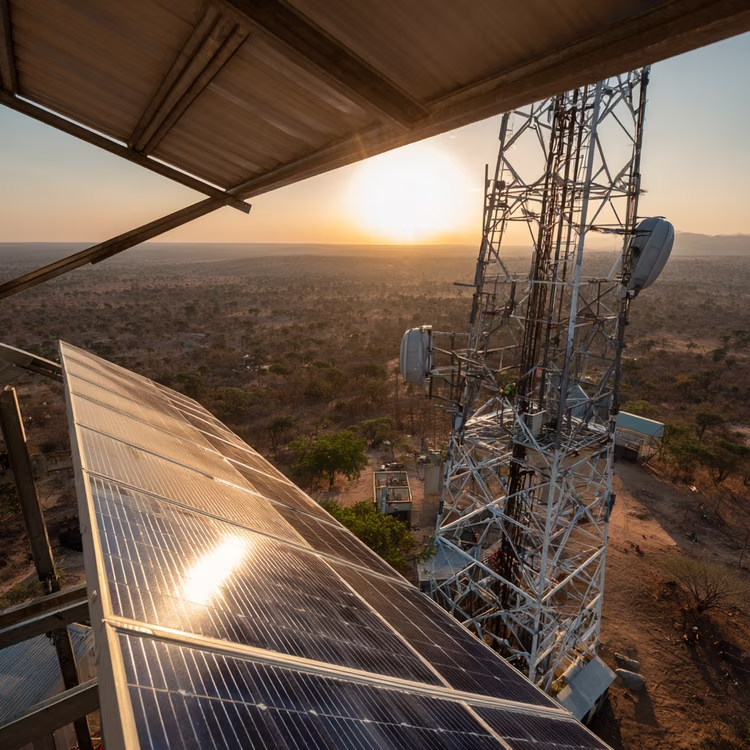
Each mobile tower serves thousands of users, office workers streaming video calls, traders processing mobile money payments, and students accessing online classes. These sites operate around the clock, powered primarily by the national grid. But when load-shedding kicks in, as it often does nowadays, they’re forced to rely on backup systems.
For a few hours, high-capacity batteries carry the load. But prolonged power cuts that sometimes stretch to 12 or even 16 hours mean diesel generators must run far longer than intended, increasing both fuel needs and maintenance costs. When both grid and generator fail, sites rely entirely on batteries, pushing backups far beyond their limits. Operators coordinate fuel deliveries to thousands of sites nationwide, a costly logistical effort. When those deliveries are delayed, the impact is immediate: weaker connections, slower data, or complete service interruptions.
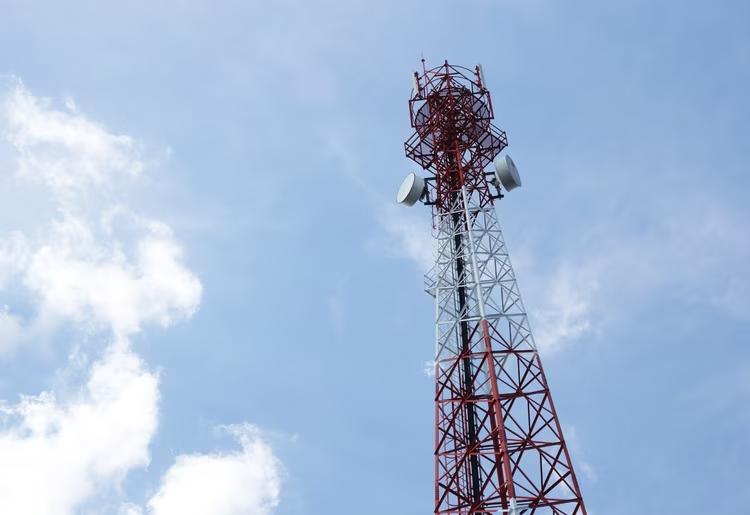
When power cuts, the problem compounds. Not only do entire neighbourhoods abandon Wi-Fi and switch to mobile data all at once, but some towers in the area may go offline entirely, forcing the remaining sites to handle even more traffic than the sudden Wi-Fi exodus alone would create. A site, for example, handling a few hundred connections suddenly processes thousands. That spike leads to network congestion, causing calls to drop and poor-quality connections that frustrate users already dealing with the inconveniences of load-shedding. The effects are felt even more severely in densely populated areas like Kamwala and Chimwemwe, overwhelming even the most well-prepared towers.
Despite the challenges, Zambia’s telecom sector is evolving fast, driven by a digital economy that now processes hundreds of billions of kwacha in mobile money transactions every year. All three of Zambia’s network operators are adapting their infrastructure to cope, though each is taking a different approach. Airtel Zambia has placed network resilience at the centre of that effort.
Airtel, which operates one of the country’s most extensive networks, serves over 12 million customers across all ten provinces. The company has spent recent years expanding its infrastructure footprint in Zambia. Through TowerCo partners, the operator runs 1,700 of the country's 3,600 towers and is crucially rethinking how those towers stay online when the grid doesn’t cooperate.
“Connectivity isn’t a luxury anymore,” says Airtel Zambia's Managing Director, Hussam Baday, during a recent briefing at the company’s headquarters in Lusaka. “It’s the backbone of everything from business, education, healthcare, to even family life. That’s why we have invested over $240 million in network infrastructure over the past five years, with $90 million earmarked for 2025 alone—the highest ever for one year. Already, 60 towers have gone live, with another 340 expected to go live by February 2026. We aim to keep Zambia connected, no matter what’s happening with the grid.”
The major change happening right now is hybrid power, combining solar panels, batteries, and generators at the same sites. It means less reliance on diesel, and towers that stay online longer when the power is out. Airtel has reportedly already seen better uptime at many of its main sites, resulting in fewer interruptions even when everyone’s online at once. The company has also deployed monitoring systems that track network performance and customer experience in real time, allowing engineers to identify and resolve issues remotely. The rollout has not been without hurdles, with burdensome approval processes causing delayed rollouts.
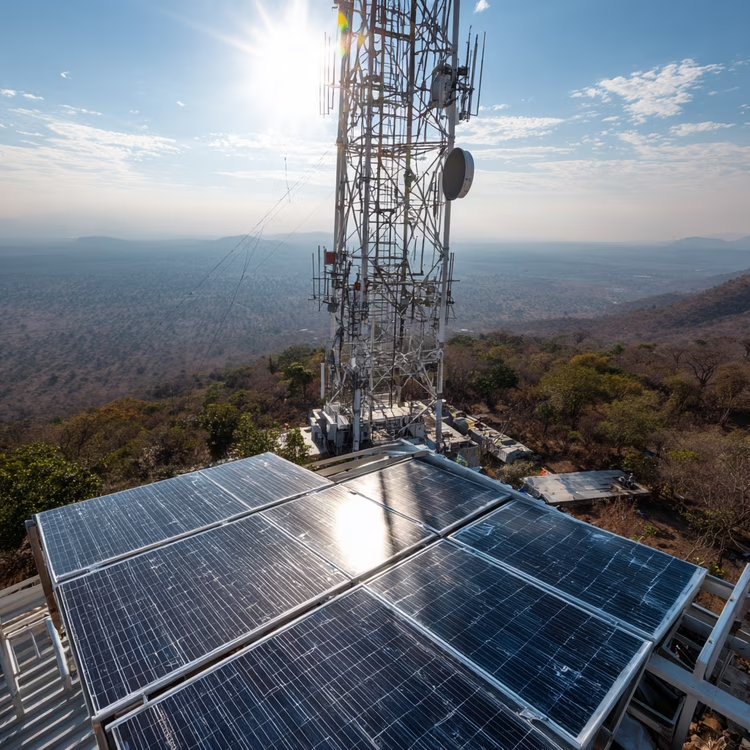
It's not just about keeping phones online. The whole economy relies on these towers, which include market vendors processing payments, government services, banking and everyday communications. When the signal drops, modern Zambia grinds to a halt.
Airtel's focus has been on prevention rather than reaction. It’s working closely with partners to redesign how sites are built, its logistics teams are reworking delivery routes to get backup systems where they’re needed faster, and smarter technology is being introduced to detect and resolve issues before customers ever notice them. Though some customers still report connectivity issues during extended outages, the process is slow and complex, and this will take time to complete across the entire network. However, it is designed to make outages less disruptive and connectivity more dependable, even when the grid is anything but. It is evident that the telecommunication sector is essential to the backbone of the nation’s economy.
Dropped calls during load-shedding are undoubtedly frustrating. But they are symptoms of a broader challenge, keeping an entire country connected when the grid itself is unreliable. The fixes are slow and costly, but they’re happening, site by site, upgrade by upgrade and district by district. And if the current pace continues, the next time the lights go out, the signal might not.