The Copperbelt region has long been the engine of Zambia's economy, with copper mining providing over 70% of the nation's export earnings. Yet this prosperity comes with environmental challenges that affect local communities.
The Copperbelt always tells the truth before its people do. From a distance, you see the haze first, not the skyline. Smelter stacks rise tall and blunt against the horizon, trailing smoke spreading until the clouds turn the colour of tarnished silver. By the time you reach the city centre, the metallic tang in the air clings to your tongue. Locals hardly notice it anymore, but to a visitor, it is striking and difficult to ignore.
Copper's Dual Legacy
For Zambia, copper has been both a lifeline and a source of challenges. It has built towns, sustained industries, paid for schools and hospitals, and placed the country firmly on the global map of resources. The mining sector employs hundreds of thousands directly and indirectly, supporting families across the nation. Yet the industry has also left environmental footprints that require attention and action.
Health professionals across the Copperbelt have observed patterns that warrant careful study. Children are sometimes taken into hospitals wheezing, their developing lungs strained against air thick with sulphur dioxide during peak production periods. Skin conditions, rashes, irritated eyes, and recurring sinus infections appear with notable frequency. Medical staff keep inhalers on hand, especially in the cold season when atmospheric conditions can trap emissions closer to the ground.
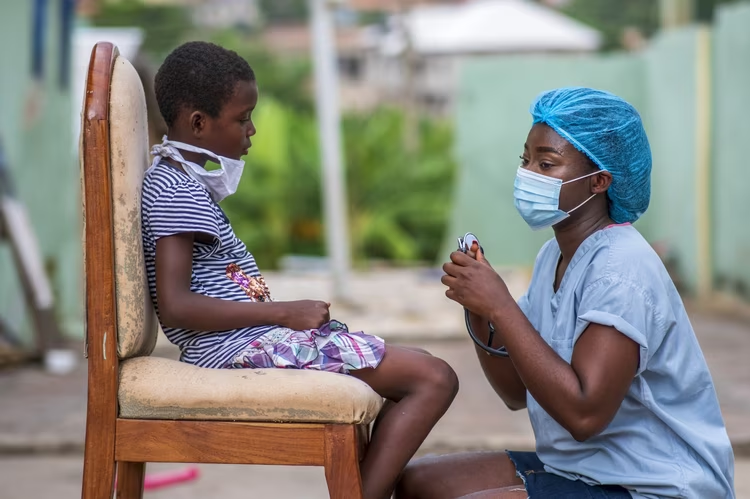
A 2018 study by the Zambia Environmental Management Agency identified lead and cadmium contamination in several Copperbelt districts, providing important baseline data. Whilst comprehensive health impact assessments remain limited, this research has spurred mining companies and regulators to prioritise environmental monitoring and mitigation strategies.
Environmental Footprints and Monitoring
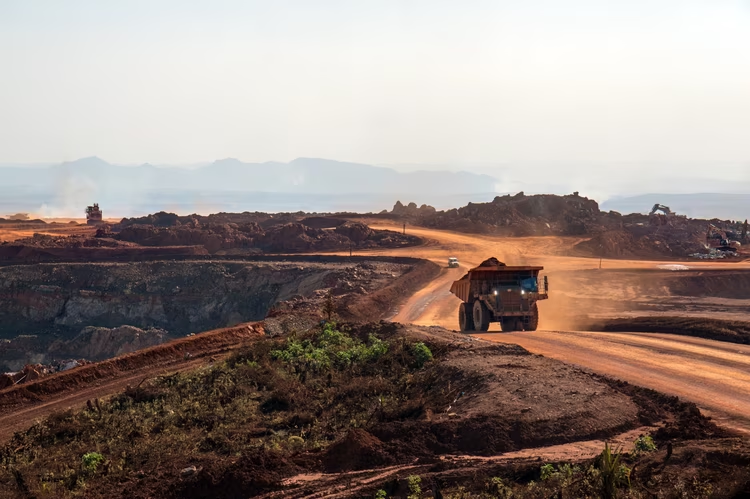
The environmental impact of decades of mining activity is visible across the region. No one denies that copper is Zambia's backbone. More than 70% of export earnings depend on it. Without mining, salaries would shrink, development would stall, and schools would struggle. Families across the country, not only in mining towns, depend on its revenues. The sector remains the single largest contributor to GDP and revenue, funding essential services from healthcare to education.
Innovation and Responsibility of the Mines
Mining companies are increasingly investing in cleaner technologies, from improved smelting processes that reduce emissions to better waste management systems. International environmental standards are being adopted, and partnerships with communities are helping to identify and address local concerns.
Regulatory frameworks have strengthened, requiring environmental impact assessments and regular monitoring. Civil society organisations are playing a vital role in advocating for transparency and accountability. These combined efforts represent a shift towards what many call "mining with a conscience", an approach that acknowledges past challenges while building a more sustainable future.
The mineral that connects Zambia to the world can also become a model for responsible resource extraction. The true value of copper should be measured not only in dollars per tonne but in healthy communities, productive farmland, and clear skies. This vision is achievable through continued investment in cleaner technology, robust regulation, and genuine partnerships between industries and citizens.
A challenge for the nation is to harness the wealth beneath its soil whilst protecting the health of its people. With commitment from all stakeholders, the Copperbelt can become a region where prosperity and wellbeing grow together, where the air clears gradually, and where copper continues to build the nation without compromising its most valuable resource, its people.