Long before mobile money and microfinance became buzzwords, Zambian communities were already revolutionising how money moves. Through chillimba, village banking, and grocery pools, everyday people—especially women—are buying land, funding education, and launching businesses without ever stepping into a formal bank.
Zambians have always found innovative ways to make money work for their communities, driven by a belief that financial strength comes from collective action rather than individual resources alone. Even before banks arrived in many areas, resource pooling, rotating savings, and lending circles helped whole communities thrive. Women, in particular, have led these efforts, using such systems to expand opportunities and improve lives. At the heart of these practices—chillimba, village banking, grocery chillimba—lies a system built on culture, trust, and ingenuity, showing how communal contributions create lasting opportunities.
How Chillimba and Village Banking Work
Chillimba is a system many know by experience. A group of friends or neighbours each puts in a set amount every month, and one person takes the total each time. When it’s your turn, you get a chunk of cash that can go toward school fees, land, or a small business. Everyone waits their turn, trusts one another, and ultimately benefits.
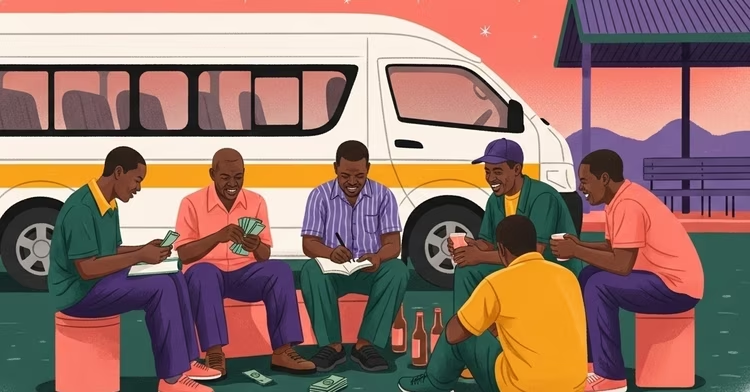
Village banks and stokvels follow the same idea on a slightly larger scale. Ten, twenty, or sometimes thirty people meet regularly to contribute to a fund that then rotates or lends to members. There is no contract, no collateral, and no bank manager saying yes or no. It works because people know one another and hold each other accountable. It's practical, social, and empowering.
Economic Empowerment Through Community Banking
Women are the backbone of these systems. In countless urban and rural communities, many have used chillimba and village banking to grow household income, pay for school fees, and improve health care access. Some have bought land, started businesses, or self-sponsored the entirety of their tertiary education. These achievements are more than financial milestones—they demonstrate agency and resilience in a society where formal financial systems often leave women behind.
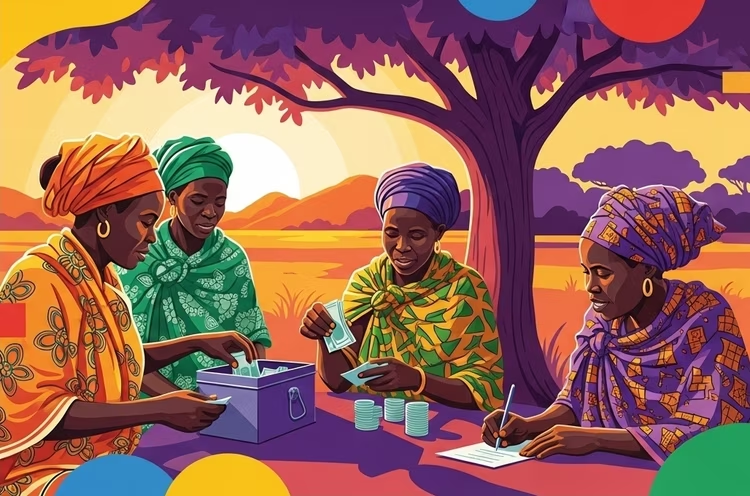
It is easy to assume that these systems exist because banks are missing, but it is more than that. They are flexible, accessible, and tuned to the rhythms of everyday life. People understand their money in ways no algorithm or credit score could ever capture.
The Social Impact of Informal Banking
Informal finance in Zambia is as much cultural as it is economic. It is trust, solidarity, and shared responsibility. Funds from chillimba or grocery pools can help during illness, emergencies, or unexpected hardships. They are safety nets made by communities for communities.
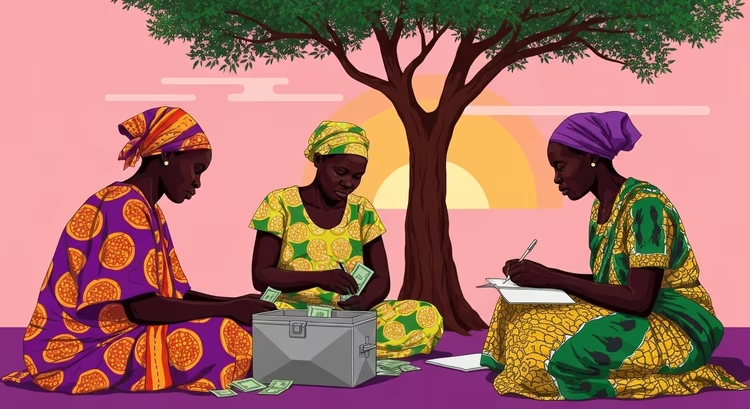
Sometimes it is even playful. Some households save money in old wine bottles, breaking them at the end of the year to distribute funds. Groups pool money to buy groceries in bulk and rotate purchases, helping everyone stretch their resources further.
The Future of Informal Finance in Zambia
Digital tools and mobile banking are emerging, but do not replace traditional methods. They make it easier to track contributions, send reminders, and manage funds. The magic still lies in people coming together, trusting each other, and turning small contributions into meaningful outcomes.
The challenges of financial literacy, regulation, and formal recognition are areas that could support these systems without changing what makes them special. With thoughtful support, these informal systems can grow stronger and reach more people.