African stories are everywhere now—on Netflix, in international campaigns, and across global media. But who's actually telling them? Whilst global platforms offer reach and funding, local African creators are asking a different question: why are our stories still being filtered, reshaped, and simplified for outside audiences?
There is growing attention around who gets to shape the narrative of Africa, largely because stories have a way of settling in people’s minds long before statistics ever do. Ideas about place and identity are often formed through film, images, and popular culture before anyone engages with policy or history. Over time, many of these impressions have been shaped to fit standards that global audiences have grown accustomed to. Stories created on the continent often exist alongside this, but they rarely travel with the same ease or reach.
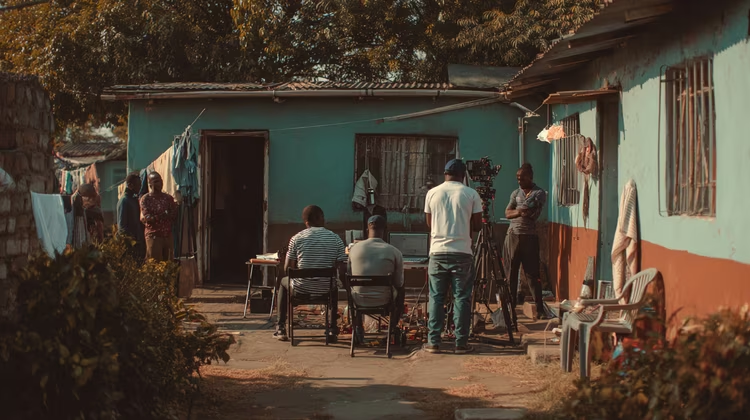
This imbalance is not theoretical. It becomes visible in how projects are funded and in which stories are given the support to move beyond their country of origin. At its core sits a question of authorship. When stories are rooted in African lives and African realities, the issue of who tells them carries real consequences.
Zambian Filmmakers and Storytellers
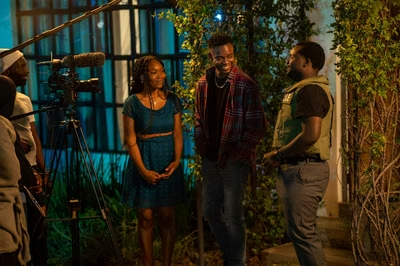
In Zambia, the conversation shifts once attention is placed on what is already being made locally. Across film and visual storytelling, Zambian creators are producing work that reflects everyday life without reshaping it for outside interpretation. These stories may not arrive wrapped in spectacle, but they carry social detail that feels accurate to people who live here.
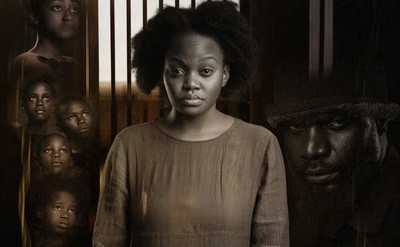
Suwi, directed by Musola Cathrine Kaseketi, is a clear example. The film moves through ordinary Zambian spaces and relationships without framing them as cultural explanations. Characters are not positioned to teach the audience about Zambia. They exist within their own social logic, shaped by family dynamics, expectations, and choice. The film trusts its viewers to follow without translation, and that trust is what gives it its honesty.
How Zambian Creators Are Telling Stories Online
Beyond traditional film and television, much of Zambia’s storytelling now lives online. Platforms such as Facebook, YouTube, and TikTok function as informal archives of daily life, shaped by creators who document their surroundings directly and without heavy mediation.
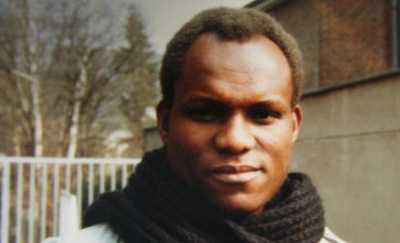
Creators like Mix Kasamwa move through this space with ease. Through short-form video, music, and visual projects rooted in Lusaka’s culture and language, he captures moments that feel immediately recognisable to younger audiences. His work does not aim for polish or export appeal. It reflects city life as it is lived, with humour and reflection. Over time, this kind of content builds a record of contemporary Zambian identity that global productions rarely attempt to hold.
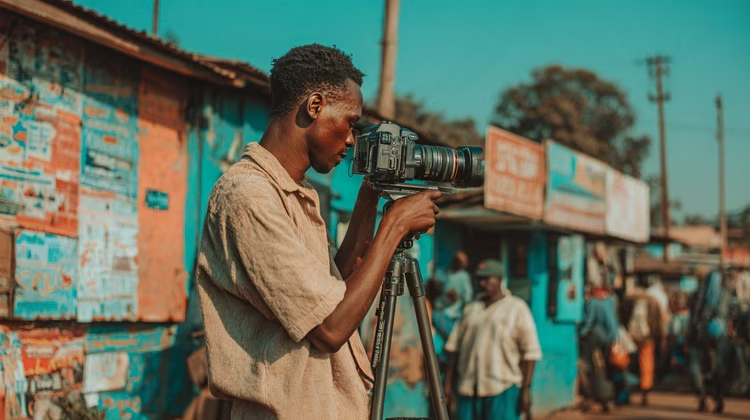
These digital creators are not positioning themselves against international narratives. They are choosing to build traction within their own communities first. In doing so, they take control over how everyday life is represented.
Zambian Fashion and Visual Culture
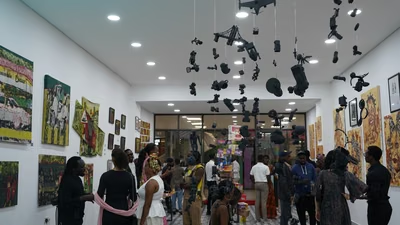
Fashion and visual branding have become another space where narrative control takes shape. Zambian designers, stylists, and creative studios are producing imagery that reflects present-day realities rather than imagined tradition. Campaigns are shot in familiar neighbourhoods and styled by and for people who recognise themselves in the images.
When visual identity is shaped locally, it avoids turning African aesthetics into something ornamental or distant. It becomes an expression of lived culture, grounded in how people actually move through the world.
Why Local Writers Matter for Cultural Authenticity
Literature has long carried narrative weight across the continent. African writers have reclaimed space by writing from within their own worlds, refusing to soften experience for external interpretation. Much of this work prioritises being legible to local readers who understand what sits beneath the surface of the text.
In Zambia, literary work continues through poetry, essays, and fiction shared via readings, short stories, and online platforms. These stories may not dominate international shelves, but they circulate among readers who recognise their own lives in the writing. That recognition carries cultural value on its own terms.
Benefits and Limitations for African Stories
Global media industries bring real advantages. International studios, publishers, and streaming platforms offer funding, technical capacity, and wide distribution. African stories can now reach audiences that were once inaccessible, including members of the African diaspora scattered across the world.
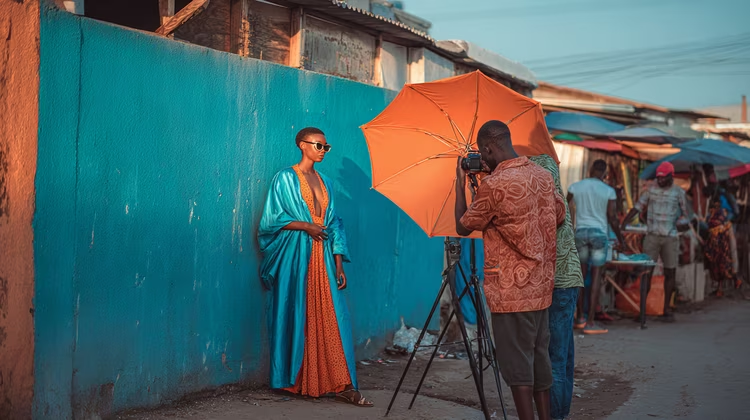
This is where representation becomes selective. Certain stories travel repeatedly because they fit familiar frames. Others remain local, not because they lack value, but because they resist simplification. In Zambia, this imbalance is easy to see. Local creators continue to produce meaningful work with limited resources, while international productions may pass through briefly without investing in long-term creative ecosystems.
Letting African Creators Lead Their Own Stories
Ownership of African narratives comes down to trust and recognition. African creators are asking to be treated as credible authors of their own realities, with the access and support needed to represent themselves in ways that feel natural rather than mediated. The shift allows stories to move through the world without being reshaped to meet external expectations.
When Africans tell their own stories, the tone changes. Context is understood rather than explained, and humour arrives without effort. There is space for contradiction and uncertainty, which is often where truth settles.
The question of who gets to tell African stories remains open, but the direction is increasingly visible. Across Zambia, local creatives are already answering it through their work, from digital creators documenting city life through vlogs to filmmakers telling stories without translation. The stories are being shaped from within. What remains uncertain is whether systems of funding, distribution, and recognition are prepared to trust African creators enough to let those stories travel on their own terms.