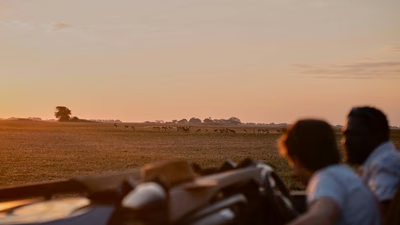
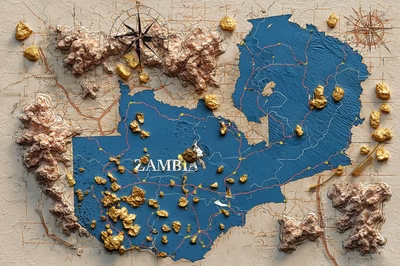
After years of economic headwinds, Zambia is staging a powerful comeback. Fueled by a historic debt restructuring, surging copper production, and resurgent agriculture and tourism, the nation is on track to be one of Africa's fastest-growing economies by 2026.
After years of economic downturn, Zambia is making steady progress towards stability. Various sectors show promise. With an estimated 4 per cent GDP growth in 2024 and a projected 5.8 per cent in 2025, the International Monetary Fund (IMF) describes Zambia as a country with strong reform momentum and growth potential.
Following Zambia’s Eurobond restructuring in June 2024, the national budget prioritised education, health, and post-drought recovery, all of which are key to the country’s growth. As a result, GDP is forecast to expand by 6.4 per cent in 2026, among the region’s highest. Growth is fuelled by mining expansion, agricultural recovery, and revitalised tourism.
According to Bloomberg’s Matthew Winkler, the June 2024 Eurobond restructuring sparked an 18 per cent increase in the value of Zambia’s dollar-denominated sovereign bonds. The rally outperformed emerging-market peers over the same period, signalling renewed investor confidence in Zambia.
This optimism is echoed internationally. The United Nations Conference on Trade and Development (UNCTAD), in its 2025 World Investment Report, highlighted Zambia as one of Africa’s most reform-driven economies, citing its fiscal consolidation, debt restructuring, and inflation control.
The 2026 National Budget, totalling K253.1 billion, aims to propel Zambia towards middle-income status through inclusive growth and equitable development. Notably, allocations include:
- K33.0 billion (13%) for education
- K26.2 billion (10.3%) for health
- K6.2 billion for the Constituency Development Fund (K40 million per constituency)
- K15.7 billion earmarked for social protection programmes
These allocations underscore a shift toward economic transformation and human-capital development. Narrowing fiscal deficits and maintaining stable reserves indicate sustained macroeconomic stability. Yet risks remain. They are both external and domestic and will need constant attention.
Mining
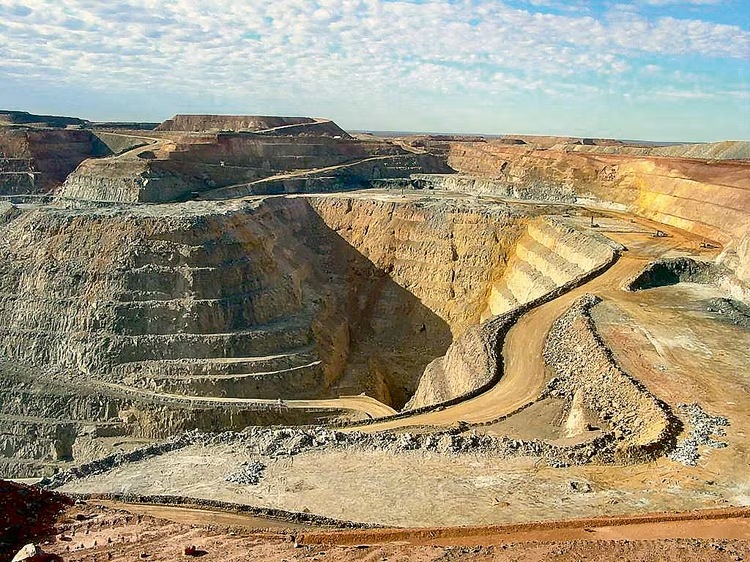
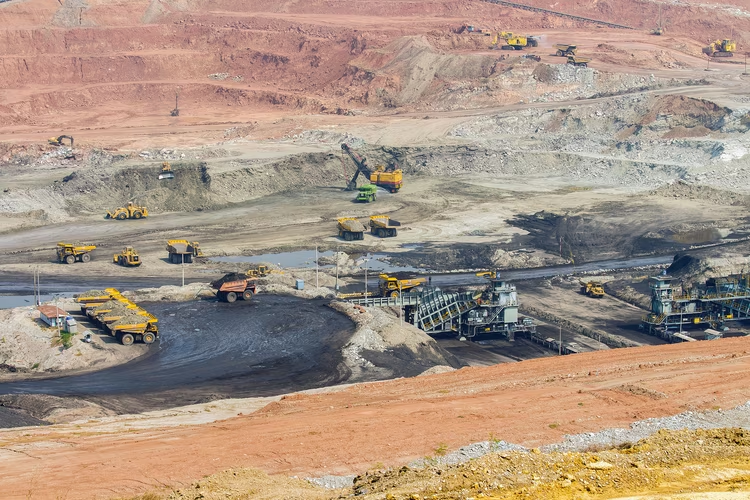
Building on this progress, mining remains the anchor of Zambia’s economic resurgence. The sector’s improved performance is driven by a stable tax and regulatory environment. Renewed investor confidence provides a cornerstone for the country’s projected growth. Key developments include:
- Expansion projects at Barrick Lumwana, Konkola Copper Mines (KCM), Lubambe, and Mopani are expected to add around 400,000 metric tonnes of copper production annually as they reach full ramp-up.
- New projects such as Mingomba, Mwekera, and Kitumba are expected to begin contributing towards the end of the decade, adding around 300,000 tonnes once fully on stream.
- Copper production rose by 12 per cent in 2024 to 820,676 metric tonnes despite a power deficit caused by the 2023/24 drought.
- Output is projected to surpass 1 million tonnes in 2026.
- Zambia’s long-term target is 3 million tonnes annually by 2031.
The budget allocates K1.2 billion to the mining sector, K449.5 million to support artisanal and small-scale mining, and K75.9 million to operationalise the Minerals Regulatory Commission (MRC).
The operationalisation of the MRC, in collaboration with the Zambia Revenue Authority (ZRA), will improve oversight, transparency, and investor confidence. While higher copper prices in 2025 strengthened foreign reserves, Zambia’s dependence on global commodity cycles leaves it vulnerable to price fluctuations.
Diversification into agriculture and tourism will be crucial in mitigating the economy's vulnerability to external shocks. These sectors are already playing a supportive role in Zambia’s recovery.
Agriculture
Zambia’s agriculture sector is rebounding from the 2023/24 drought.Maize output more than doubled to 3.7 million metric tonnes in the 2024/25 season, up from 1.5 million metric tonnes the previous year. Favourable weather and improved financing drove this rebound. A bumper harvest has eased food-security concerns despite ongoing power shortages. Allocation to agriculture, livestock, and fisheries amounts to K15.5 billion in 2026. The 2026 Budget focuses on climate-resilient practices and developing an export-oriented livestock sector. Priorities include:
- Construction of nine new dams, with 300 existing scheduled for maintenance.
- Completion of ongoing irrigation projects to ensure reliable water access.
- The Sustainable Agriculture Financing Facility (SAFF) has supported 8,841 farmers with access to credit.
- Emphasis on drought-resilient crops and conservation farming to strengthen food security.
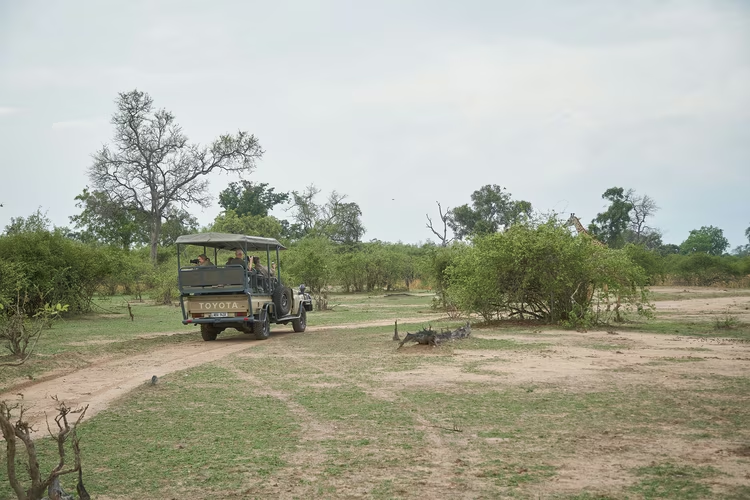
Through these initiatives, Zambia is strengthening its resilience against future climate shocks, providing hope for continued progress. As agriculture recovers, tourism regains momentum.
Tourism & MICE Travel
The sector shows strong post-pandemic momentum. Recent performance highlights include:
- International arrivals doubled from 1.1 million in 2022 to 2.2 million by 2024.
- Over 1.2 million visitors were recorded by mid-2025.
- Visa-free entry now applies to citizens from 167 countries, effective January 2025.
- Online bookings are projected to account for over 60 per cent of tourism revenue by 2030, according to sector forecasts.
- The “Destination Zambia” campaign continues to boost the country’s global visibility.
- The budget allocates K1.5 billion to tourism infrastructure, wildlife conservation, and marketing—alongside K1.1 billion for provincial airport development.
PwC notes, “These steps will secure Zambia’s edge, attract private investment, and unlock new jobs and growth…Zambia is poised to become a leading African destination, offering visitors unforgettable experiences and driving prosperity across the country.”
However, the absence of a dedicated budget for the Meetings, Incentives, Conferences and Exhibitions (MICE) sub-sector may slow progress in this high-value market segment, even as Zambia is beginning to gain traction in tourism overall. Energy continues to underpin this development, providing the foundation for sustained growth.
Energy & Infrastructure
Energy remains the backbone of Zambia’s development. The 2023/24 drought created a power deficit of around 1 GW, resulting in prolonged load shedding that affected households and industries. Key policy measures and reforms include:
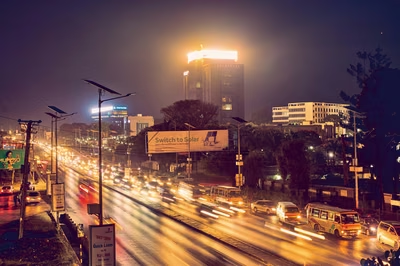
- Duty relief on solar equipment has been maintained to encourage renewable-energy investment.
- A gradual move towards cost-reflective electricity tariffs is underway.
- Renewable-energy projects are being fast-tracked, including solar and hydro initiatives under the national green-energy drive.
- The budget establishes an Electricity Fund, with allocations to be announced.
- The IMF increased Zambia’s programme access in June 2024 by about US$385 million to help address drought and energy-related pressures.
The budget also provides new resources for drought relief and social protection. This strengthens efforts to ensure a stable and sustainable energy future for all Zambians. A reliable energy supply remains crucial, as it underpins progress across all major economic sectors.
Stability & International Support
Zambia’s progress in stabilising its economy, restructuring debt, and attracting investment across diversified sectors is widely acknowledged, despite ongoing challenges. Key issues and risks remain:
- Rising domestic debt-servicing costs remain a concern.
- Social spending, as a share of total expenditure, has declined modestly.
- Persistent infrastructure gaps continue to constrain productivity.
- The risk of external shocks—such as dips in global commodity prices or climate-related disruptions—remains high.
Zambia’s current outlook reflects cautious optimism. With steady fiscal management, diversified growth, and policy consistency, the country is well-positioned to consolidate its gains and advance towards middle-income status. Continued investment in power, education, and climate resilience will determine whether this momentum evolves into lasting prosperity.