From mortgaging his home to leading Zambia's manufacturers, Ashu Sagar's journey with Aquavita water is a masterclass in faith and grit. Discover how this entrepreneur is fighting energy cuts and border delays to build a future where Zambia exports finished goods, not just raw materials.
In the ever-evolving story of Zambia’s private sector, few figures cut as distinct a figure as Ashu Sagar. His journey from a young man raised in a family of educators in Ndola to the co-founder of one of Zambia’s most recognisable beverage brands, and now, as he concludes his term as the president of the Zambia Association of Manufacturers (ZAM), is a portrait of ambition and purpose.
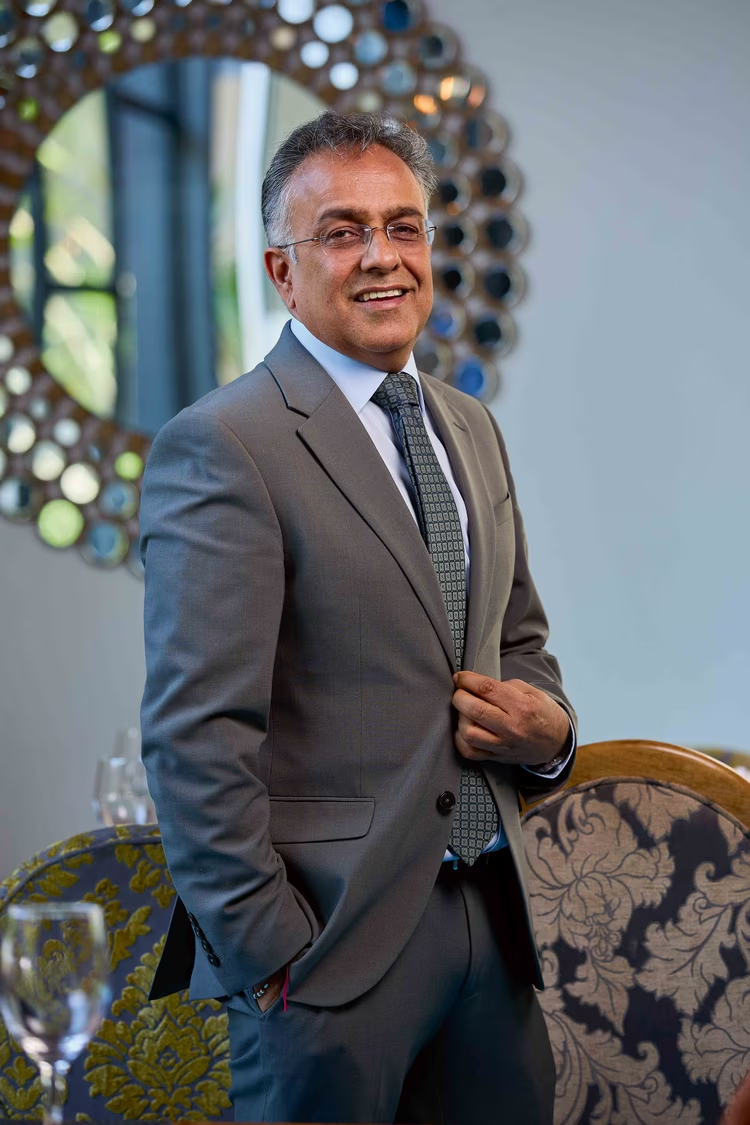
Ashu’s parents were both teachers, a dynamic that shaped both his discipline and curiosity. This foundation created opportunities early on, one of which was a scholarship through United World Colleges. This global education network brings together students from around the world to study and live in a community. For Ashu, this opportunity was life-altering; it instilled a deep desire to contribute to Zambia whilst fostering a global perspective and worldview.
A trained accountant, he was drawn to the structure and predictability of the corporate world, working his first job at just 17 years old. But soon, Ashu grew restless and, after careful thought, decided that he was meant to build something of his own. “You can tell whether you can work under someone for the rest of your life,” he reflected. “There is always a risk factor in business, so you might as well take a risk on yourself.”
That risk would define much of what came next and the man we know today. In 1999, alongside a small team, he co-founded Carribea Beverages, initially focused on fresh fruit juices. The company later shifted its attention to bottled water, a decision that would prove pivotal. The result was Aquavita, now one of Zambia’s leading water brands, quietly embedded in the daily lives of consumers. To fund its expansion, Ashu made a decision that many might consider unthinkable: he mortgaged his home to raise half a million dollars. It was an act of faith, not only in the business but also in his ability to make it work. He smiled as he recalled it, “Sometimes the man upstairs opens a door for you, and you have to walk through it. If you have enough faith, you take the leap.”
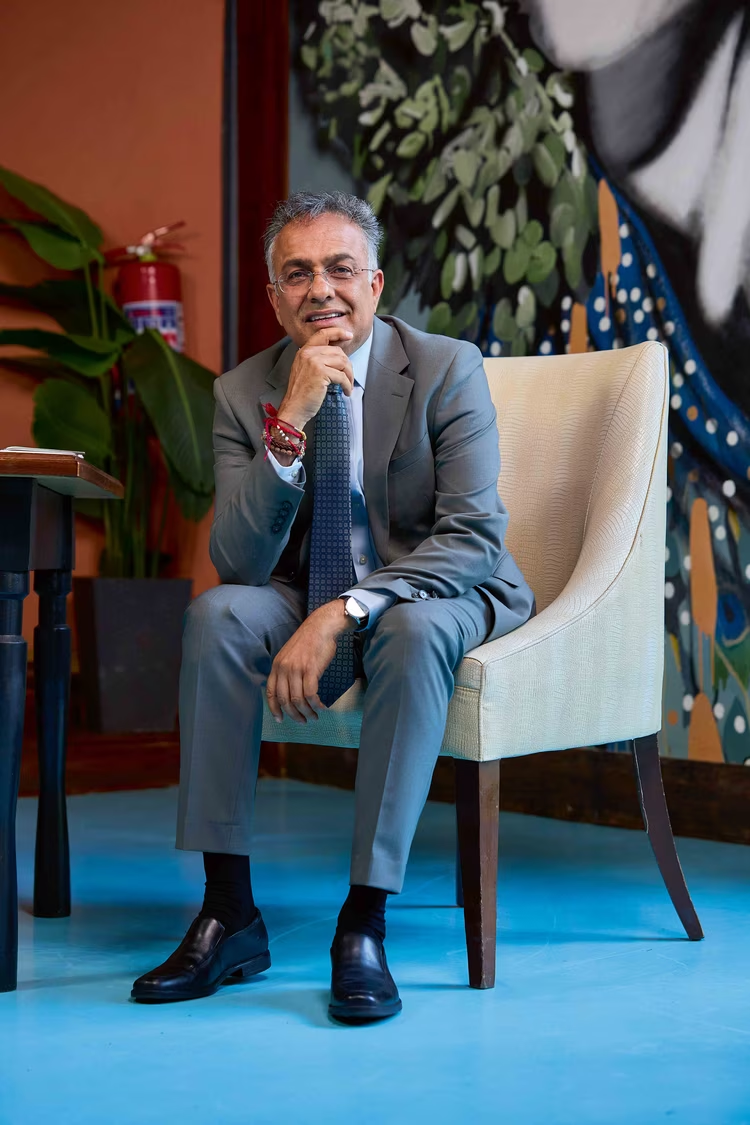
Today, Ashu is an accomplished entrepreneur and a leading voice for Zambia’s manufacturing community. For the past four years, he has served as president of ZAM, the umbrella body representing the country’s industrial manufacturing sector. ZAM advocates for policy reform, facilitates market linkages, and promotes sustainable industrial growth. Under Ashu’s leadership, the association has deepened engagement between industry and governing bodies, ensuring that manufacturers are not merely reacting to economic shifts but helping shape them.
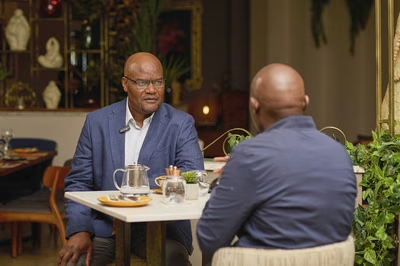
When we met for a light lunch at Flame Restaurant in East Park Mall, alive with energy and Parisian flair, Ashu spoke candidly about the realities of running a manufacturing business in Zambia today. The conversation inevitably turned to energy. “The last two years have been especially challenging,” he admitted. “Our factory used to run 24 hours a day, seven days a week. Now it runs nine hours a day, six days a week.” It is a sobering reminder of the strain that Zambia’s energy challenges have placed on production and competitiveness.
Yet despite these constraints, the sector has shown resilience. In 2024, manufacturing contributed 9.3% to Zambia’s GDP, an increase from an average of 7% over the past three decades. That number represents steady progress, aided by increased investment and more responsive policies. Large-scale projects such as United Capital Fertiliser’s $600 million investment and expansions in agro-processing signal renewed confidence in local production. Still, as Ashu points out, smaller manufacturers continue to struggle under heavy compliance requirements, slow regulatory reform, and limited access to affordable financing. “Sustainable growth in manufacturing should be private sector-led,” he said.
He believes what separates manufacturing from mining, Zambia’s current mainstay, is the potential for transformation. Mining extracts and exports, whilst manufacturing adds value at home. “We’re effectively buying back copper like importers,” he observed, “when we should be adding value right here.” His argument is practical. He believes real growth lies not only in exporting resources but in building industries that process, package, and ship finished goods across the region. With Zambia bordered by eight countries, including a rapidly expanding market in the Democratic Republic of Congo and growing demand in Malawi and Angola, the opportunities are immense.
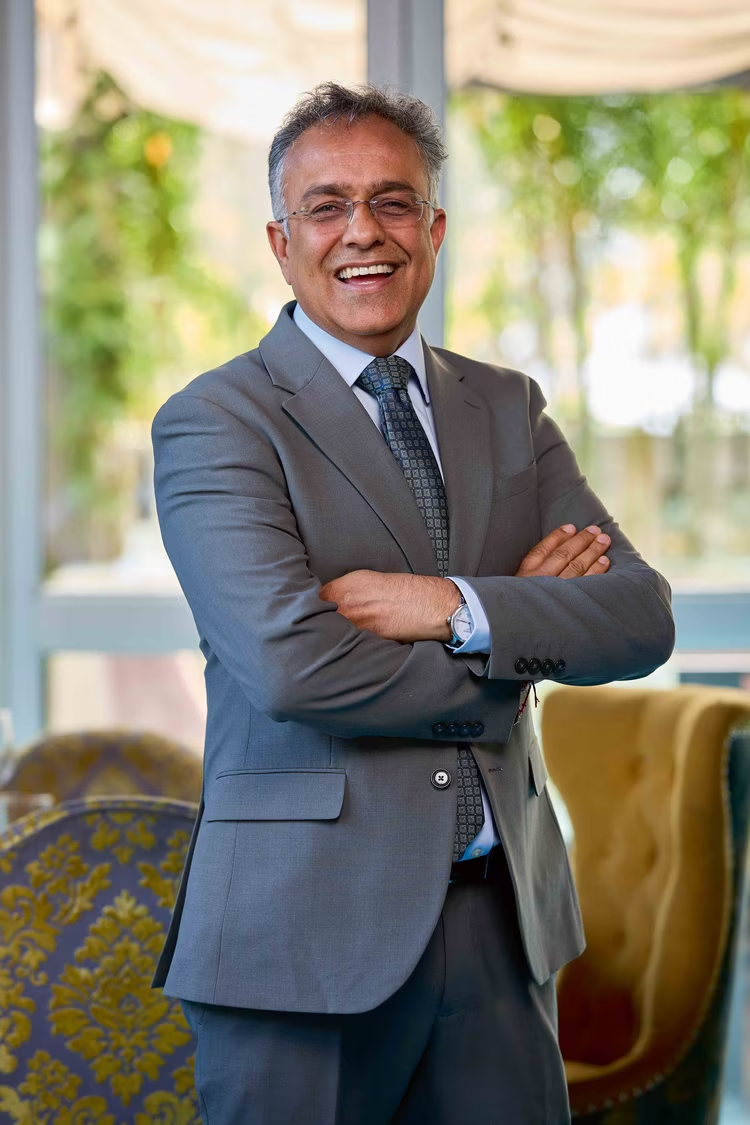
But logistics remain a stubborn obstacle. Ashu advocates for trade zones or one-stop border facilities that could transform the current situation. “It’s not a lack of demand,” he said, “it’s the bottlenecks along the way.” Trade zones are hubs designed to streamline customs, provide proper storage, ensure security, and move goods efficiently. Such zones, already successful in parts of East Africa and being implemented in Zambia, could reduce costs, protect goods, and dramatically expand Zambia’s export footprint.
For all the discussion about policy and trade, Ashu’s greatest pride remains his people. Carribea Beverages now employs 180 staff, many of whom have been with the company for years. “Find the right people who treat the business like their own,” he said. “The best people are not always the most skilled or educated; they’re the ones who can adapt.” His leadership style is grounded in trust and challenge. He believes in giving responsibility early, even if it means letting people make mistakes. “That’s how I learnt,” he added. “You throw someone in the deep end, and they learn to swim.”
Outside of business, Ashu serves on the board of United World Colleges, helping young Zambians access the same opportunities that changed his life. He laughed as he mentioned how some applicants are now using AI to craft their essays. “We are now seeing brilliant kids use AI in their applications,” he said. “For me, independent thinking and logic can’t be outsourced.” When I asked if he used AI himself, he smiled. “Very little. It’s just a tool that you must use to get simple things done. Not to think.”
As our lunch drew to a close, I asked Ashu what the future holds. He paused, thoughtful but sure. “I am not the type to retire,” he said. “I’ve been working since I was 17, so I’ve already had about 10 more years of work experience than my peers. But I also know there’s more to life than work. If I’m remembered, I hope it’s because I positively changed someone’s life. That’s what matters most.”
Ashu left soon after our interview to attend another industry engagement. He is still in motion, still advocating for the sector he believes can redefine Zambia’s economy. Watching him leave, it is clear that his story is not one of chance but of the conviction that builds one enterprise at a time.
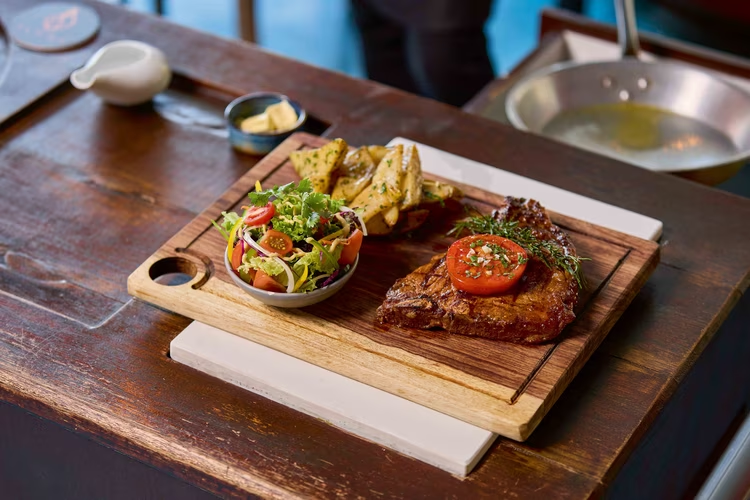
Flame Restaurant
One of Lusaka’s finest contemporary dining venues. Known for its stylish ambience and fusion menu. Flame has become a popular setting for high-level business conversations and networking events in Zambia.