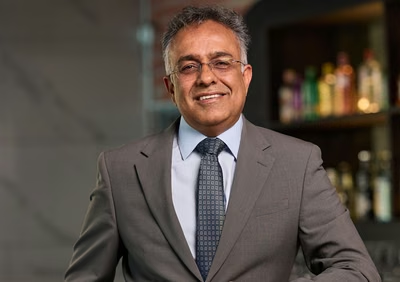
From dismantling household appliances in Lebanon to leading one of Africa's key telecom operators, Abbad Reda’s two-decade journey is a testament to where relentless curiosity can lead.
MTN Zambia’s Abbad Reda doesn’t default to job title, status or achievements when he reminisces over the last two decades of his illustrious career. Instead, he reverts to a core emotion and state: curiosity. Growing up in Lebanon, it was curiosity that drove a young Abbad to dismantle household appliances and then to attempt to fix them, often with little success. “I was fascinated by how things work, and I wanted to know more,” he says, recalling those early experiments that quietly shaped his future. What Abbad didn’t realise was that those moments would spark a lifelong quest to learn, build, and connect.
This early drive to learn set Abbad firmly on the engineering path in the early 1990s and subsequently led to his first job as a Call Centre Support Engineer with MTN Lebanon while he studied. His world rapidly expanded from that single support desk in Beirut to Saudi Arabia, and then to Ghana, Liberia, Afghanistan and finally to Zambia. Across every country and assignment, he carried one belief: technology should serve people in ways that genuinely matter.
His passion for caring for others is reflected in his leadership. He recalls how he felt burdened in his early years by the heavy task of being responsible for the design & operation of systems that people could genuinely rely upon, nearly suffering from insomnia in the process. It was a period that taught him to stay calm, keep searching for solutions, and ask for help when needed. He shared, “No one gets a free ride without challenges, but it is how you react that shapes and defines you.”
Abbad has an uncanny ability to draw parallels between his life and his work. “I have witnessed the evolution of mobile phones from luxury items to essential, everyday tools, and from 2G and EDGE to 3G. This has shown me that change is not only technological but also social. Connectivity has allowed people to reach marketplaces, schools, healthcare, and most importantly, each other,” Abbad says, somewhat philosophically. For him, connectivity has never been about signals and spectrum alone but about widening access to opportunity.
For Abbad, the tale of how Africa’s technology has changed over time has always been a story of what determined and resilient people can do. He recalls how his father once challenged him to swim 100 pool lengths without stopping when he was a young competitive swimmer in Lebanon. Despite his strong remonstrations, a young Abbad completed the challenge, and that moment altered his definition of the word “impossible.” “I thought I couldn’t do it. I was fatigued and almost gave up several times, but my father wouldn’t let me. That day, I realised that I could achieve anything that I put my mind to with the right attitude and motivation.” It is a lesson he still draws on whenever he encounters pressure or uncertainty.
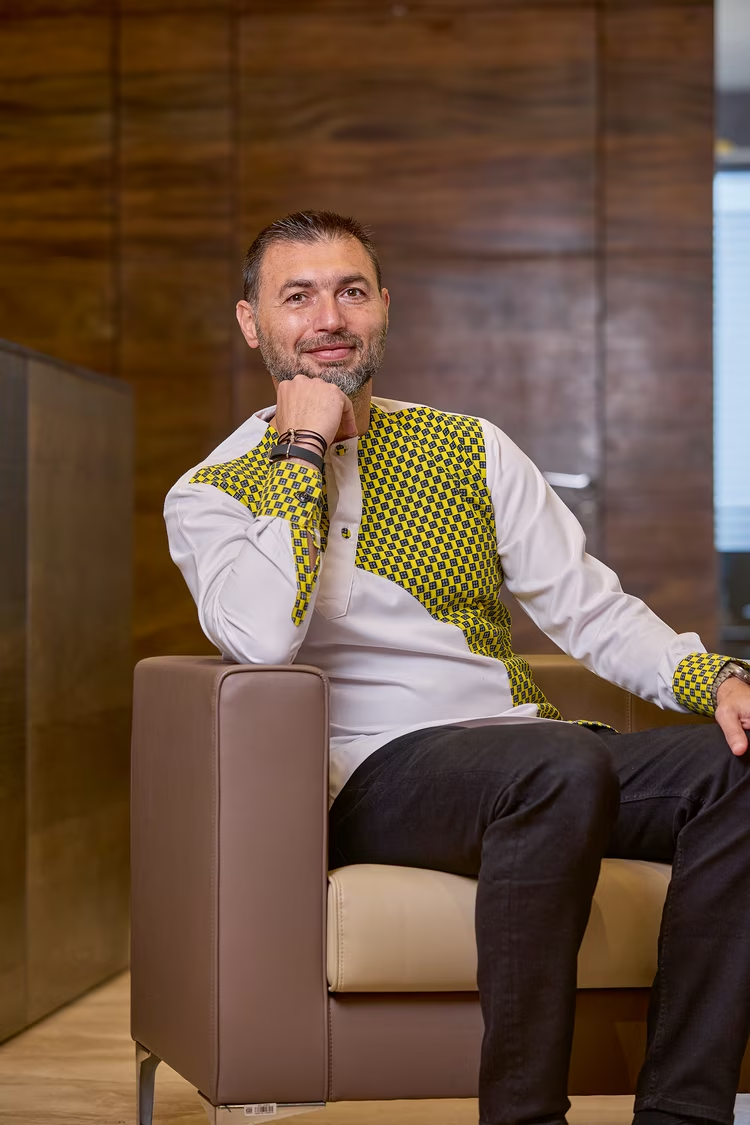
Currently at the helm of MTN Zambia, Abbad has been a part of the MTN Group for more than 23 years. Deftly and humbly avoiding discussion around his growth and ascension in the organisation, he prefers to talk about what his journey has taught him about people, society, and leadership. He believes we all win or lose because of people. It is for this reason that he says, categorically, that “People are the beginning and end of everything.” As CEO, Reda has followed this golden rule: create a strong, motivated staff, build trust, and get everyone on board with a common goal. In a world obsessed with technology, Abbad says it is culture, not code, that really drives progress.
When asked what makes a good leader, Abbad responds swiftly, “Question everything, challenge convention, design in a radical fashion.” He adds, “Think big, set high goals, be honest, be genuinely caring, and inclusive. Place value on systems that put value first.” To him, leadership is equal parts bravery and empathy, and neither can function without the other. He says this is what has kept him endeared to MTN’s “Live Y’ello” way of leading with care, serving with respect, and working together quickly.
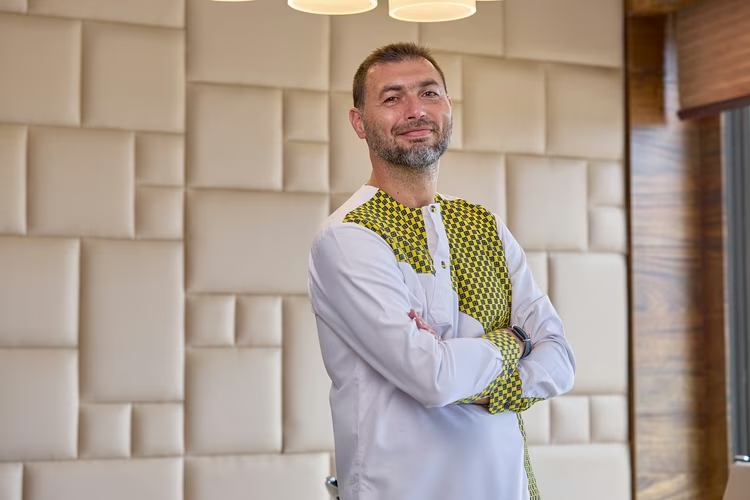
Abbad holds firmly to a human-centred approach to digital change in Africa. For him, the change only makes sense if it betters real lives: a farmer able to sell directly to his customers, a rural child with access to the same information as his urban counterparts, a business that uses mobile money payments to grow. That is when “digital advancement becomes the foundation for social and economic upward mobility, and not merely convenience.” This unique perspective looks beyond towers and megabytes per second, to opportunity and empowerment. He is convinced that AI, FinTech, and cloud computing will only matter if they open doors that were previously closed. “Technology should always have a purpose for people,” he adds.
Abbad believes that to go far, you have to go together. From various mentors, including his first boss on the African continent, Mazen Mroué, he learned the virtues of discipline, vision, courage, and compassion. From them, he observed that being a leader isn’t about knowing it all; it’s about continually improving and helping others along the way. When asked what advice he would give to young professionals just starting out in the tech field, Abbad, drawing from his own experiences, said, “Push yourself, learn more than what’s required in your job description, volunteer for cross-functional work, and be open to pain, which is part of the growth process. Being open to new opportunities is more important for career growth than simply meeting set goals. Always raise your hand, even when you’re not comfortable,” he continued. For him, the courage to volunteer and the willingness to stretch beyond comfort zones define real progress.
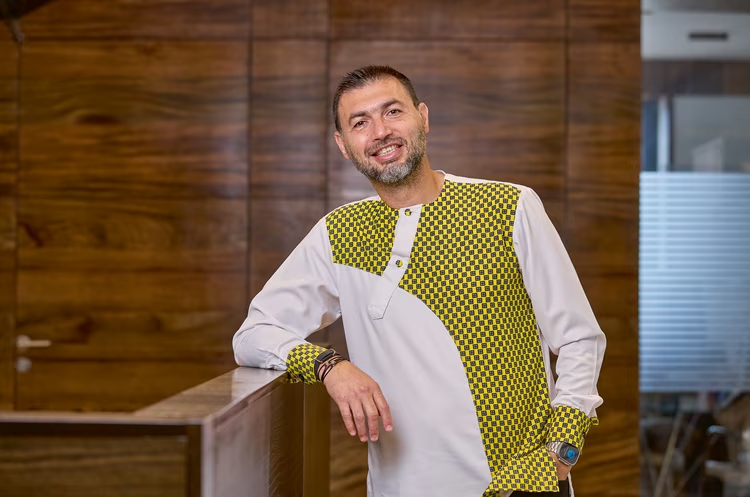
Abbad Reda’s view of the future remains deeply rooted in the same curiosity that guided his career many years ago. The world and the tools may have significantly changed, but at the centre of it all is a leader who still sees technology as a means to connect, uplift, enable, and improve people’s lives.

As he drifts to sleep every night, Abbad dreams about leaving a legacy. Not some big monument, but change. “I want people to remember me for doing good,” he says quietly, “for making a real and lasting difference in communities.” It is a simple ambition, grounded in impact rather than accolades.