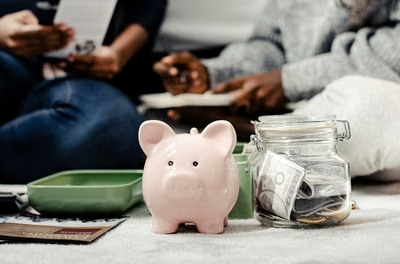
By March, our New Year's resolutions likely get abandoned—not because we lack discipline, but because we lack systems. Most people set goals that look perfect on paper but crumble when life gets messy: when tired, distracted, or just plain bored. The problem isn't the motivation; it's the method. Goals need systems that work when enthusiasm fades.
You know the drill. January 1st arrives, and we are convinced this is the year. Finally, hitting the gym five times a week, saving 20% of our salary, and learning Portuguese. By March, the gym membership is gathering dust, the savings account hasn't grown, and we can't remember how to say 'hello' in Portuguese. The problem isn't our discipline—it's our systems. Here's how to build goals that actually survive 2026.
How to Achieve Your Goals
Most people begin by listing what they want—treating goals like genie wishes. Fewer people ask how those goals will survive everyday life. Planning is where most people fail, so that's where you need to be most deliberate.
A goal that only works when you feel focused, rested, and inspired won't last. The real test is what happens when you are tired, distracted, busy, or bored. Start by choosing a planning method that eliminates decisions when you're tired, distracted, or unmotivated.
One proven method is implementation intentions—deciding ahead of time exactly what you'll do in specific situations. Instead of 'I want to exercise more,' you decide: 'If it's 18:30 on a weekday, I walk for 25 minutes.' If you skip a session, you reschedule it within 48 hours—no negotiation.
This works because the decision is already made. When the moment arrives, you are not negotiating with yourself. You are following a plan you agreed to earlier.

Goal Planning Strategy
Another approach that tends to last longer is systems-first planning. Goals describe outcomes, but systems describe the actions that make outcomes possible.
People often focus on what they want to achieve without asking what needs to happen every week for that achievement to move forward. When goals depend on bursts of effort, they fade. When they rely on routines, they persist. A system might look like three fixed workout sessions in your calendar each week, an automatic transfer on payday combined with a brief weekly review of your finances, or a study block that occurs after dinner on weekdays. These actions are not exciting, but they are repeatable. That repeatability is what carries goals through the year.
Build Routines That Last All Year
Even with good planning, progress tends to stall when goals remain private. Accountability adds a layer of follow-through that planning alone cannot provide. This can be as simple as one accountability partner. Choose someone you trust and set a fixed check-in time. During that check-in, you share what you planned to do, what you actually did, and where things slipped. Then you adjust the plan, not the goal. For some goals, a small accountability group works better. Groups are beneficial for shared goals like fitness, study, or professional growth. The structure matters more than the size. Keep the group small. Meet at the same time consistently. Have everyone report the same type of progress. The expectation of reporting keeps goals active even during slow weeks.
Accountability for Goal Setting
Planning and accountability still do not guarantee consistency if goals stay abstract. This is where habit-building matters. The most reliable way to build habits is to start smaller than feels impressive.
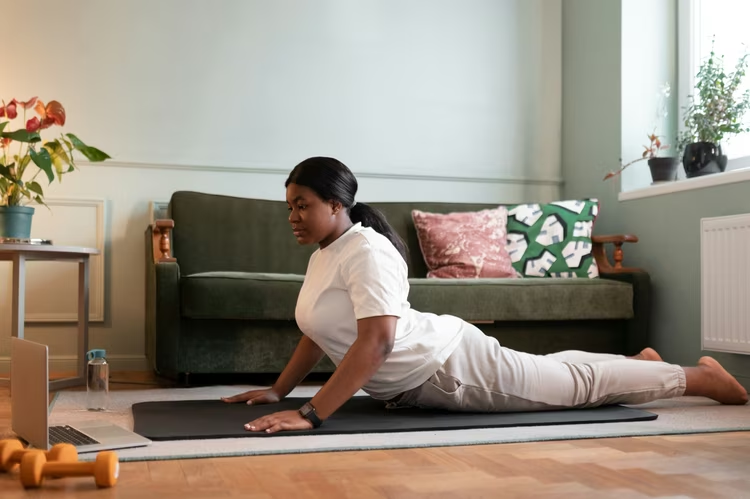
Writing 100 words every day outperforms waiting for a free afternoon to write a thousand. Stretching for two minutes builds more consistency than planning long sessions you keep postponing. Small actions lower resistance and create momentum. Habits also stick better when they attach to routines that already exist. Review your task list after brushing your teeth.
Walking for ten minutes after lunch. Prepare tomorrow’s priorities after shutting down your laptop. These links reduce reliance on memory and allow actions to settle into daily life. Tracking helps here, but it does not need to be elaborate. A marked calendar, a simple checklist, or a basic habit tracker is enough. The goal is visibility. You want to see what you are doing, not guess.
How to Build Daily Habits
Even well-crafted plans slip through the review system because many people do not actually review them. Let me remind you to schedule a weekly or biweekly review, based on your needs. In each review, identify what you accomplished, what you missed, and the reasons for both. Then, evaluate your current system: Was the timing practical? Was the habit too ambitious? Do you need additional accountability? The review should not be done for judgment but for correction. As appropriate, you may match these reviews to your accountability partner or group. Shared review improves honesty and problem-solving. When you are doing it, you’d better stay in that place.
How to Stay on Track Through 2026
Having the power to stop from zero after a lapse is the most common mistake people make. Adjustment is the process that produces progress. If you want to get to your goals for the new year, your 2026 plan should have four ideas: find a planning method that requires clarity, early accountability, build habits that fit into a regular lifestyle, and watch progress regularly every two weeks. This method works because it shows us how people behave and change over time.