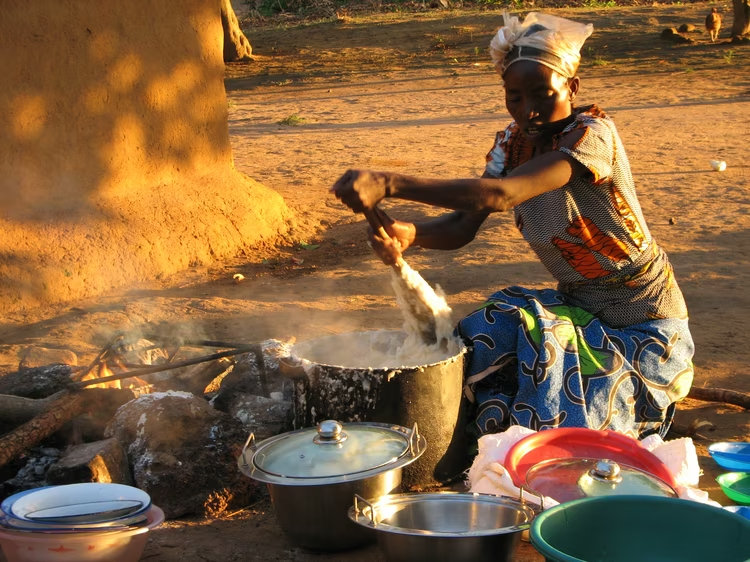
“But me, nshima!”
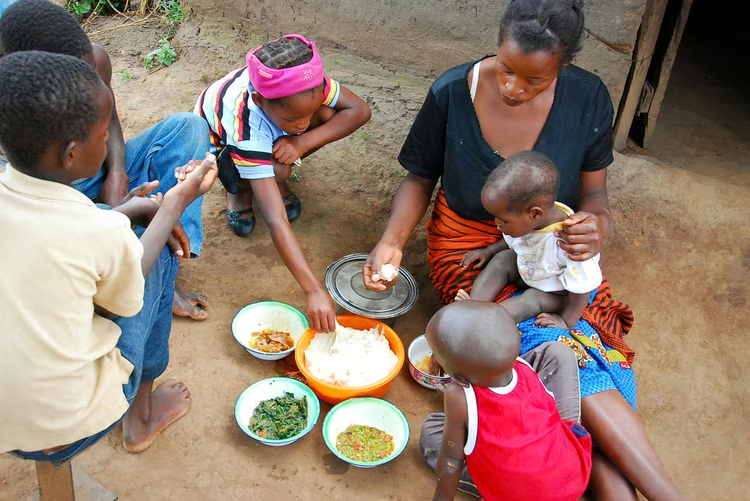
It’s a phrase many Zambians joke about online after a heavy meal. Beneath the humour sits a deeper truth. Nshima is the centre of the plate. Everything else, vegetables, protein, and relish, exists around it. So when a doctor on radio suggested that the type or amount of nshima we eat may be contributing to rising diabetes cases, reactions were immediate. Because once you question nshima, you are not just questioning diet, but culture itself.
And honestly, its relevance is understandable. It is simple, accessible and dependable. For a large part of the country, it is also the most practical way to feel full.
Why Nshima Is Being Linked to Diabetes in Zambia
Yet the concern itself deserves attention. Across Zambia, especially among younger adults, non-communicable diseases are rising. Hypertension, obesity, and type 2 diabetes are appearing sooner than they used to. But it's not a fair statement to place so much blame on nshima itself, but rather to understand its composition well and to see how people are actually consuming it.
How Mealie Meal Processing Affects Blood Sugar
Maize starts whole. When minimally processed, it contains fibre, micronutrients and structure that slows digestion. But the more it is refined, the smoother and whiter it becomes, and the more that structure disappears. We commonly see three types:
- Breakfast meal: Very refined, very smooth, cooks quickly, and digests quickly.
- Roller meal: Less refined, slightly coarse, and contains more fibre.
- Super roller meal: Generally less refined and slightly higher in fibre than breakfast meal and roller meal, depending on the brand and milling process.
The smoother the mealie meal, the faster your body converts it into glucose, which can spike blood sugar. Over time, repeated spikes in blood sugar can contribute to insulin resistance, which is associated with type 2 diabetes.
So the doctor was not wrong.
Frequency and Portion Size
What struck during that radio discussion was how often nshima is eaten. One caller mentioned having it four times a day — breakfast, lunch, dinner and sometimes even as a snack. At that point, the conversation shifts because no food behaves well when eaten that frequently, especially one made up almost entirely of carbohydrates. After such meals, many people feel sleepy and heavy and wonder why. Blood sugar rises quickly, then drops, leaving the body to store excess energy that never gets used. Over months and years, that storage often becomes weight gain, usually around the abdomen. With time, the pancreas works harder to keep up. Eventually, the consequences begin to show.

Should Nshima Be Blamed for Diabetes?
It is important to approach discussions about nshima with context. For many households, it remains an affordable and dependable staple. Recommending alternatives such as sorghum or other grains can be difficult to implement where budgets are limited and access varies.
Preferences also play a role in what people eat. More refined mealie meal is often chosen for its smoother texture and familiarity, even when less refined options are available. In this context, the focus shifts away from elimination and towards adjustment in type, portion and frequency.
How to Eat Nshima in a Healthier Way
First, frequency matters more than prohibition. Not every meal needs to revolve around nshima. Even replacing one nshima meal a day with rice, sweet potatoes or cassava can reduce repeated spikes in blood sugar. Believe it or not, nothing bad happens when you skip it a few times a week.
Second, type matters. Roller meal and super roller tend to release glucose more slowly because they contain more fibre. The difference in taste is real, but over time, your palate adjusts, and your body benefits from the change.
Third, portion matters. Many people eat five large lumps simply because five were served. Yet the body usually signals fullness much earlier. Large portions make it easy to eat beyond what is needed. Learning to stop when comfortably full helps the body regulate blood sugar more effectively. One moderate serving, paired with enough vegetables and protein, satisfies better than several dense portions on their own.

Imagine a single serving of roller meal with a generous portion of vegetables and your preferred protein. Even a sizeable piece of protein, such as grilled chicken, is metabolically easier for the body to manage than excessive refined carbohydrates alone.
Energy consumed is meant to be used, but modern life has removed that expectation.
After eating, a short walk with family, a stroll around the block, or even twenty minutes of movement helps muscles absorb glucose from the bloodstream. The World Health Organisation recommends at least 150 minutes of moderate activity per week. That can sound intimidating until it is broken into manageable daily movements. The goal is not to follow whatever exercise trend is circulating online, but to find a sustainable routine. It might be brisk walking, skipping rope, playing with your children, or tending a garden. What matters most is consistency and choosing movement that fits naturally into your life.
Finding Balance With a Staple Food
Nshima itself is not the sole cause of diabetes. More often, it is the combination of highly refined mealie meal, large portions, frequent consumption and low physical activity that increases risk. Cultural foods rarely harm us on their own. It is how modern lifestyles interact with them that changes their effect.