A young girl learns her worth through comparisons to fairer skin. A boy laughs at jokes about his complexion whilst something tightens in his chest. These aren't dramatic moments—they're everyday occurrences that reveal how deeply colourism has woven itself into Zambian society.
I appreciate Western culture for many reasons. Yet history shows that its early encounters with Africa reshaped more than trade routes or religious practice. When missionaries and colonial officers arrived, they brought new ways of living that felt unfamiliar but strangely exciting at the same time. New systems appeared. Clothing changed. There was suddenly a sense that the world stretched far beyond what most people had been taught to imagine.
Curiosity existed alongside clear power imbalances. That curiosity did not disappear. It gradually settled into everyday life and took on meaning. Over time, lightness of skin became associated with access, opportunity, and advantage. People began to assume that the fairer your skin was, the better you were. Long before anyone could name it, that association had already begun shaping how Africans saw one another. It even made us start looking at our skin differently, wondering what it said about us and why.
THE LANGUAGE WE USE
You can hear that history in the language people use today. Words like "yellowbone" or "ukusamba" are said casually, sometimes playfully, as though they carry no weight. Yet they do. They come loaded with years of steady ranking. A lighter complexion often attracts praise more easily. Compliments come faster, assumptions lean kinder, and no one really pauses to explain why.
Over time, those moments add up. A young girl notices that admiration comes when she is compared to someone fairer, and she learns to see herself through that comparison. A boy grows up sharing jokes about being dark and learns to laugh along, even when something in him tightens his chest. Nothing dramatic happens in those moments, and that is the problem. The damage is subtle enough to stay.
EVERYDAY IMPACT IN ZAMBIA
In Zambia, this plays out in everyday places. On the school playground, children repeat what they have heard at home, often without understanding what they are reinforcing. Later on, in offices and interview rooms, the same bias slips in quietly. Someone is described as looking presentable before their work is even discussed. At a family event or a party, a compliment about complexion passes as harmless conversation.
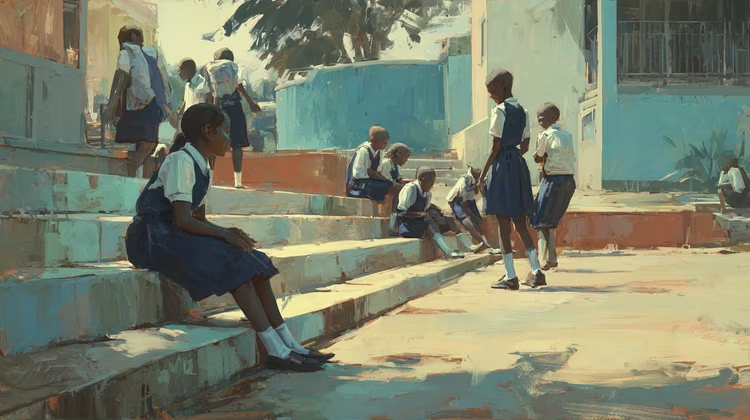
People smile, laugh, and move on, but beneath that ease sits a long memory of who society has been taught to admire. These small moments accumulate. They shape confidence, posture, and how freely people move through the world. The pressure settles most heavily on those whose skin does not sit close to what is preferred.
THE BEAUTY INDUSTRY'S ROLE
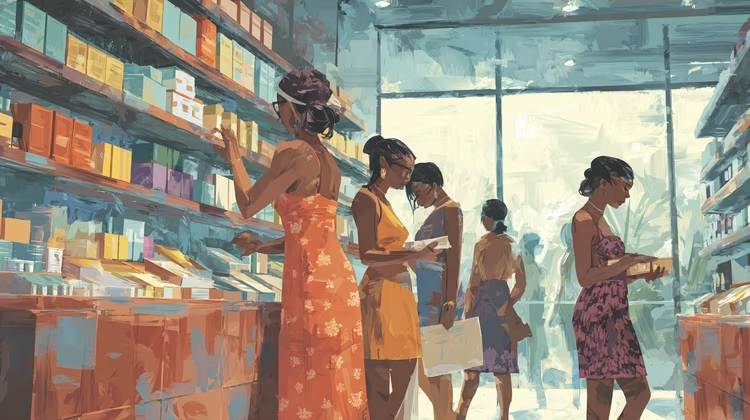
You can see the same thinking reflected in the beauty industry across the continent. Skin-lightening products are easy to find. They are often expensive, carefully packaged, and sold with promises of glow, confidence, or a fresh start. It sounds like ordinary marketing until you look closer.
What is rarely discussed are the chemical burns on the skin, the thinning of skin, and the patches of hyperpigmentation that exacerbate unpredictably. Many of these products contain substances like hydroquinone or potent steroids, known to cause lasting damage. Despite this, demand remains high. The desire for fairer skin often outweighs concerns about long-term harm. This is not about vanity. It is about decades of conditioning that taught people indirectly and consistently that lighter skin moves more easily through social and professional spaces.
When certain shades are valued above others, skin stops being neutral. It becomes a form of currency. Beauty narrows. Representation follows. Advertising reflects the same preferences. Families comment on newborns in ways that seem affectionate but quietly carry old hierarchies forward. If nothing interrupts that pattern, it passes smoothly from one generation to the next, almost unnoticed.
A SHIFT IS BEGINNING
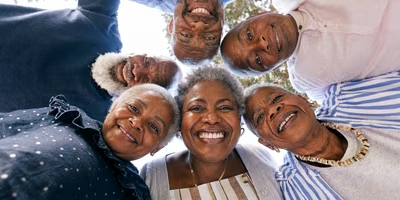
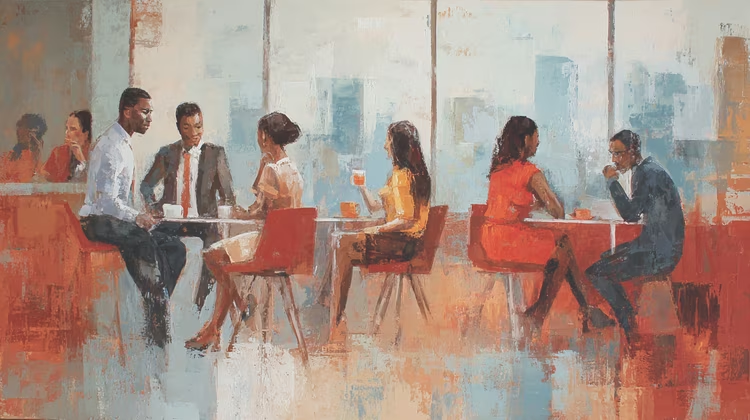
Still, change is beginning to show. You can see it in photography that refuses to whitewash deep tones. You see it on the runway. You see it in local brands choosing faces that look like the people around them. Online spaces are slowly reclaiming features that were once dismissed or softened for approval. Makeup ranges are expanding, not dramatically, but enough to signal a shift.
Progress is uneven and gradual, which is natural when beliefs are learnt early. The most meaningful change will not come from campaigns or billboards alone. It will emerge from homes, from the way adults speak about beauty, and from what children are taught to admire before they ever learn to rank themselves.
This shift requires conscious effort from all of us—parents, educators, media creators, and brands. By celebrating the full spectrum of African beauty and questioning the biases we've inherited, we can create spaces where every shade is seen, valued, and celebrated equally. The conversation has started, and it's one worth continuing until colourism becomes a chapter in history rather than a daily reality.