Most teenagers worry about exams and weekend plans. Lydia Mabuya is building a machine to save lives. At just nineteen, this Lusaka-based innovator is designing the CrowBot—a robot meant to enter dangerous underground mines before human workers risk their lives.
Lusaka moves with a particular kind of energy—organised chaos, some might call it. From the hustle of the CBD to artists transforming ordinary walls into breathtaking murals, the city pulses with creative ambition. And within all that motion is nineteen-year-old Lydia Mabuya, building a machine designed to protect underground mine workers.
Her journey began with a fear a friend shared after getting employed in an underground mine, a fear that lodged itself in Lydia’s mind and pushed her to imagine a safer way for people to earn their living. Something about her is deeply inspiring—a raw and honest story that is still unfolding.
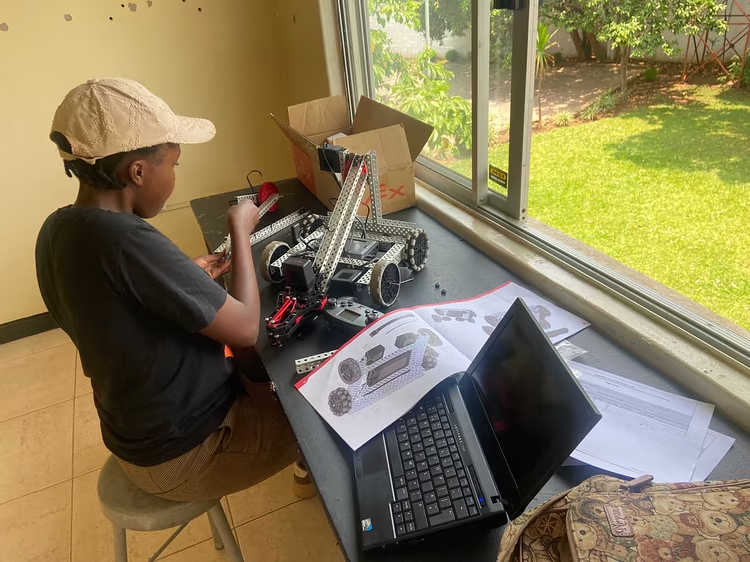
She grew up reaching for science and asking questions typical of a future innovator, shaped by a childhood filled with curiosity that kept pulling her toward creation. She was drawn to STEM from an early age. She joined the Junior Engineers, Technicians, and Scientists (JETS) Club in high school, always seeking practical solutions that the traditional education system could not provide. She remembers the high school projects and how they made her feel alive, and something powerful about bringing to life something that had once been just a mere idea.
The 19-Year-Old Building Mining Safety Robots in Zambia
After high school, she tried to envision her future in science. For a moment, computer science seemed like the answer. It didn’t take long to realise that theory on its own could never hold her attention. She needed movement, wires, tools—something tangible she could hold in her hands.
Robotics felt like the answer, although the path wasn’t as straightforward as she once imagined. Initially, studying abroad was her dream, but the finances didn't align. So she did what determined young innovators do: she found another way. She found what she could access, which led her to pursue a diploma in robotic engineering at Cavendish University. It wasn't the shiny international lab she'd once pictured, but it was enough to start. And sometimes, starting is the most important part.
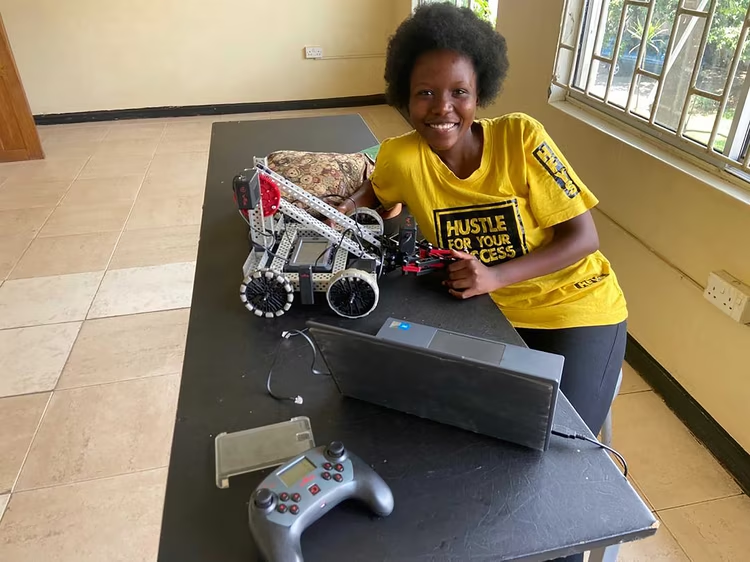
From Computer Science Dreams to Robotics Reality
In her program, Lydia built gadgets and saw the impact her innovations could make. When her friend described underground mining risks, Lydia saw an opportunity for change. She questioned why humans faced danger first and channelled that question into the blueprint for a new solution.
That idea became the first blueprint of the CrowBot.
Today, she speaks about her work with a kind of calm reassurance, almost as if she has already lived the next version of her story. Her vision for the next year is clear and steady.
She wants to strengthen the robot with the right materials, the right sensors, and the right partnerships so it can handle the reality of underground environments. She wants to work with people who see the value in protecting miners—people who understand that technology built here can be just as powerful as anything made abroad.
She also sees herself forming meaningful collaborations both locally and internationally, especially with organisations that understand the role robotics can play in safe mining. She hopes these partnerships will help her refine her machine, expand her knowledge, and build a version of the robot that can be tested in real mining conditions.
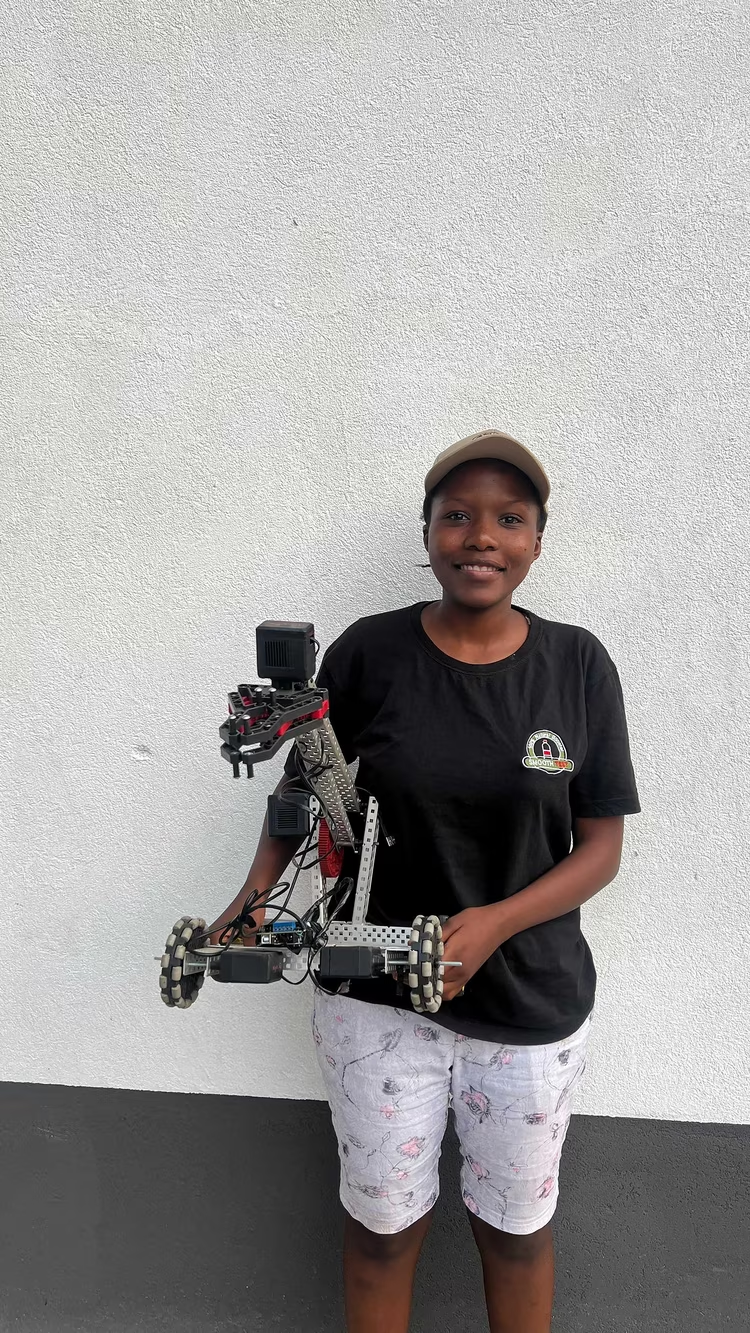
Lydia aims to guide young innovators, creating spaces for others to learn, present, and gain confidence. She wants Zambians to see the value in their ideas and feel empowered to address real challenges. Through her own example, she hopes to inspire others to present their innovations with pride and confidence.
Her story stands as a reminder that innovation is not reserved for certain countries or certain people. It can grow anywhere—even in small classrooms in Lusaka, even in the hands of a nineteen-year-old who refused to wait for permission.