As 2025 draws to a close, it's tempting to dwell on what went wrong. But look closer, and Zambia reveals itself as a nation rich in everyday miracles. This list of 25 gratitudes celebrates the food, festivals, people, and places that make Zambia extraordinary. More than nostalgia, it's a reminder that home is built from small wonders we too often take for granted.
Why Gratitude Matters in a Difficult Year
As each year draws to a close, there's a familiar temptation to dwell on everything that went wrong — to take stock of the damage 2025 dealt us and complain poetically about our battle scars. Yet in doing so, we often overlook the things that surround us every day, so constant that they fade into the background. This list of 25 things Zambians are grateful for in 2025 is a reminder of just how special this nation truly is.
1. Mangoes and Seasonal Fruits
Our country is host to a range of seasonal fruits so divine that it's easy to think of the year less in terms of seasons and more in terms of which fruit you'll be lucky enough to welcome into your cupboards. From the sweeter-than-honey masuku to the tart, versatile impundu, each has its moment. Yet all these wonders are merely opening acts to what late November has in store.
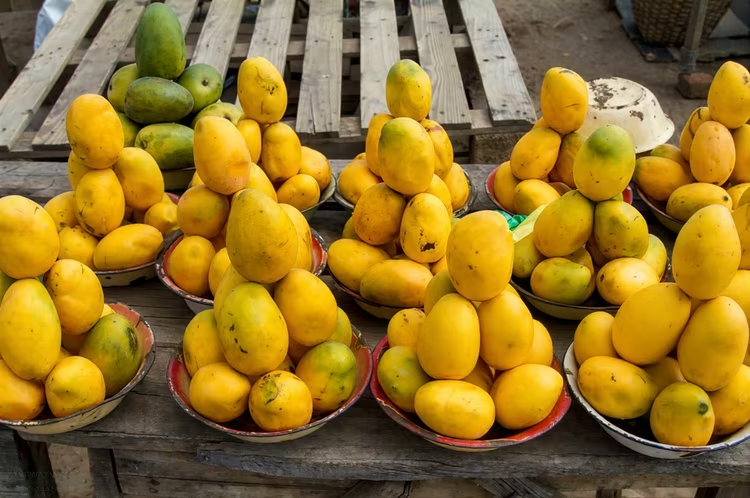
Mangoes - the Beyoncé of fruits. Blends of bright yellow, orange and red at their ripest, green yet still sensual and tempting in the wait. Mangoes are the reason that, as our days grow wetter and our shoes soggier, we greet December with a smile (even if there are mango fibres caught in our teeth).
2. Natural Wonders: Mosi-oa-Tunya and Beyond
Mosi-oa-Tunya, in all its thundering majesty, carries the rare distinction of being one of the Seven Wonders of the World — and one of our own. People take flights, save for years, and spend tens of thousands to witness something that exists on land we are lucky enough to be born on. David Livingstone himself described it as "a scene so lovely [it] must have been gazed upon by angels in their flight."
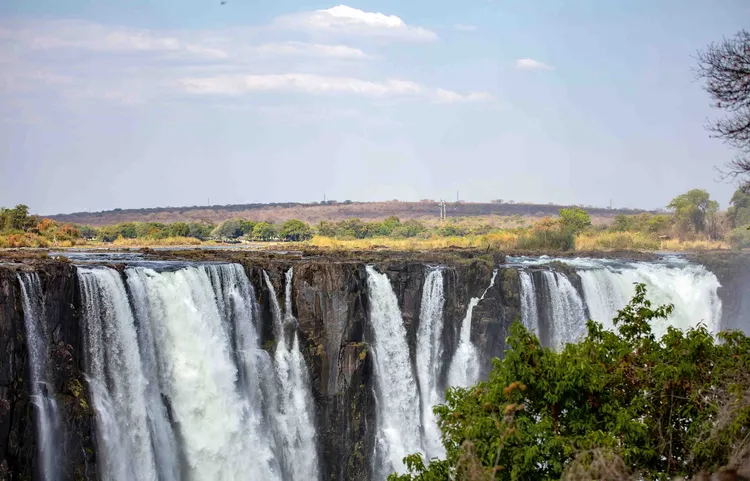
And Victoria Falls is not all. Beyond the beauty we share with our Zimbabwean cousins, Zambia holds an abundance of wonders entirely its own. From South Luangwa National Park — one of Africa's greatest wildlife sanctuaries, so untouched and rich in hippos, leopards, and more that it feels like our own Garden of Eden — to the deep plunge of Kundalila Falls, with the greenery, doves, and ripples that surround it.
3. 73 Tribes
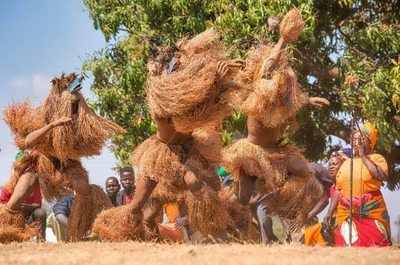
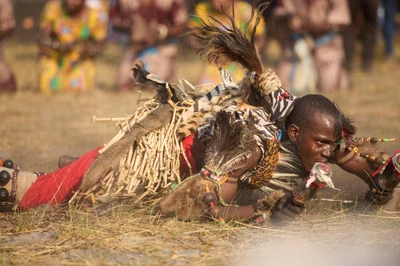
From Muli shani to muli bwanji. Yeela. Mwapona. And every other way there is to say hello. Seventy-two tribes, each carrying its own language, rhythms, stories, and ways of seeing the world. From the songs sung at birth to the ceremonies that mark our passing, our differences layer us more than they divide. Stitching 73 unique fabrics into one beautiful green patchwork. In the way food is prepared, in how elders are greeted, in the patterns woven into cloth and dance. One Zambia, one nation, etched into our coins and coat of arms, our flag, Zambia reveals itself again and again. To belong to this nation is to inherit many histories at once, to be shaped by a richness so vast it becomes ordinary — until we pause to remember just how rare it is.
4. Local Markets and Vendors
They wake up to darkness, greeted by the crow of roosters, and whilst we are still sunk into our pillows, they are arranging tomatoes into bright, colourful pyramids and weighing out groundnuts by hand. They become a stop that nourishes both our pantries and ourselves — through teasing, laughter, negotiation, and even the occasional argument. Rain or heat, good days and slow ones, they show up all the same, anchored to their stalls by necessity and pride. Their work is physical, repetitive, and often invisible, yet it shapes how our days begin and how our meals come together.
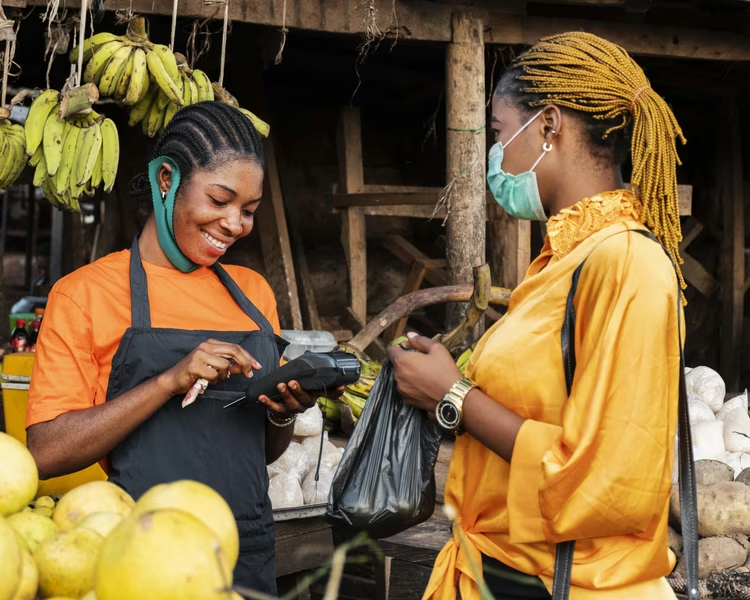
Being a marketeer in Zambia is a largely thankless job, one that requires patience, risk, and stamina. They carry the uncertainty of spoiled goods, shifting prices, and long hours with quiet resilience. Here's to the people who keep our nation affordable and moving. And here's to remembering to help them keep themselves going, too.
5. Chicken, Rice and Fanta
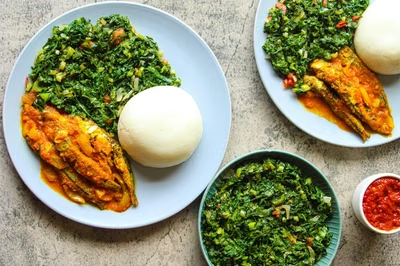
Whether it's Christmas or Easter, Sunday lunch or graduation, or you're simply hungry and in need of something tasty and filling, you can count on it. Chicken, crisp and fragrant, seasoned to perfection. Rice so warm it rises in soft steam. And a bottle of ice-cold Fanta (especially yamu chi glass bottle), sweating in your hand as you wash it all down.
This is the meal that shows up for us again and again. Served at roadside stalls and family gatherings, in foil plates and plastic containers, eaten standing, seated, or on the move. It appears at birthdays and funerals, after long journeys and at the end of ordinary days. It feeds crowds and comforts individuals, stretching to meet whatever the moment asks of it. No one questions its presence; it is expected, welcomed, and understood. Humble in its making, generous enough for any table.
6. The Hybrid Chicken
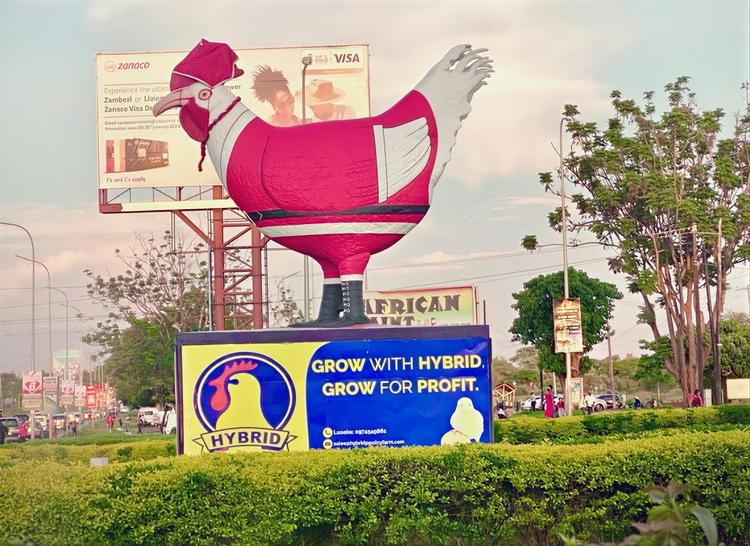
We've changed presidents and load-shedding schedules. Endured droughts and floods. Worried about the progression of our personal lives, our economy, and our country. And through it all, the hybrid chicken has been there for us - standing like a beady-eyed beacon over the roundabout, guiding us home.
Through his frequent career changes, we learn both to aspire to greatness and to remember that it's never too late to try something new. Regardless of what you've lost this year, take firm refuge in the fact that the three metres of fashion icon we call Nkuku will always be there for us.
7. The Afronauts
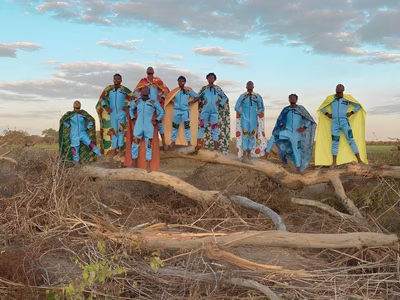
Long before space became sleek, commercial, and branded, Zambia looked to the sky with imagination and nerve. In the 1960s, on the outskirts of Lusaka, the Zambian Afronauts trained — not with billion-dollar budgets, but with conviction, curiosity, and a refusal to believe that the future belonged to anyone else. Rolling in oil drums, staring down the sun, rehearsing gravity the only way they could, they dreamed boldly and unapologetically.
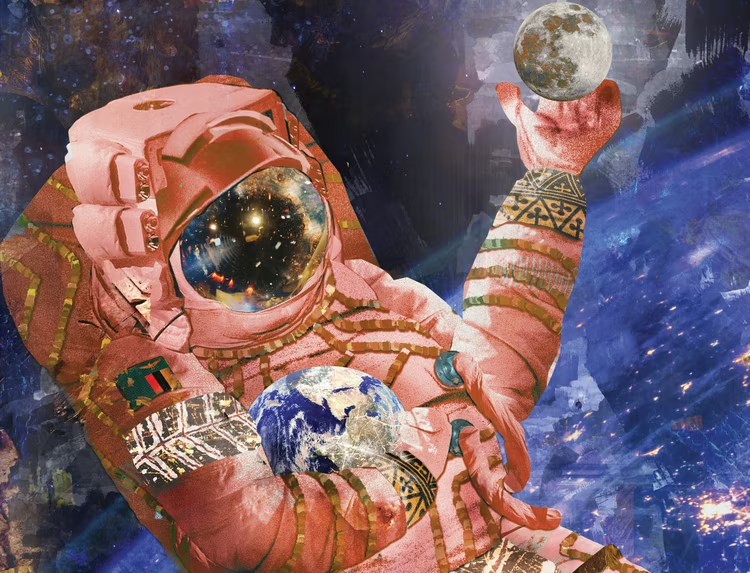
The Afronauts were never really about reaching the moon. They were about reaching for the right to imagine wildly, to claim ambition without permission. In a country newly learning its own name, they reminded us that progress is not always tidy or realistic, but it is always brave. And even now, decades later, they stand as proof that Zambians have never been short on vision — only early.
8. Thrifting and Salaula Culture
What was once spoken about with a quiet shame has become a celebration of style and ingenuity. Salaula is a story woven from journeys across oceans, arriving tightly baled and spilling out in markets from Kamwala to City Market, from roadside stalls to curated Instagram boutiques. You rummage, you discover, and you choose—jackets that once brushed shoulders in distant cities become statements under Lusaka's sun, denim finds fresh life beside chitenge wraps, and vintage tees find new owners whose steps will tread new memories. Thrifting in Zambia is delight and negotiation, laughter and patience, and sometimes a bargain won right before someone else's eyes.
9. Rains, Summer and the Seasons In Between
From the late-year rains that turn the city the colour of an emerald gem, to the scorching sun that brings with it afternoons stretched out in the company of friends - a glass bottle of crisp Coke beside you, itself sweating in the heat.
When the rain falls for the first time, and the earth releases its scent, when the cold retreats and we are met with the relief of the sun. Every fruit it ushers in, every wardrobe change it demands. Our unique seasons are a part of Zambia, and so a part of us — and it is an honour to bear witness.
10. Wildlife
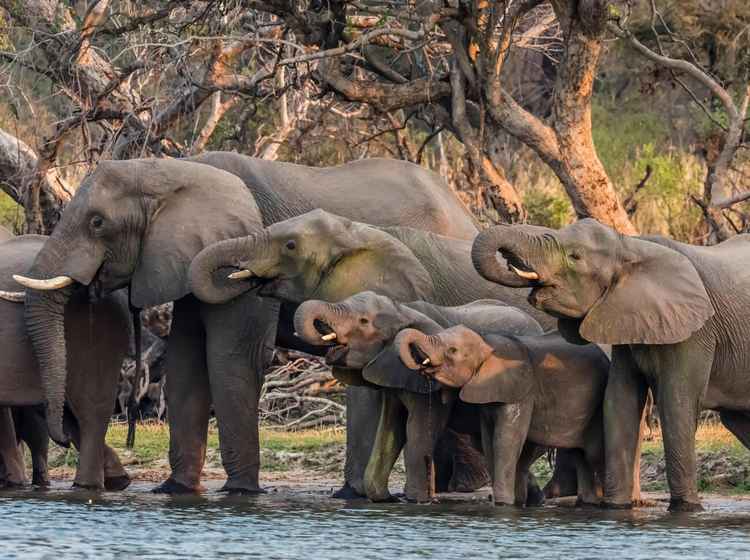
Zambia is home to some of Africa's most magnificent wildlife. Elephants walk freely through national parks that stretch wider than some countries. Lions rest beneath mopane trees. Hippos surface in the Luangwa River at dusk, and leopards prowl under the cover of night. We share this land with creatures that existed long before borders were drawn, and their presence reminds us that we are guests here, not owners. To witness a herd of buffalo crossing your path or to hear the distant roar of a lion is to feel small in the best way possible—connected to something ancient, wild, and irreplaceable.
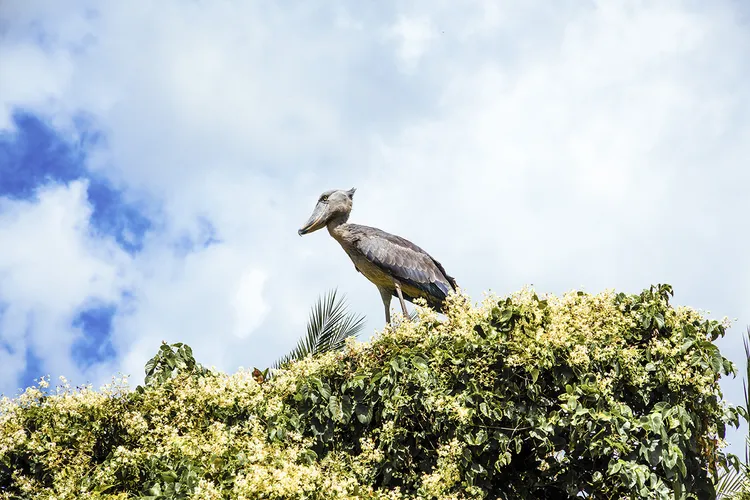
11. The Shoebill
There's something almost mythical about the shoebill stork. Standing nearly as tall as a person, with a gaze that can only be described as ancient and unbothered, this bird feels like it wandered out of prehistory and decided to stay. Found in Zambia's wetlands, particularly around Bangweulu Swamps, the shoebill moves slowly, hunts patiently, and has become an unlikely symbol of the country's unique biodiversity. Birdwatchers travel from across the globe just to catch a glimpse. We're lucky enough to call it a neighbour.
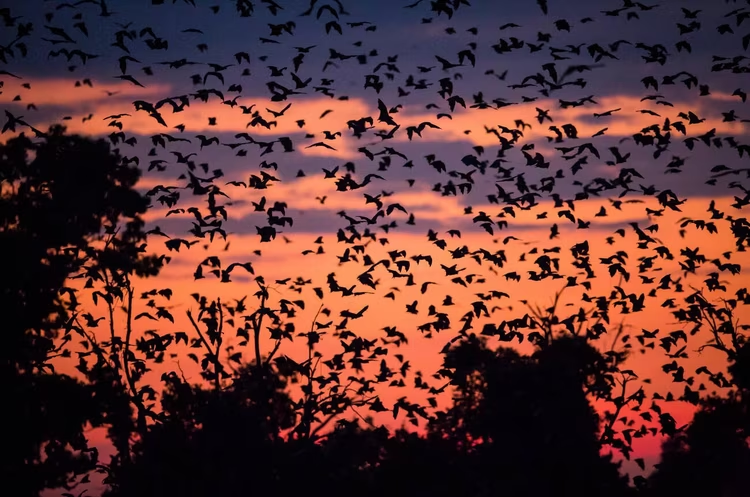
12. Bat Migration
Every year, millions of fruit bats descend on Kasanka National Park in one of the world's greatest wildlife migrations. Between October and December, the sky darkens as they emerge at dusk, a living cloud that moves as one. It's eerie, beautiful, and humbling all at once. The migration draws visitors from around the world, but for Zambians, it's a seasonal reminder that nature follows rhythms far older than we are—and that we're privileged to witness them.
13. Peace
Zambia has never fought a civil war. In a region marked by conflict and upheaval, this nation has remained largely peaceful since its independence. That peace is not passive—it's a daily choice, woven into how people speak to one another, how disagreements are handled, how communities coexist. It's in the way strangers greet each other on the street, in the patience shown even when systems fail. Peace is not the absence of struggle; it's the presence of restraint, respect, and shared humanity. And it is something to be fiercely grateful for.
14. Ubuntu
Ubuntu—the belief that a person is a person through other people—is more than a word. It's the neighbour who helps carry your groceries without being asked. The way funerals become community gatherings, not just family affairs. The unspoken understanding that when one of us suffers, we all feel it. Ubuntu is what makes Zambia feel less like a nation of strangers and more like an extended family. It's not always perfect, but it's real, and it shapes how we move through the world.
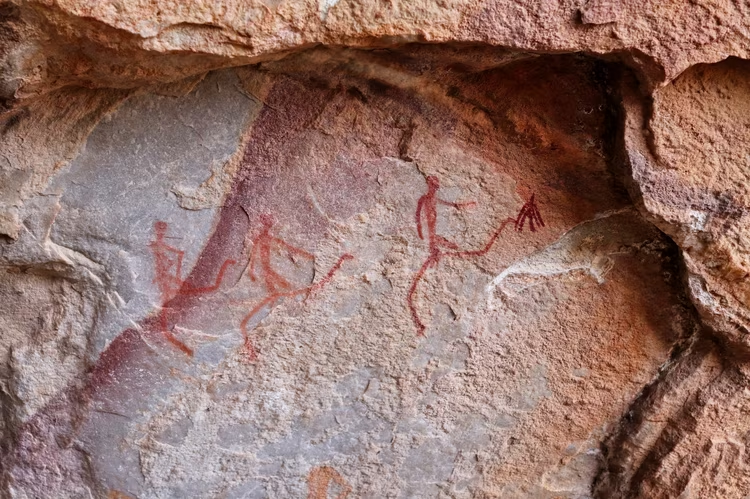
15. Rock Paintings
Long before written history, people lived on this land and left behind their stories. Zambia is home to ancient rock paintings, some dating back thousands of years, found in places like Kasama and Mpika. These images of animals, people, and rituals are windows into lives that were lived with care, creativity, and meaning. They remind us that this land has always been home to those who saw beauty and felt the need to preserve it. We are not the first to love this place. We are simply the latest.
16. Yo Maps and Zambian Music
Zambian music has always had soul, but in recent years, it's found a voice that's undeniably its own. Yo Maps, with his heartfelt lyrics and smooth melodies, has become a soundtrack to love, loss, and everything in between. But he's not alone. From Macky 2 to Mampi, Chef 187 to Sampa The Great, Zambian artists are creating music that moves bodies and touches hearts. These songs play at weddings, in minibuses, at braais, and late into the night. They tell our stories in our own voices, and that's something worth celebrating.

17. Zambian Films
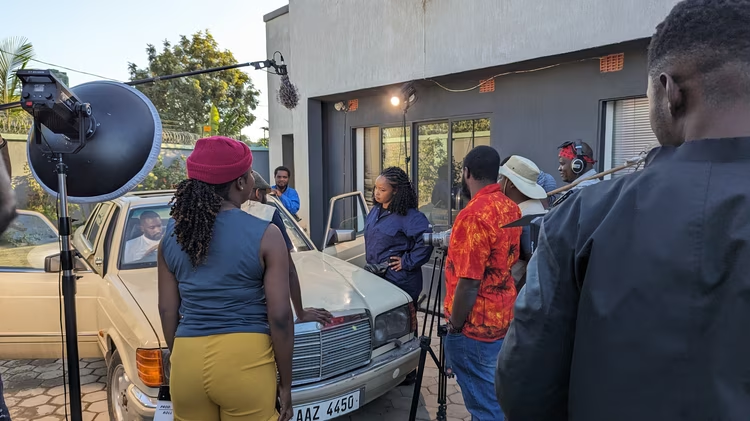
For too long, African stories were told by outsiders. But Zambian filmmakers are changing that. From "I Am Not a Witch," which earned international acclaim, to local productions that capture the humour, drama, and reality of everyday life, Zambian cinema is growing. These films don't shy away from complexity. They show us as we are—flawed, funny, resilient, and deeply human. To see yourself reflected on screen, to hear your language spoken with authenticity, is powerful. And it's only the beginning.
18. Lake Tanganyika
Lake Tanganyika is not just a body of water—it's a lifeline. One of the oldest and deepest lakes in the world, it stretches along Zambia's northern border, providing fish, livelihoods, and a sense of place for countless communities. Its waters are clear and cool, home to species found nowhere else on earth. For those who live along its shores, the lake is family. For visitors, it's a reminder that Zambia's natural wealth extends far beyond what can be seen from a car window.
19. Zambian Creativity
Zambians are problem-solvers. When the power goes out, someone finds a way to charge phones using a car battery. When imports are expensive, designers create fashion from salaula. When resources are scarce, musicians record hits in makeshift home studios. This creativity isn't always celebrated or funded, but it's everywhere—in the markets, in the music, in the art that fills street corners and social media feeds. It's proof that brilliance doesn't wait for permission or perfect conditions. It simply finds a way.
20. Alick Phiri
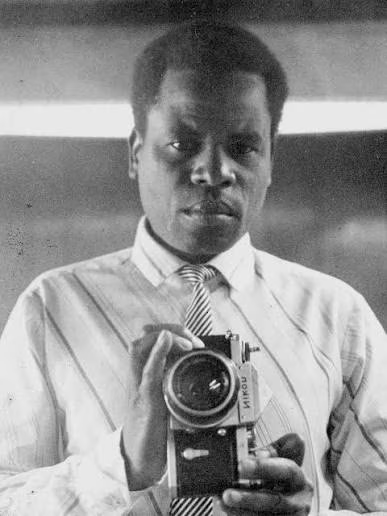
Alick Phiri's name belongs among Zambian pioneers. As one of the few surviving Black Zambian photographers who received professional training, he practised his craft from the 1960s through the 1990s in Lusaka—a time when photography was barely accessible to most Zambians. With his camera, Phiri documented ordinary life with extraordinary care: families gathered outside their homes, people in the streets, moments that might have otherwise been forgotten. His work is more than a collection of images—it's a visual archive of Zambian life during a formative period in the nation's history. Phiri didn't just take photographs; he preserved dignity, memory, and identity at a time when few had the means or opportunity to do so. His legacy reminds us that storytelling comes in many forms, and that those who document our lives give us the gift of seeing ourselves clearly.
21. Farmers
Before the mangoes reach the market, before the chicken is grilled, before the rice is cooked, there are farmers. Working under the sun, tending to crops, raising livestock, and hoping for rain. Farming in Zambia is not romantic—it's hard, uncertain, and often underpaid. Yet farmers keep going, because they know their work feeds families, sustains communities, and keeps the nation moving. They deserve more recognition, more support, and far more gratitude than they receive.
22. Natural Resources: Copper, Cobalt, and Beyond
Zambia sits on wealth that has shaped its history and economy for decades. Copper, cobalt, and other minerals have drawn investment, created jobs, and fuelled industries. But beyond extraction, these resources represent potential—potential for growth, for innovation, for a future where natural wealth benefits the people who live above it. Gratitude here is mixed with hope: that what lies beneath the earth will one day fully serve those who walk upon it.
23. Good Life and Good Health
In a year marked by uncertainty, health has never felt more precious. To wake up without pain, to move freely, to share a meal with loved ones—these are not small things. Zambia's healthcare system faces challenges, but communities find ways to care for one another. Traditional healers work alongside modern medicine. Neighbours check in. Families gather. Good health is a gift, and a good life is often built from simple, repeated moments of care.
24. Guinness World Record Holders
Zambians have claimed their place in the record books, and it's a source of quiet pride. Whether it's an unofficial grilling marathon, the most people opening bottles simultaneously, or other feats of endurance and creativity, these achievements show that Zambians don't just participate—they excel. Records are more than stunts; they're declarations that we belong on the global stage, that we can compete, and that we're capable of extraordinary things.

25. Youths
Zambia is a young country, and its youth are not waiting for permission to lead. They're starting businesses, making music, creating content, organising movements, and demanding better. They're irreverent, ambitious, and unafraid to challenge what's always been done. Some of them will stumble. Some will succeed spectacularly. But all of them are shaping what Zambia will become. And for that energy, that refusal to accept limits, we should be grateful. The future is already here—it's just louder and more determined than we expected.
Carrying Gratitude Forward
As 2025 winds down, it's easy to focus on what we've lost, what didn't go as planned, or the challenges that tested our patience. Yet, if we pause and look around, we see resilience, joy, and beauty stitched into the everyday—in our markets, our meals, our music, our seasons, and in the people who make this nation pulse with life. These 25 reminders are proof that Zambia is alive, vibrant, and endlessly remarkable. And as we step into a new year, we carry that gratitude with us—a quiet, steadfast celebration of home.