The Origins of Lubuto Library Partners
During her time in Zambia, Jane Kinney Meyers observed the devastating impact of the HIV/Aids epidemic firsthand. The toll on the youth orphaned by the disease was arguably the hardest reality to cope with and led to an increased number of street children and disadvantaged youth that neither the Zambian education system nor society could cope with.
How Lubuto Libraries Support the Youth in Zambia
Her solution was Lubuto Library Partners, A chain of public libraries established in Zambia with a focus on providing equal access to print and digital resources for vulnerable youth, especially those out of school.

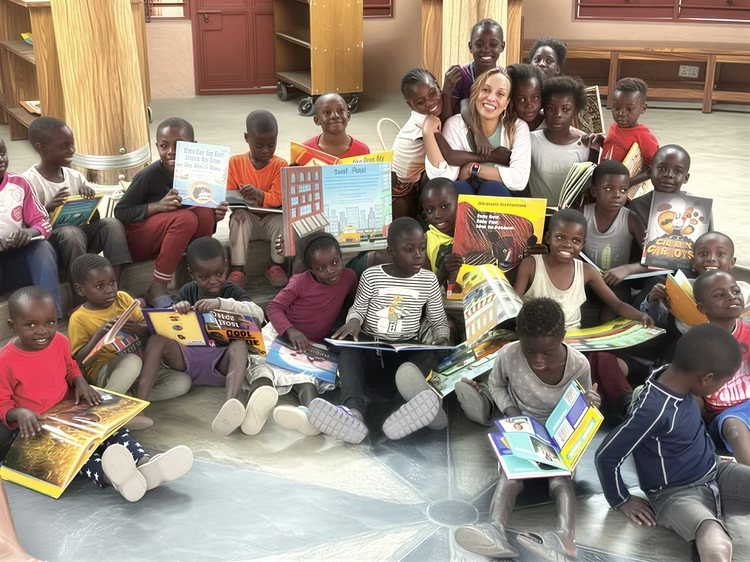
Twenty-one years later, Lubuto has five libraries spread across the country, with plans to expand into Malawi. More than 250,000 young people have been impacted by its services, with over 2.3 million recorded visits, an average of 6,000 visits per week. Through the Lubuto Library network, young people have been exposed to technology, literacy, drama and the visual arts, giving children who would otherwise have access to very little a safe and formative space.
The name “Lubuto” for the libraries stems from a Bemba word for “light” or “enlightenment”. Browsing through the network, one sees galleries of children smiling as they read, explore laptops, participate in mentorship programmes and engage in creative play. Inclusivity is a key aspect, with sign language story times, family literacy programs for young mothers, and books in braille for visually impaired readers.
Preserving Zambian Literature Through the Zambian Heritage Library
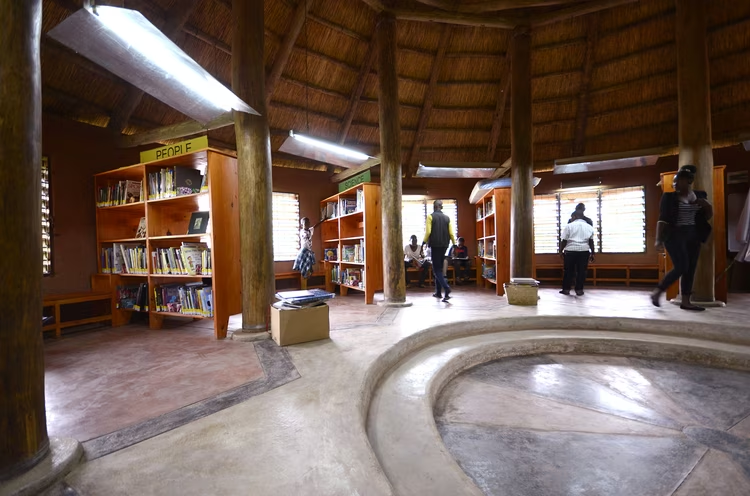
Zambia has relatively few public libraries, and many face challenges related to collections, infrastructure, internet access and modern cataloguing systems. The Lubuto Library Network serves as a vital resource not just for its users but for the preservation of Zambian Literature. Lubuto hosts over 4,000 books and has acquired numerous locally published collections, including more than 80 out-of-print Zambian classics.
In a worldwide partnership with numerous other libraries, Lubuto has begun the process of repatriating out-of-print books to create the Zambian Heritage Library. On their website, you can find digitally stored classics in 13 Zambian languages, free to access and read, with the collection growing on a daily basis.
To achieve this, volunteers and partners have identified and scanned dozens of Zambian storybooks from collections held outside Zambia, including uncatalogued titles from the U.S. Library of Congress and Boston University’s African Studies Library, which would otherwise remain inaccessible to most Zambians.
These included folktales, early readers, oral histories, and texts exploring traditional customs and values. Many were published in small print runs and quietly disappeared from circulation over time. Others survived only in overseas archives, and without intervention, they risked being lost entirely.
This positions Lubuto not only as a haven for young readers but also as a guardian of Zambia’s literary history. A book once hidden in a distant archive can now be read online by a student in Lusaka, a teacher in Chipata or a researcher abroad. Searchable catalogues make these texts easier to discover, integrate into classrooms and share across generations.
A Cultural Lifeline
In this way, Lubuto Libraries serve multiple purposes: a haven for vulnerable youth, an educational resource, and an archival space safeguarding Zambia’s literary legacy. What began in response to a public health crisis has evolved into a long-term cultural mission. Lubuto is not only illuminating Zambia’s past and present but helping shape its future.