On the 5th of February, Zambia and Ghana signed a historic visa-waiver agreement, easing travel and collaboration between the two nations. But what dominated headlines was not this monumental agreement but the choice of attire of Ghanian President Mahama upon his arrival in Lusaka. Stepping off the plane in a flared traditional garment called a fugu.
Zambian social media erupted in a flurry of activity. With netizens broadcasting mostly derogatory comments on President Mahama’s ensemble. Calling an item of traditional Ghanian attire everything from a blouse to a dress, calling into question President Mahama’s professionalism for donning it and contemplating why President Mahama simply couldn’t have worn a suit as President Hakainde Hichilema had.
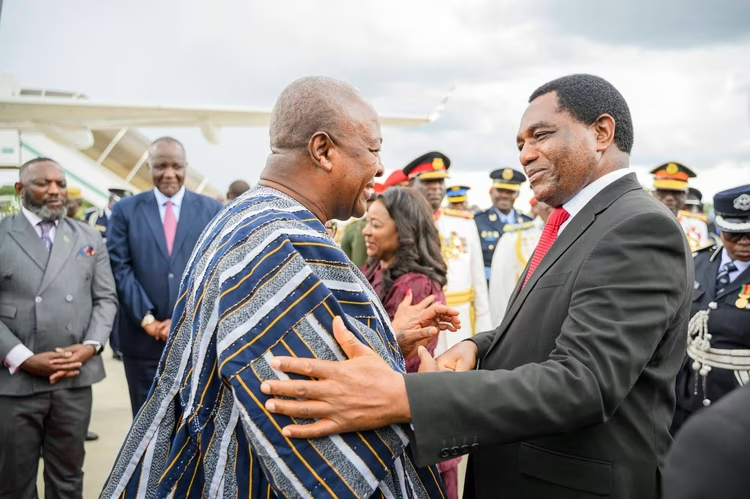
The cries were loud, and soon enough, a meeting meant to strengthen ties between two countries that had a long history of collaboration had led to an all-out social media comedic sparring match, complete with memes, side-eyes, and the kind of petty clapbacks that make African social media the chaotic theatre it is.
Ghanaians flocked to the defence of their president and traditional wear, occasionally delivering a few jabs at Zambia in return. Whether peaceful or not, the swiftness and passion behind the replies were understandable.
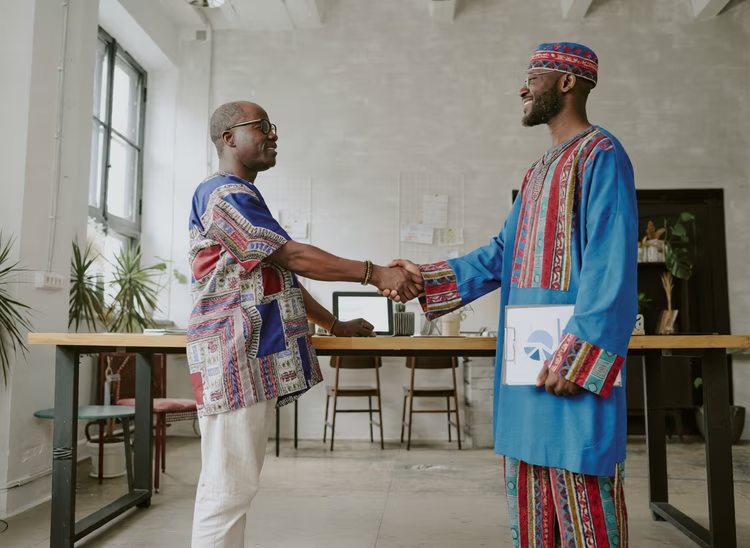
But beneath the banter lies a more serious question: what if more African leaders showed up in their traditional attire? What if summits, state visits, and international conferences saw presidents arrive not in western suits borrowed from colonial playbooks, but in boubous, kaftans, dashikis, Kaunda suits, and fugus?
The visual alone would be a statement and reclamation of identity on the world stage, a reminder that professionalism was never meant to have a single, Eurocentric uniform. If African leaders consistently chose to honour their heritage in their traditional outfits, it would be symbolic and revolutionary.
What Is Fugu?
With origins in Northern Ghana, the fugu was the uniform of a warrior. With every element of the design, from the flared bottom to the stripped top, designed for endurance and unrestricted movement, especially on horseback. The craft that goes into the production of each individual fugu is intricate and timely, with the detailed stitching around the neckline frequently indicating the rank or standing of the person wearing it.
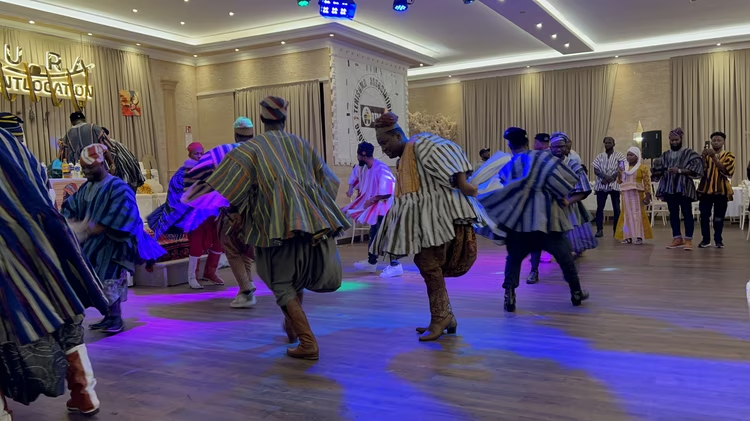
The garment is comprised of bits of fabric woven on looms before being stitched together by hand. A key technique of colonialism was the stripping away of culture, whether in language, tradition or clothing. What was African was taught to Africans to be inferior, and it was for this reason that Ghana’s first president and key figure in their fight for independence chose to wear a fugu, as a symbol of reclamation, when declaring independence from years and years of British colonial rule.
When African Professionalism Still Means Western Dress
President Mahama's choice to wear the fugu was a quiet act of defiance against the notion that Western dress is the default language of diplomacy. And perhaps it's time other African leaders followed suit.
Imagine a continent where traditional attire at state functions wasn't the exception but the expectation. Where our leaders walked into the UN, the African Union, bilateral meetings, and global summits dressed in the visual language of their people. The fugu controversy revealed how far we still have to go, but it also showed us the path forward. Ghana led. Others should follow. But from this conflict has risen a tide of positivity, both in the education about fugu to cultures unaware of its significance to the proud donning of the outfit by Ghanians in defence of their culture.
Ghanaian Parliament's Show of Cultural Pride
A week later, the Ghanaian parliament held a fashion sit-in, with members of the house, regardless of their political party, united in their wearing of the fugu. President Mahama has jokingly thanked Zambians for marketing the fugu on behalf of his country, and President Hakainde Hichilema stated that he’ll be ordering some of the attire for himself.
At its end the Ghana - Zambia - Fugu debacle seems less of a feud and more of a brotherly scuffle. And if more points, quips, arguments and education need to be exchanged, let us not let this brief argument overshadow the fact that all this now can be done in person visa- free.