Few things unite Zambians faster than a weak signal bar. A frozen WhatsApp call, a delayed mobile money transaction, or a video buffering during peak hours, network quality has become part of everyday conversation.
Earlier this year, the Zambia Information and Communications Technology Authority (ZICTA) publicly instructed mobile network operators to address persistent service quality concerns. The message was firm, connectivity is no longer a luxury, but essential to economic participation, education and daily communication. Operators were urged to strengthen infrastructure, improve redundancy and ensure more consistent service delivery.

It sounded like a turning point.
Zambia has built a large internet user base through mobile connectivity. Mobile data remains the primary gateway online, largely because data bundles are affordable and accessible.
Official figures by late 2023 estimated approximately 12.6 million internet users in a population of about eighteen million. Expansion of 4G services has continued, with early 5G rollouts in select urban areas.
From a policy and infrastructure standpoint, progress is visible.
Yet lived experience sometimes tells a more complex story.
What Zambian Users Are Experiencing
Across X, and other online platforms, users often describe fluctuating speeds and inconsistent performance, particularly during peak afternoon and evening hours.
A recurring complaint is rapid data depletion combined with slower than expected browsing speed. Some users report noticeable differences in performance depending on the time of day.
It is important to recognise that peak-hour slowdowns are not unique to Zambia. Mobile networks operate on shared tower capacity and allocated spectrum. When many devices connect simultaneously, particularly in densely populated areas, speeds can decrease temporarily.

As more Zambians move online for work, education, entertainment and digital payments, traffic demand naturally increases.
Late night and early morning performance is frequently described as smoother. This pattern reflects usage distribution rather than manipulation. When fewer users are connected, available bandwidth per device increases.
These realities point less to malfunction and more to the pressures of rapid digital growth.
What Operators Are Doing to Improve Network Quality
Mobile network operators have publicly acknowledged rising demand and have outlined measures to strengthen service quality. These include:
- Expanding 4G coverage into underserved areas.
- Deploying additional communication towers to reduce congestion.
- Investing in fibre backhaul upgrades to increase capacity.
- Rolling out early 5G infrastructure in selected zones.
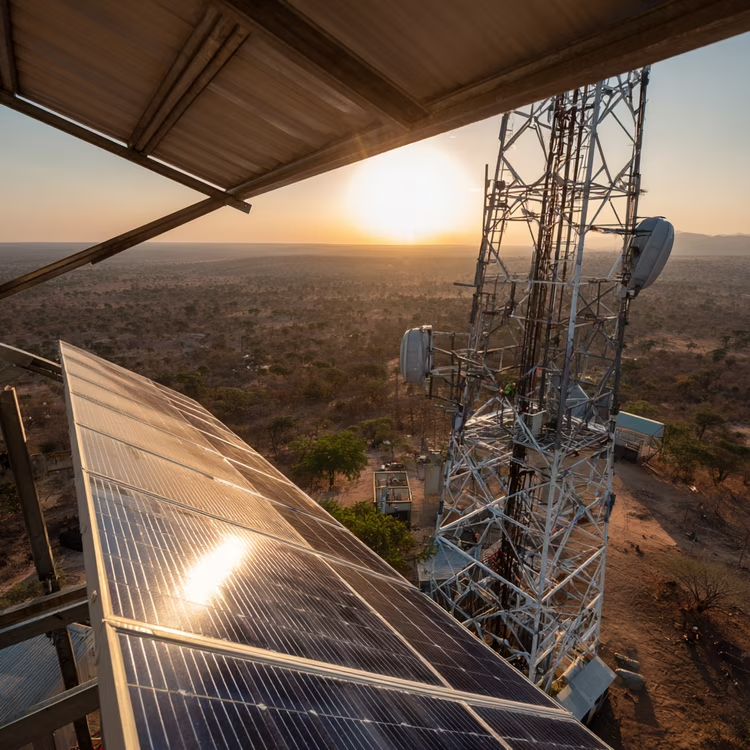
- Strengthening tower redundancy systems to mitigate power interruptions.
Industry reports have highlighted ongoing capital investment aimed at modernising equipment and increasing spectrum efficiency.
Network providers are also working to improve resilience against power instability through alternative energy solutions at selected sites.
A 2025 telecommunications sector report by PwC Zambia noted that demand for data services continues to grow at a pace that challenges infrastructure expansion timelines. Equipment vandalism, power supply interruptions and the high cost of deploying new sites remain structural hurdles.
However, the same report points to steady infrastructure growth and increased broadband penetration over recent years.
In short, expansion is happening, but demand is rising just as quickly.
ZICTA’s Role in Strengthening Accountability
ZICTA’s 21-day directive to providers underscored the regulator’s awareness that service quality must align with national digital ambitions. Stable connectivity underpins e-systems, mobile banking, online commerce, education platforms and tax services.
The regulator has indicated that quality of service standards will be more closely monitored.
This reflects an understanding that technical performance indicators must translate into a consistent consumer experience.
Regulation and investment are working in tandem, though implementation takes time.
What the Data Shows
Independent global network performance studies show measurable gains in median mobile download speeds between 2023 and 2024. The number of communication sites supporting 2G, 3G, 4G and early 5G networks has increased. Broadband penetration continues to expand.
However, improvement measured in speed benchmarks doesn’t always feel dramatic in daily use. Where mobile connectivity remains the primary access method without widespread fixed broadband alternatives, congestion during high usage periods can still occur.
So why does the data show improvement while users sometimes report strain?
Part of the answer lies in rapid digital adoption. More users are streaming, video calling, trading online and working remotely than ever before. As usage intensity increases, infrastructure must scale continuously to maintain seamless performance.
So, Have Network Issues Improved in Zambia?
The honest answer is: yes, but unevenly.
Coverage has expanded. Speeds have improved in measured benchmarks. Regulatory oversight has intensified. Operators are investing in capacity upgrades.
At the same time, many users still experience congestion during peak hours, particularly in densely populated areas. As Zambia’s digital economy grows, expectations also rise. A connection that was acceptable three years ago may now feel inadequate for modern demands.
Closing the gap between technical progress and lived experience will require investment, improved power reliability, continued regulatory engagement and realistic consumer understanding of how shared networks function.
Until then, conversations about network quality will likely continue as part of the natural evolution of a country rapidly digitising.