They called her a mystical woman. In a time when kingdoms rose and fell by the sword, she forged an unprecedented weapon: an army of women. When the fierce Makololo warriors descended upon the Sala, expecting an easy conquest, they were met not by the chief but by his wife, Queen Loongo, leading her warriors into battle.
Zambia’s history is filled with stories of courage, leadership, and resilience. Among them is the story of Queen Loongo in a time when survival often depended on force as much as diplomacy. Her life and legacy offer insight into the Sala people, their history, and how bravery and leadership are remembered across generations.
The Story of Queen Loongo
In the eighteenth century, the land that would later become Zambia was home to many communities, each navigating threats and alliances in a fragile balance. For the Sala people, independence was a constant struggle: win in battle and remain free, or lose and be absorbed by a stronger neighbour. Loongo was born into this world and described as a mystical woman from the onset.
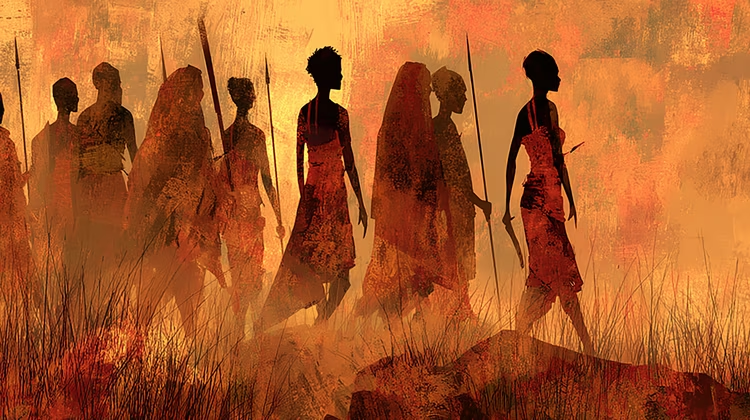
After her husband became chief and founded the Shakumbila Chiefdom, Loongo assumed the role of chieftainess. She took the unprecedented step of forming an all-woman army, motivated by both spiritual guidance and practical strategy. When the Makololo invaded, she led her warriors with courage and determination.
Their victories were so significant that the battlefield was named Tabi ba Sadi, “Hill of the Women.” Though Loongo was held captive for many moons, she returned to her people with her dignity intact, and the Sala maintained their autonomy even as neighbouring tribes offered gifts and tribute to the conquerors.

The Ikubi lya Loongo Ceremony
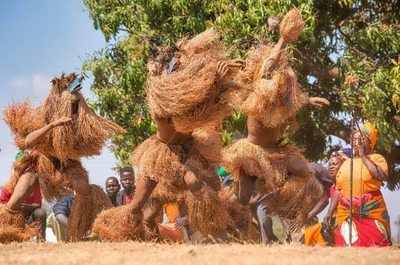
Queen Loongo’s legacy is honoured through the Ikubi lya Loongo Ceremony, held annually by the Sala and Ila in Mumbwa District. The event celebrates the founding of the Shakumbila Chiefdom, successful harvests, and the courage of the chieftainess. Drums, song, and storytelling recount her leadership and the bravery of her all-woman army.
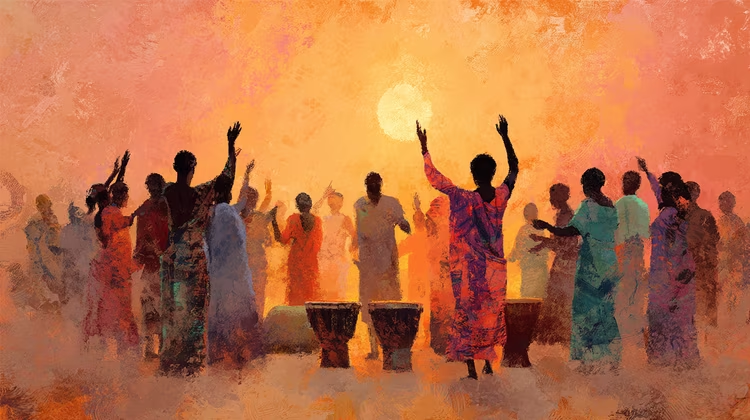
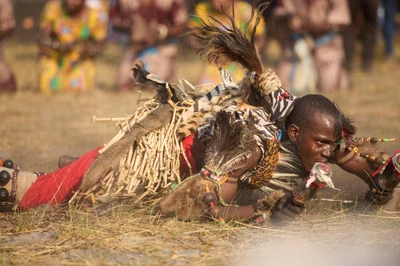
The ceremony culminates in a trance-inspired performance by a traditional leader, believed to channel Loongo’s spirit, linking past and present and reinforcing cultural identity. Through this ritual, the community honours resilience, leadership, and the role of women in shaping history.
Queen Loongo’s life shows that strength is not limited by gender and that a community’s identity can endure despite conquest. By celebrating her through the Ikubi lya Loongo Ceremony, the Sala connect their past to the present, remembering a woman who reshaped their destiny. A reminder that the future is female, and often, the past is too.