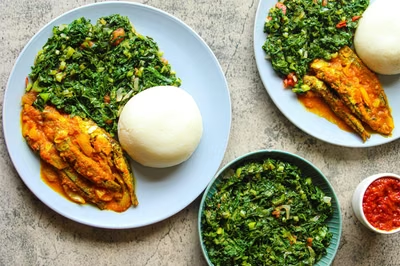
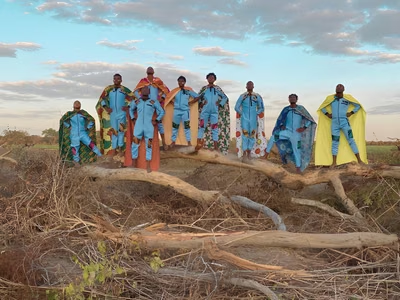
You can tell a Zambian's entire life story through nshima. The wedding nshima, where a bride proves herself with silver pots and matching chitenges. The funeral nshima, eaten quietly among relatives you'll never see again until the next burial. The village nshima was cooked over firewood by women with grit in their hands and joy in their hearts. The office nshima that puts you to sleep until knock-off time.
Did you know that maize did not originate in Africa, but was probably introduced from the Americas by the Portuguese? The origins of corn are not explicitly clear, but scholars widely agree that it originated in the Mexican highlands around 1500 BC and was established in Africa around 1500 AD.
Before the introduction of maize, African staple diets consisted of sorghum, Rapoko, millet, manioc, and yams.
It has been the ingredient to create mealie meal, the main dish for many Africans. So, let’s familiarise ourselves with how people on the African continent dive into this meal, which in Zambia is called Ubwali/Nshima.
Pre-Wedding Ceremony Food Traditions
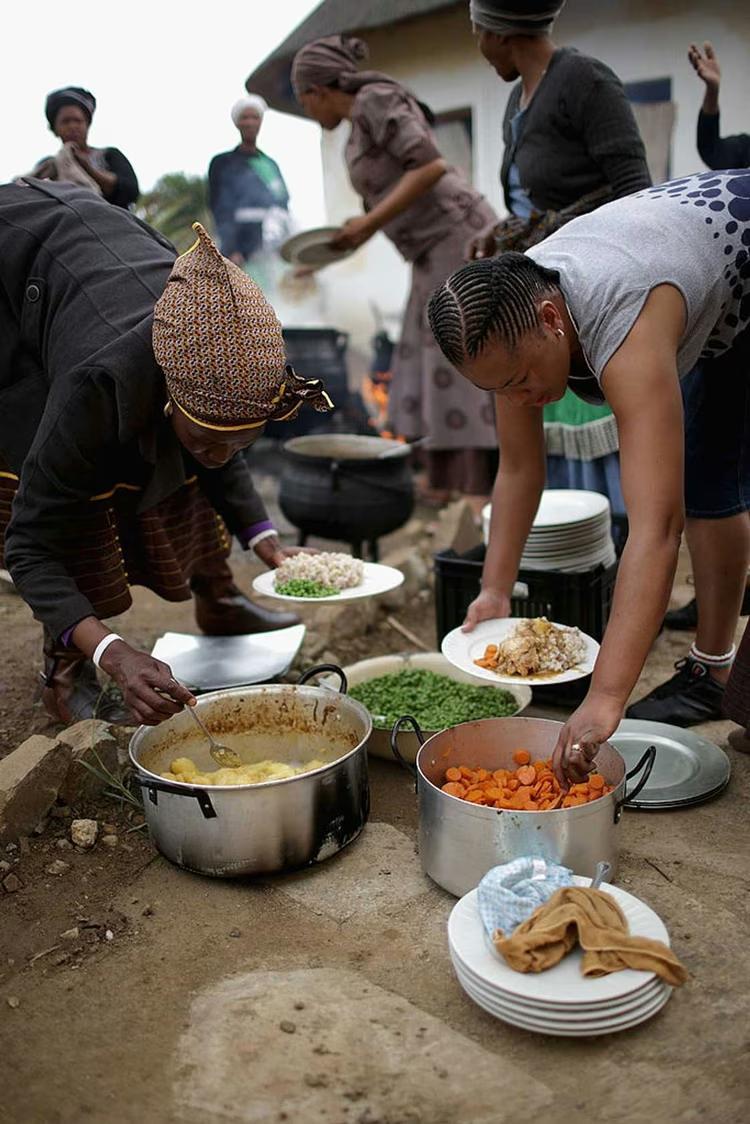
Chilanga Mulilo is a pre-wedding ceremony where the soon-to-be bride shows off her cooking skills, and the soon-to-be groom is taught by Ba Shibukombe (Groom’s mentor/emissary) on how a husband should behave.
Women in matching Chitenges and white T-shirts carry silver pots with all sorts of relish, such as Ifishimu (Mopane Worms), Ubowa (Mushrooms), Kapenta (Sardines), Chisense (Small fish), Chicken, Beans, Beef, Umusalu (Variety of veggies), and so on.
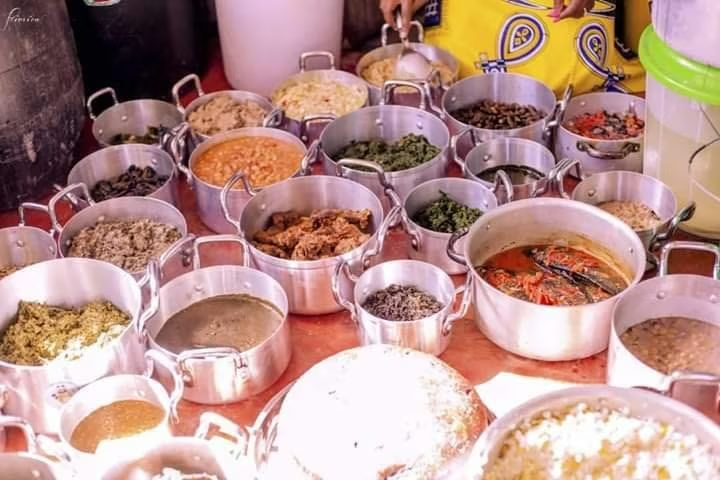
The Nshima is cooked in a large pot, with the bride helping other women as they prepare it. The relishes are served alongside the Nshima for visitors and family members to enjoy together and celebrate.
How Nshima Connects Mourners in Zambian Tradition
The gathering of mourners at the funeral house has brought tears and sorrow that need to be quenched. It has been the tradition that those who have come to mourn with the grieving family should be fed by the family; after all, contributions towards the funeral sometimes come from the mourners (Who are extended family).
Some are quietly rebelling against this tradition, as they believe that the grieving should not trouble themselves with thinking about feeding others. While some continue with the tradition as they feel that a meal brings everyone together after they grieve.
After grieving, the cooks have prepared a simple relish that comes with Nshima, which you eat with other members of your family or friends. This Nshima is for laughter and stories.
This funeral is also a way of knowing family members whom you’ve never met before and will never see again until another funeral.
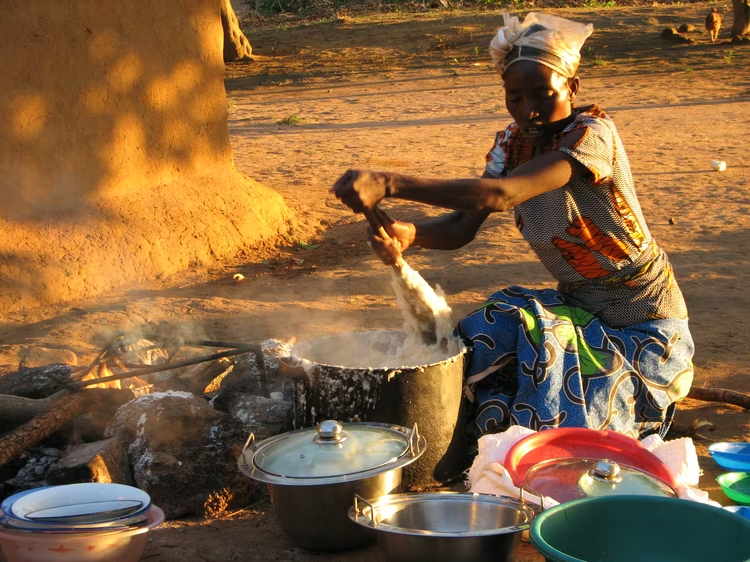
Traditional Zambian Cooking Over Firewood
Village Nshima is cooked in a large pot to accommodate the number of people coming together to feast in one setting. The pots are dark brown beneath, a kiss from the heat of firewood. The women who made it are full of grit and joy, a wooden spoon carving their next meal, a testament to their strength.
This isn't a drive-through; you can only eat here at a specific hour, and you'd better be there on time, or you'll miss it. Its relish is normally green veggies such as Chibwabwa, rape, or garden eggs. Mix that with dry fish, Kapenta, or Chisense, or the very famous slaughtered chicken with tiny bits of hair-sized feathers on it, and this boiled golden chicken tastes better than your home-cooked chicken.
If a table is not available, food is placed on a Mealie meal mat, on the ground, and those who eat sit on wooden stools. Morning and evening, this is the meal of the day.
Zambian Lunch Culture
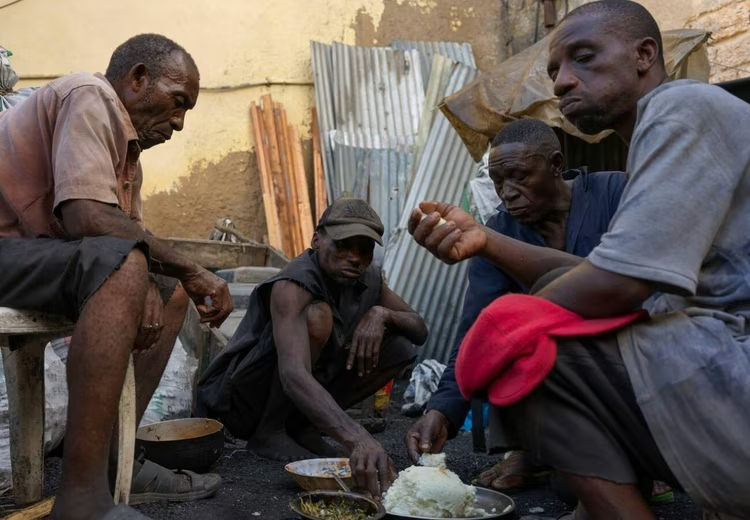
This is lunch Nshima, the 13:00hrs Nshima, the after midday Nshima, the meal that office workers start thinking of after 12, cause their lunch break is at 13:00hrs. They leave their workspace with friends and add their money together to buy that Nshima with beef and veggies.
Construction workers do the same thing; they don’t need a table, the plastic that carries the takeaway pack will be their Floor mat. No one has separate packs, but the Nshima has its own pack, and so does the relish; they dig in, and within seconds it's gone.
This is the meal that will doze you off until you knock off.
Be careful.
University Student Nshima
Ah, yes, the university student whose funds are in, and you splurge on takeaway. Once those funds are almost done, you're stuck in the middle of the month with a pot, a wooden spoon, and a whole 10Kg bag of Mealie meal in your cupboard.
You turn up the stove and begin to prepare your daily bread until the 31st of the month. You're regretting buying takeaway, and now grocery stores and budgeting call for you. Eggs and cabbage are your saviours.
If Zambians are given the option of Nshima or another meal, many prefer Nshima. It’s nothing personal, it’s just that Nshima won’t make you think about eating until the end of the day. Unlike some meals.