The other day in Kabwata, I passed a church wall covered in scripture posters, and right beside it hung a white cloth with red writing from a traditional healer promising to recover stolen money, lost lovers, and future wealth. Two schools of thought about spirituality are advertising on the same brick surface, ironically coexisting. That small street corner explained a large part of Zambian spirituality.
Zambian Spirituality Before Christianity
Long before missionaries ever knew the Zambezi floodplains or Victoria Falls, spirituality already lived among the people. It was not a formal religion in the European sense but a way of ordering reality, a framework that placed human life inside a greater presence that shaped values and conduct. Among the Bemba, Tonga, Lozi, Ngoni, Kaonde and the many other tribes of Zambia, existence was layered.
A creator existed, often distant yet linked through ancestors. Beneath that were territorial spirits, then ancestral spirits, then the living community. Health, rainfall, fertility, hunting success, childbirth and social harmony depended on keeping those layers aligned.
Sacrifices were therefore not superstition but rather a form of deep communication. They allowed negotiation with an unseen ecology believed to sustain visible life.
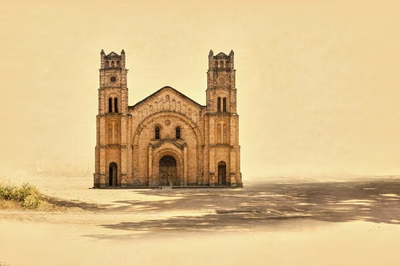
Missionaries entered in the nineteenth century. Traders and explorers arrived first, followed by organised missions. The London Missionary Society and the Paris Evangelical Mission were among the earliest influences, later joined by Catholic orders such as the White Fathers. They brought scripture together with schools and clinics, and these institutions became inseparable from the message they preached. Literacy spread as the Bible was translated into Bemba, Tonga, Lozi and Nyanja so people could read it directly. Education, medical care and colonial administrative structures encouraged Christian affiliation and gradually normalised it.
Zambia's Christian Declaration
By 1991, President Frederick Chiluba publicly declared Zambia a Christian nation, formalising a reality that had already become socially dominant. Yet older beliefs did not disappear and remained present beneath the surface of daily life.
African literature has long documented this encounter. Chinua Achebe’s Things Fall Apart portrays a society reshaping under Christian influence. Elechi Amadi’s The Concubine presents spirits interacting with human destiny in a coherent moral universe. Ngũgĩ wa Thiong’o’s The River Between treats conversion as both spiritual awakening and cultural fracture. Okot p’Bitek’s Song of Lawino reads like a courtroom argument between inherited spirituality and imported faith. Thomas Mofolo’s Chaka explores authority and sacred power in a pre-missionary world. For generations, Africans have recognised this interaction and have lived thoughtfully within it, observing the patterns and living through them.
How Zambians Practice Dual Belonging
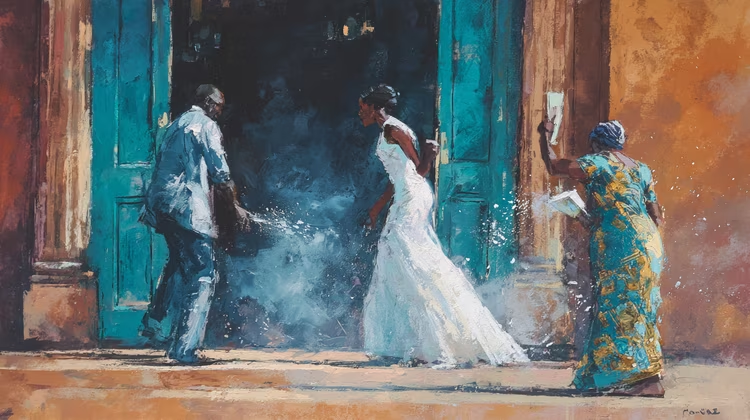
Zambia today operates inside that pattern. The clearest evidence appears in ritual sequencing. A couple undergoes amafundisha or insaka marital instruction rooted in intimacy, obligations, and defined household roles. The same couple then stands before a pastor and exchanges vows, invoking the Trinity. The functions differ and are understood that way. One establishes social harmony among the living and the departed, while the other establishes a sacred covenant before God.
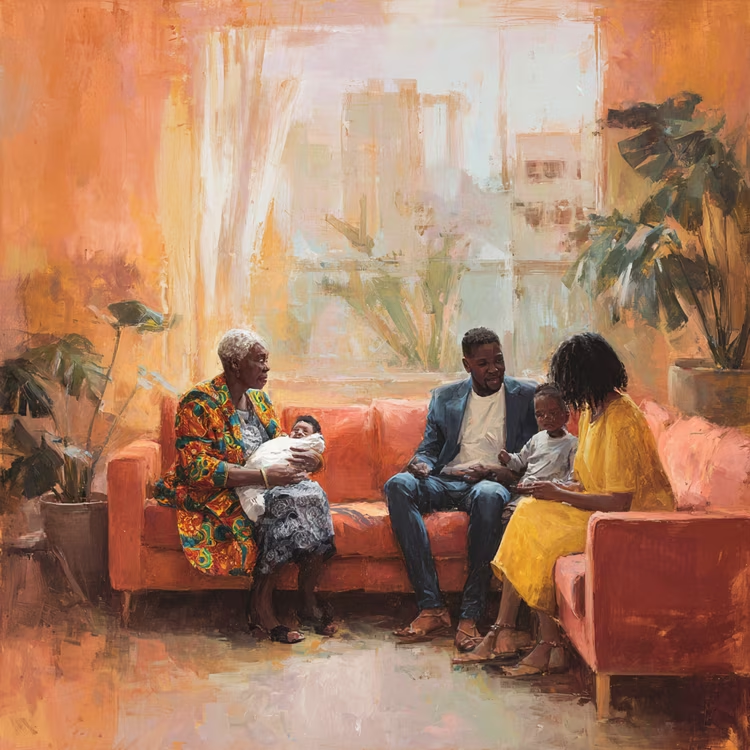
Birth provides another example. A child may be prayed over in church and baptised, while grandparents follow naming customs tied to lineage continuity. Names carry the weight of those who came before, which explains why children are often named after relatives. The Christian blessing seeks divine protection, and the ancestral naming secures belonging.
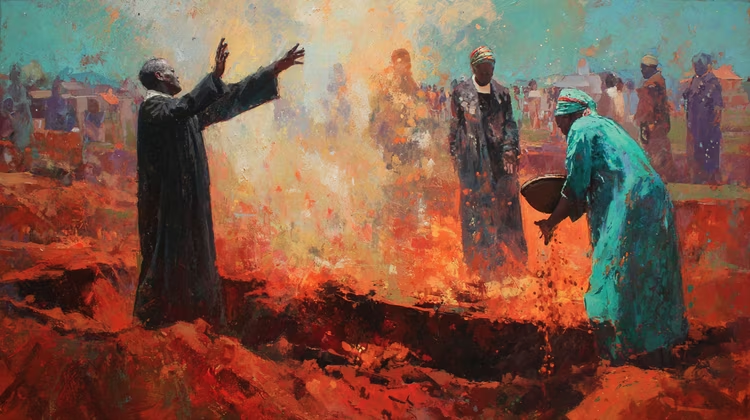
Funerals reveal the negotiation even more clearly. Christian hymns dominate the service and mourning period, yet burial timing, mourning rules and post-funeral cleansing rites still follow customary frameworks intended to observe reverence to the spirit world. The debate about drums reflects the same dynamic. Some believers associate drums with spirit invocation, while others treat them as the traditional language through which grief calls upon ancestors. Both views can exist inside one family gathering.
Traditional Ceremonies in a Christian Nation
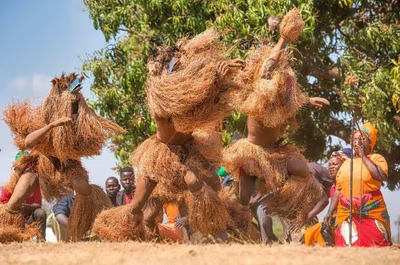
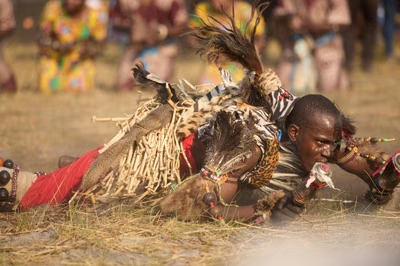
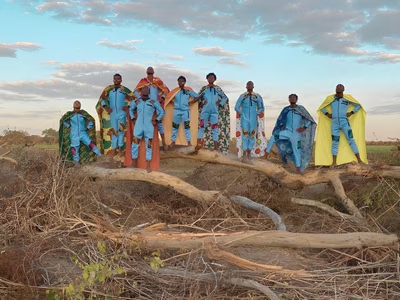
Traditional ceremonies openly preserve older metaphysics while remaining acceptable within a Christian nation. Kuomboka marks harmony between people, land and divine order as the Lozi king moves from the flooded plains. Ncwala among the Ngoni includes Christian prayer, yet historically honoured ancestral guardians of the harvest. Ukusefya pa Ng’wena, Mutomboko, Likumbi Lya Mize and Chibwela Kumushi retain symbolic acts grounded in pre-Christian thought even when opened by a pastor’s prayer, seeking order during the ceremonies.
Where Christianity Meets African Tradition
What emerges is a functional dual belonging. Christianity governs salvation and moral teaching. Indigenous spirituality sustains continuity, identity and social balance. Many Zambians may not describe it philosophically, yet in practice, they live within a layered cosmology where heaven, ancestors and community address different human concerns. And that’s okay.
The result is this unique third spiritual space. Not Western Christianity and not untouched tradition, but a negotiated view where a person attends church on Sunday, observes customary rites at family gatherings and experiences no internal contradiction. The key is observing the importance of both and not shunning the other. Cultural systems do not thrive on resisting influence. They endure by absorbing it, the way a river keeps its name even after merging with another river.