In 1948, when the cheapest radio cost £45 (more than most Zambians earned in months), Harry Franklin had an audacious idea: what if you could build a radio for £5? The result was an aluminium device that looked ridiculous, worked brilliantly, and changed everything. For the first time, villagers heard news in Bemba. Miners in compounds caught global events in Nyanja.
Long before television, smartphones and social media, radio was the single most powerful medium to reach the people of what is now Zambia.
Yet when broadcasting was first introduced in the 1940s in then Northern Rhodesia, radio was a privilege of the few. Expensive, electricity-dependent sets meant that most Africans remained outside the world of information and ideas.
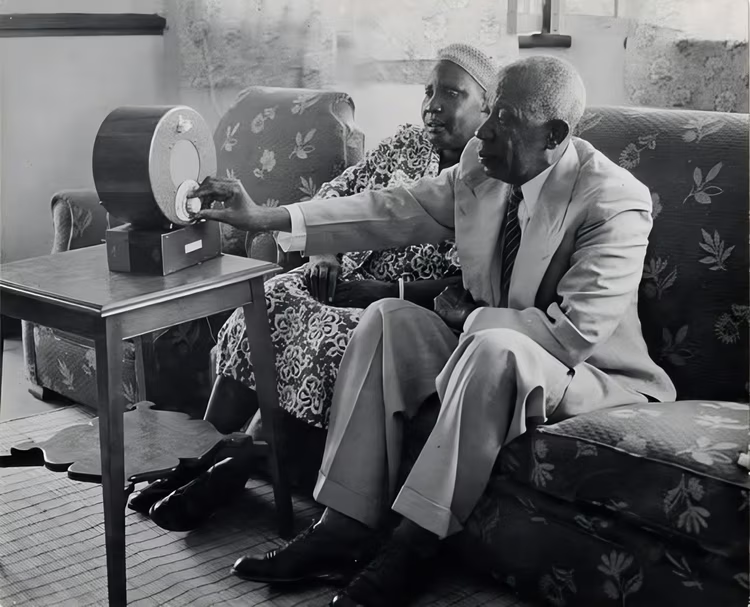
However, the landscape of radio in Zambia changed due to an unlikely, Zambian-centred innovation, the Saucepan Radio. This device brought the world into African homes and permanently shaped Zambia’s broadcasting history.
How Zambia's £5 Innovation Changed Broadcasting History
Broadcasting in Northern Rhodesia began in 1941 with the establishment of the Central African Broadcasting Station (CABS) at Lusaka airport, today’s Longacres area.
The station was set up during the height of the Second World War to keep both Europeans and Africans informed about the progress of the war.
At the time, Zambia was contributing manpower and resources to the Allied effort, with Africans conscripted to fight in distant places such as Burma. Information was therefore critical, not optional.
However, there was a major problem. Very few Africans owned radios. The cheapest radio set available then cost about £45, a price completely beyond the reach of the ordinary Zambian.
Electricity was limited to a few urban areas, and most African compounds were not connected. Early attempts at communal listening, radios nailed to trees or hung at mission stations, and bomas proved inadequate.
Early Radio Broadcasting in Northern Rhodesia
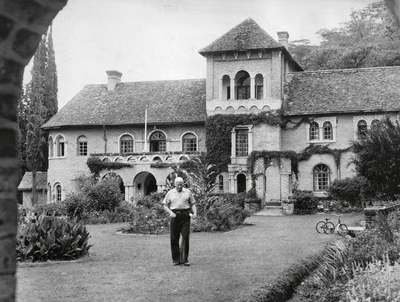
It was Harry Franklin, a colonial officer based in Northern Rhodesia and later the first administrator of CABS, who insisted that Zambia needed a radio designed specifically for Africans.
Franklin understood that if broadcasting was to succeed, it had to reach people in their homes, in villages, mines and compounds across the territory.
He spent years searching for a radio that could meet Zambia’s realities: it had to run on dry batteries, work on short-wave to cover long distances, survive rough transport and, above all, be cheap.
The Man Behind Zambia's Saucepan Radio Innovation
The breakthrough came in 1948, when Franklin met Magnus Goodfellow, chairman of the Ever Ready battery company, while on leave in the United Kingdom.
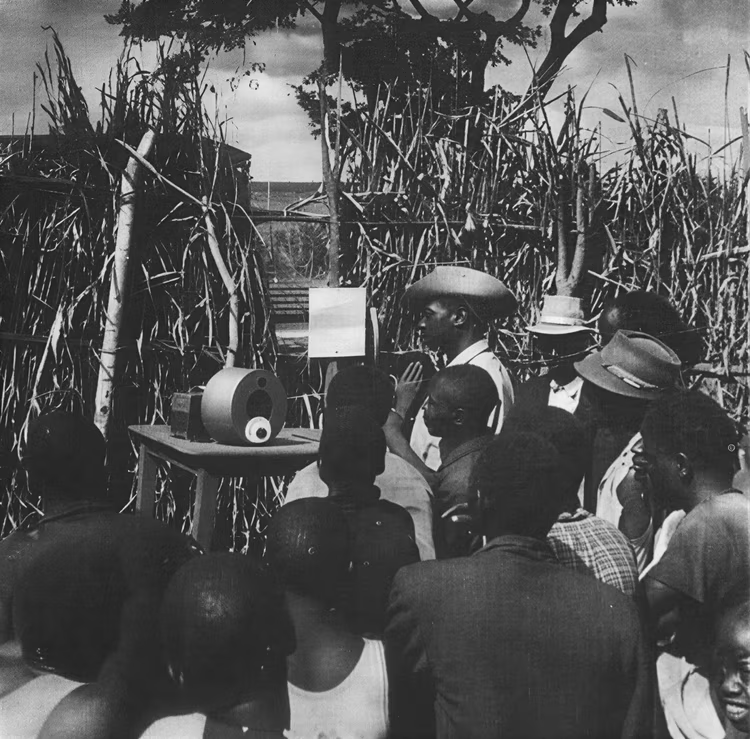
Franklin proposed a bold business model; radios would be sold at cost, while profits would come from battery sales. A BBC engineer, Bill Varley, approved the design and jokingly named it the “Saucepan Radio” after seeing the prototype built from an aluminium saucepan.
The Northern Rhodesian government backed the purchase of 1,500 radios, which sold for just £5, with batteries costing an additional 25 shillings.
Painted blue to avoid colour-related superstitions among local communities, the radio was sturdy, battery-powered and perfectly suited to Zambia’s conditions. It was an instant success.
How the Saucepan Radio Was Invented
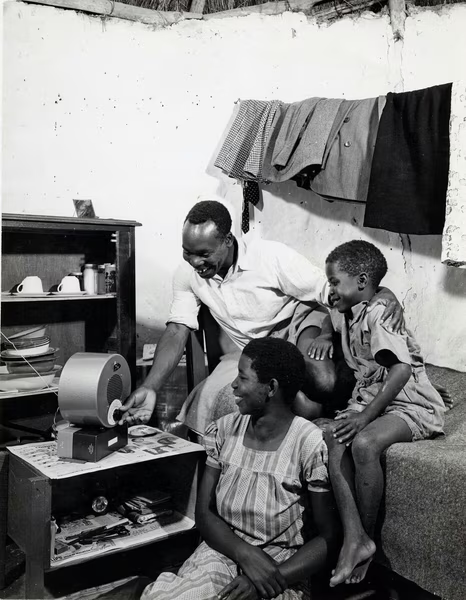
By 1949, as the Saucepan Radio entered mass production, its impact on Zambia became dramatic. CABS broadcasts in Bemba, Nyanja, Tonga, Lozi and English could, for the first time, reach a wide audience.
Radio ownership spread from Lusaka to rural districts, turning broadcasting into a truly national experience. For many Zambians, it was the first time they could hear national news, global events and educational programmes directly in their own languages.
The radio transformed education and culture. Programmes on hygiene, farming, law and family life reached people who could not read pamphlets or posters.
Popular shows such as “Zimene Mwatifunsa,” a greetings and request programme, strengthened social ties across the country, a format that remains central to Zambian radio today.
Through the saucepan radio, music from around the world entered Zambian homes, while local artists such as Alick Nkhata, Enock Evans and the Paseli Brothers became nationally known voices.
Zimene Mwatifunsa and the Birth of Zambian Radio Culture
The impact went beyond entertainment. Zambians began to see themselves as part of a wider national and global community.
Letters sent to CABS revealed pride, curiosity and a growing appetite for knowledge. One listener famously wrote that switching on the radio meant having “the whole world in my house.”
For a largely illiterate population, radio became the most powerful classroom Zambia had ever known.
Ironically, demand for the Saucepan Radio surged again in 1953, when excitement around the coronation of Queen Elizabeth II swept through the territory. Even European settlers rushed to buy the same radio designed for Africans, underscoring its effectiveness.
Although CABS later lost its independence under the Federation in 1954 and its editorial direction became controversial, the damage could not undo what had already been achieved. Zambia had discovered the power of mass communication.
Today, the Saucepan Radio is more than a curiosity of history. It represents Zambia’s first true information revolution, proof that a locally imagined solution, born in Lusaka and shaped by Zambian realities, laid the foundation for the modern broadcasting system.
In its simplicity, the saucepan radio did what no expensive technology could: it gave Zambia a national voice.