Hollywood wanted him. A British director called him indispensable. He sang the title song, acted alongside international stars, and had a pathway to global fame laid out before him—all in 1954, before most African actors ever saw a movie set. Then Michael Mataka did something Hollywood couldn't understand.
In the annals of Zambian history, few lives straddle cinema and public service with the quiet drama of Michael Mataka.
Long before Zambia gained independence, and decades before African actors regularly commanded global screens, Mataka achieved what many would only dream of: overnight recognition in an international film, praise from a Hollywood director, and a direct pathway into a global acting career.
Yet, at the very moment when fame beckoned, he turned his back on the klieg lights and returned to the police force. In doing so, Mataka carved out a legacy that is uniquely Zambian—one rooted in duty, discipline and nation-building.
The Zambian Who Turned Down Hollywood for Public Service
Michael Mataka emerged from Northern Rhodesia at a time when Africans were rarely given centre stage, either on screen or in colonial institutions.
Born and raised in what is now Zambia, he joined the Northern Rhodesia Police Force in 1941 as a young constable. Even in uniform, he stood out.
He was intelligent, composed, and commanding in presence, which explains why he quickly rose through the ranks, becoming a senior instructor at the police training depot and later an inspector.
By the early 1950s, he was already breaking racial barriers in a system designed to exclude Africans from senior authority. It was during this period that fate intervened in the most unlikely way.
From Northern Rhodesia Police Constable to Film Discovery
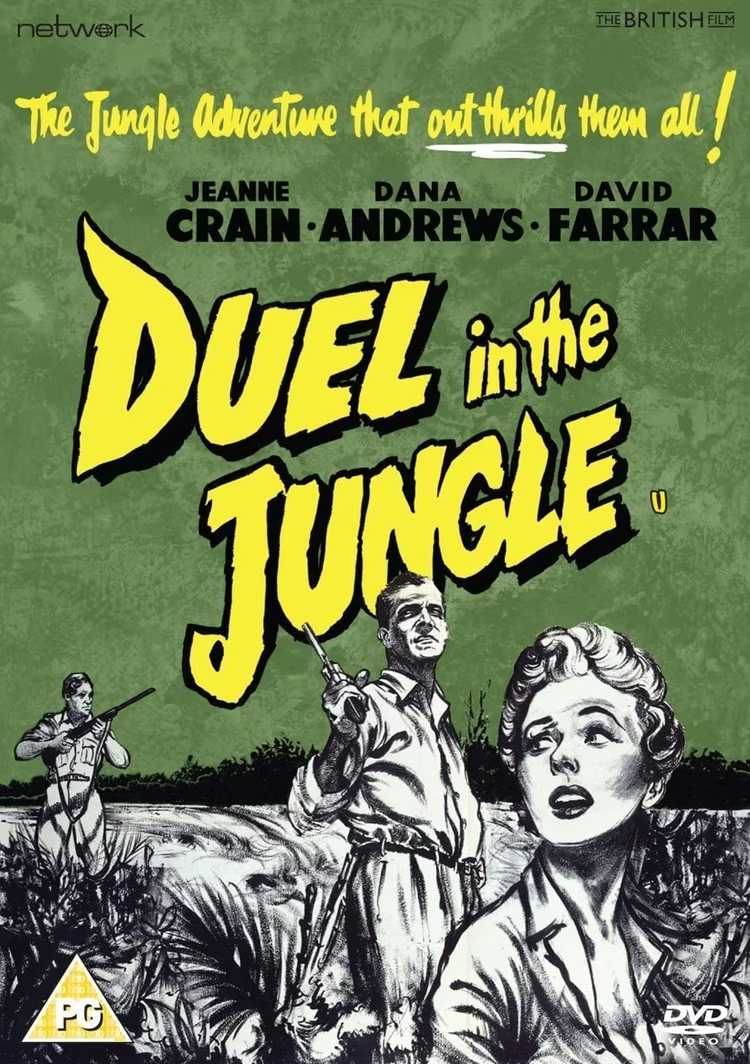
In 1954, British director George Marshall arrived in Livingstone while preparing to shoot Duel in the Jungle, an ambitious adventure film starring established Hollywood names such as Dana Andrews and Jeanne Crain.
Marshall needed an African actor to play Vincent, a crucial supporting role that required far more than a stereotypical performance.
He needed intelligence, authority, emotional restraint and screen presence. A chance visit to the local police station solved his casting problem instantly.
There, Marshall encountered Michael Mataka, then a 32-year-old police inspector. As Marshall later recalled, Mataka was “the man”—possessing both an impressive appearance and a sharp, sensitive intelligence that could rival trained professionals.
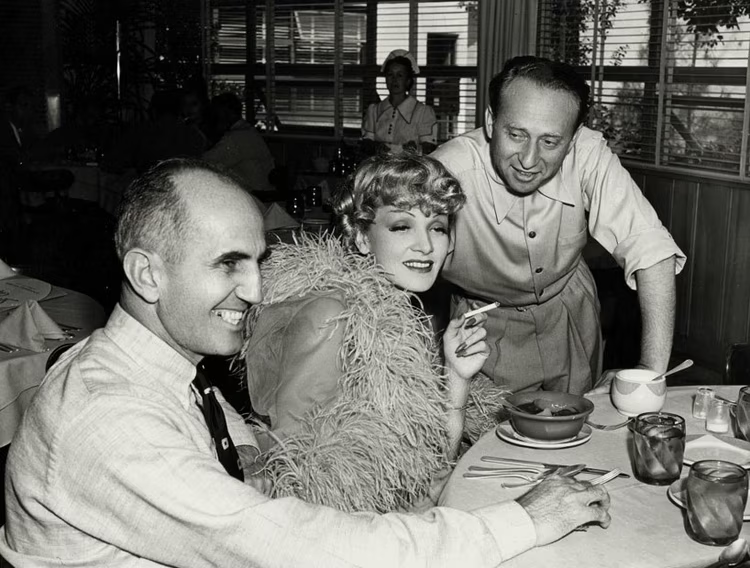
With the approval of colonial authorities, Mataka was “borrowed” from the police force for three months. What followed was nothing short of remarkable.
How George Marshall Discovered Michael Mataka
On screen, Mataka’s portrayal of Vincent was poised, dignified and memorable. Off-screen, his contribution was even greater.
He served as an informal second assistant director, helping Marshall navigate local conditions, languages and the coordination of African extras.
Marshall would later describe him as “the best second assistant director I ever had,” admitting that the production would have struggled without Mataka’s guidance.
For a Zambian policeman to become indispensable on a major international film set was unprecedented.
Adding to his versatility, Mataka also sang the film’s title song, The Night Belongs to Me. With music by Mischa Spoliansky and lyrics by Norman Newell, the song further cemented his place in cinema history.
In one stroke, Mataka became an all-round performer—actor, singer and cultural bridge between Africa and the West. For Zambia, still under colonial rule, this was a rare moment of global visibility through one of its own.
Michael Mataka's Groundbreaking Film Performance in 1954
Hollywood took notice. Marshall was so impressed that he offered Mataka the chance to pursue an acting career abroad.
For many, especially an African in the 1950s, such an offer would have been irresistible. Yet Mataka declined. When filming ended, he returned to Livingstone and resumed police duties, reportedly saying he preferred police work to acting. It was a choice that spoke volumes about his character and priorities.
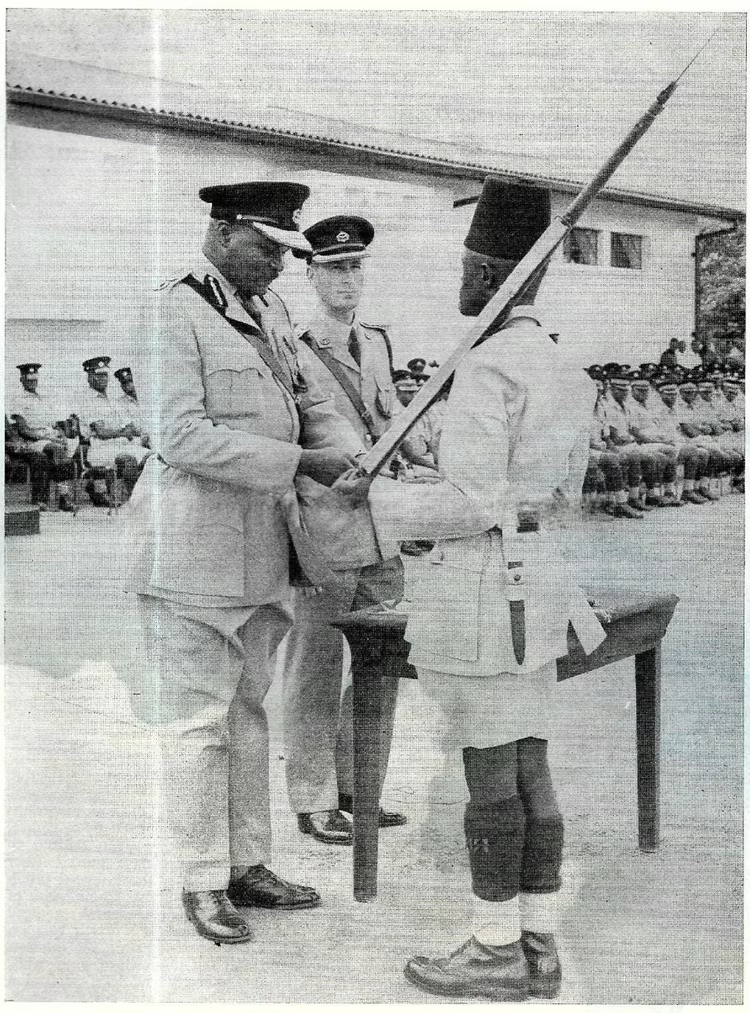
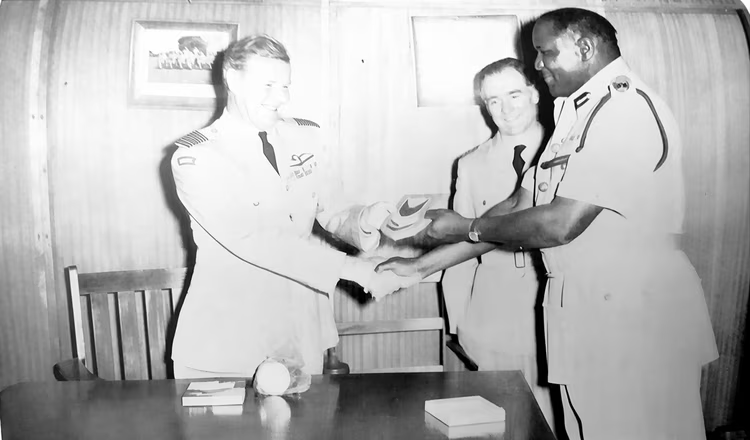
Mataka’s decision was not a retreat from greatness, but a redirection of it. In the years that followed, he continued to rise through the police ranks, becoming the first African Inspector Grade 1 and, later, the first African Assistant Inspector of the Northern Rhodesia Police Force.
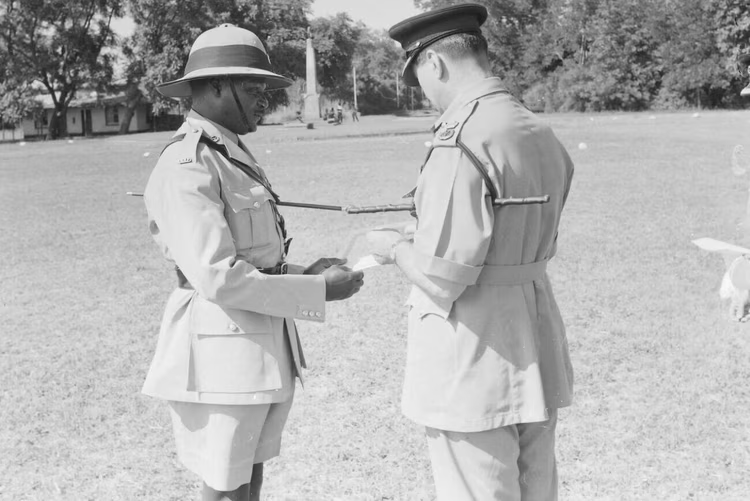
After Zambia’s independence, history was made once again. On November 1, 1965, Michael Mataka was appointed the first Zambian Commissioner of Police, replacing British-born Lawson Hicks. It was a powerful symbol of African leadership in a newly sovereign nation.
As Commissioner, Mataka embodied authority earned through service rather than spectacle. He led the police force during Zambia’s formative years, helping to shape national institutions at a time when stability and discipline were essential.
His tenure lasted until 1970, when he was medically retired following serious injuries from a traffic accident. Even in retirement, he continued to serve the public through roles on licensing boards and diplomatic assignments in Angola and Egypt.
Michael Mataka’s story challenges modern assumptions about success. He proved that one could conquer Hollywood expectations without surrendering local purpose.
He showed that African talent did not need validation abroad to be meaningful at home. In choosing the badge over the spotlight, Mataka aligned his personal destiny with that of his country.
Today, as Zambia reflects on its cultural and institutional pioneers, Michael Mataka deserves renewed recognition—not just as the first Zambian overnight actor or the singer of "The Night Belongs to Me," but as a man who prioritised national service over personal fame.
His life reminds us that sometimes the greatest role is not played on screen, but lived in service of one’s people.