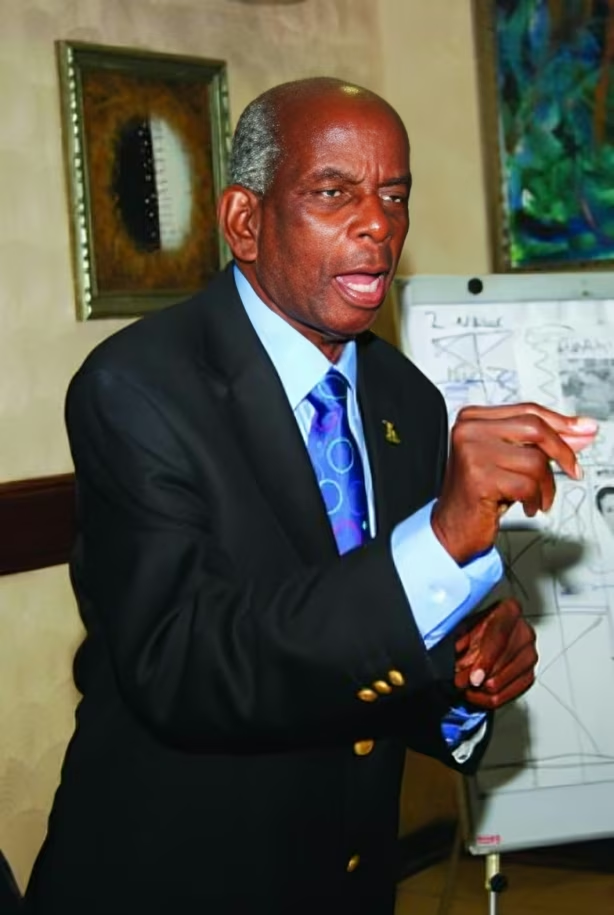
There is something mystical about translating real-time events into words that make people see what you are seeing through their ears. It requires a rare blend of description, creativity, and instinct, and very few master that art. When I think of Philip Dennis Liwewe, also known as Dennis Liwewe in Zambia, that is the first thing that comes to mind. He did not dictate a football match. He made listeners believe they were there too, hearing every sprint, tackle, and goal through sound itself.
Who Was Dennis Liwewe?
Liwewe’s life was not a linear path. Born in Malawi on January 10, 1936, and a teacher by profession, he moved to Northern Rhodesia (present-day Zambia) in 1960, where he began his career as a journalist with the Nchanga Weekly Newspaper on the Copperbelt. Before he became the voice of football, he was a storyteller at heart. He understood imagery and cadence and how stories, when well told, bring people together. In an era when television sets were not common in the typical Zambian household, radios were the only window to the world, and Liwewe’s words were the lens. His broadcasts spanned a 41-year career and took him to more than 40 countries on 96 trips around the world, speaking through the crackle and static of Zambian airwaves.
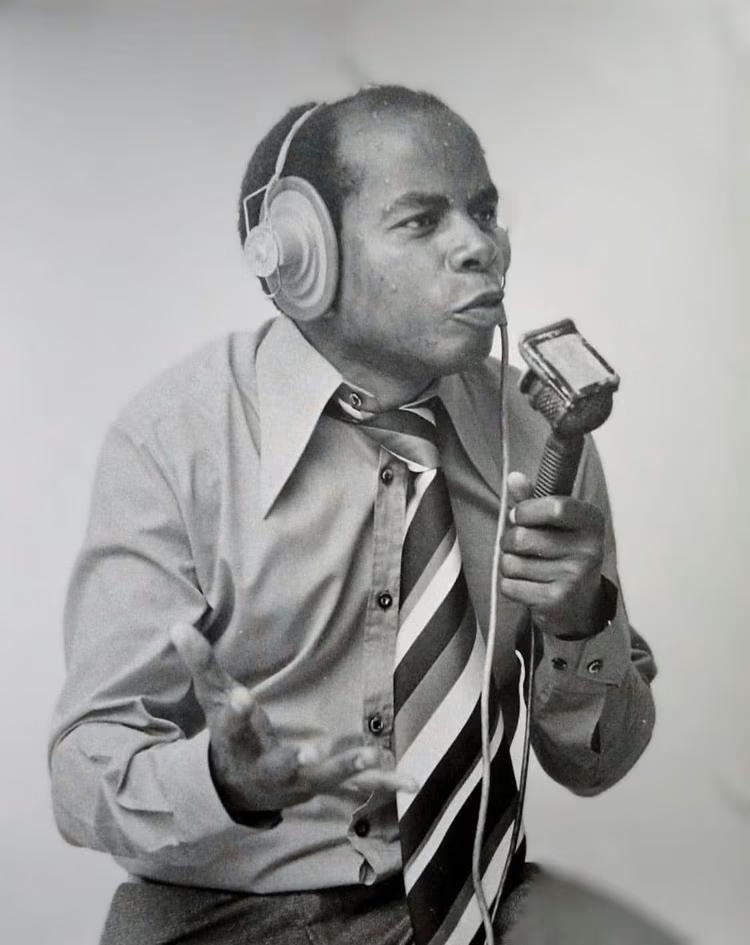
People described him as the Voice of Zambian Football, but once I read and listened to his life story, the label felt inadequate. His voice drew millions into a shared experience of sport, identity, pride, and connection. Fans in stadiums clutched portable radios and listened attentively, even while watching a live game on television for the lucky few, because Liwewe’s narration carried the spirit of the moment. Although he never played the game professionally, his bond with football was built through disciplined study, recorded BBC commentaries, and consistent practice. He learnt to translate movement into language so precisely that millions could follow the match without ever seeing the pitch.
Forging National Identity Through Sport
One of the clearest measures of Liwewe’s influence on the Zambian psyche was how he coined the name KK11 for the national team lost in the 1993 Gabon air disaster. This phrase became more than a label and offered the country a shared symbol of grief, pride, and remembrance, repeated in stadiums and around radios as shorthand for collective identity in the face of loss. That moment also irrevocably bent his own life. He had been scheduled to board that flight, spared by circumstance rather than choice, and survival carried a lasting physical and emotional toll that never quite left him. When Zambia finally won the AFCON Cup in 2012, he honoured it as a tribute to the fallen heroes.
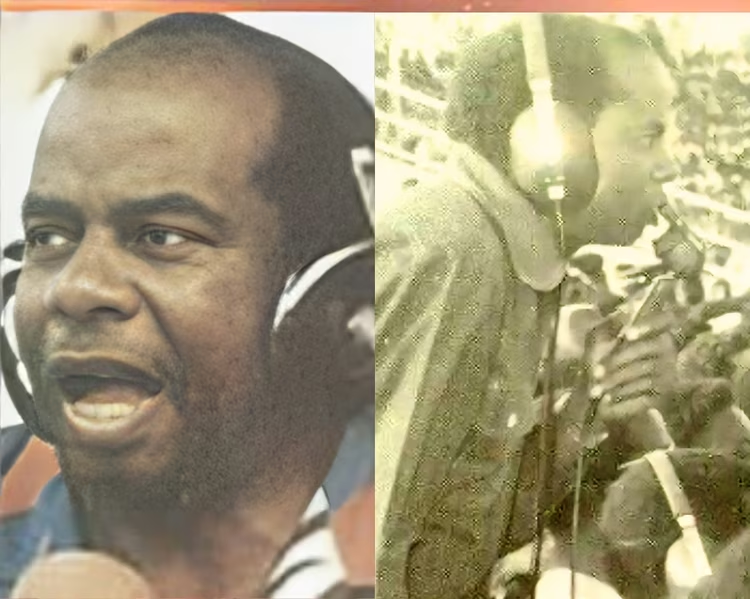
On a personal front, Liwewe was a family man. He was married to Sylvia, and together they raised their four children, Ponga, Kwangu, Linda, and Liwewe. His son Ponga still carries the torch in the world of football. Together, they worked on major events like the 1988 Olympic football tournament, forming a legacy fans still remember and quietly passing the craft to another generation. To date, one would say he left very big shoes to fill.
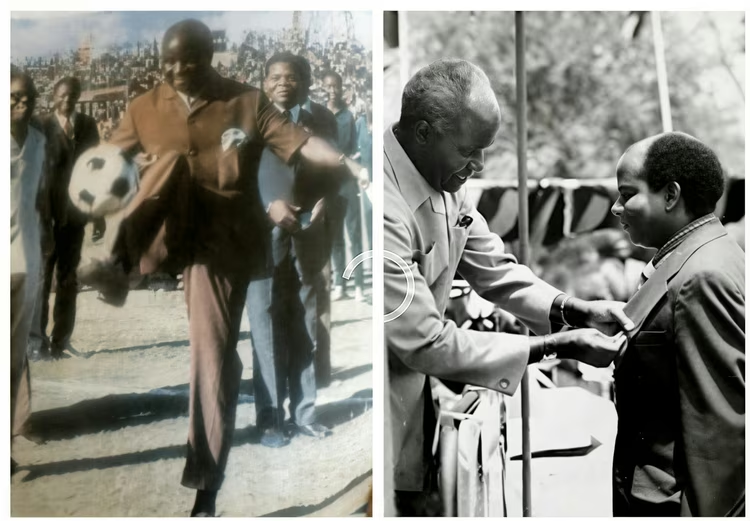
Recognition for his contribution was not limited to public affection. Long before he died, Liwewe was honoured by President Kenneth Kaunda with the Order of Distinguished Service in 1977 for his role in popularising the national game. In 2023, he became one of the recipients of the President’s Award at the National Sports Awards, a posthumous recognition chosen by State President Hakainde Hichilema that reaffirmed his lasting imprint on Zambian sport and culture.
Why Liwewe’s Voice Still Resonates
The legacy of Dennis Liwewe lives in memory. Many still recall the silence of the streets of Kabwata on a Saturday afternoon, gathered around an ITT Supersonic radio on their verandas, waiting to hear him describe an Independence Stadium goal. Others remember turning down the television’s volume in favour of his voice, trusting his narration more than the images on their screens. His commentary reminded Zambians to be authentic and brave, despite all circumstances.
When asked by the BBC how he wished to be remembered, Liwewe did not speak of titles, medals, or the matches that made grown men cry into radios. He spoke about his tombstone. He wanted it to read, “Here lies a man who used every opportunity that God had given him.” From a teacher in Malawi to a voice recognised across the football world, Dennis Liwewe did more than comment on the game. He brought it to life.