Zambia's Ancient Grass-Based Salt
The bulk of our indigenous knowledge has its roots in our environment. Additives and remedies plucked from our habitat that sustained and improved our lives long before our borders were ever crossed. Some were forgotten long ago, and some are still relied on today.
One of them is found along the banks of the Lwitikila River in the Mpika district, where the long blades of grass that serve as the main ingredient for Chibwa salt grow.
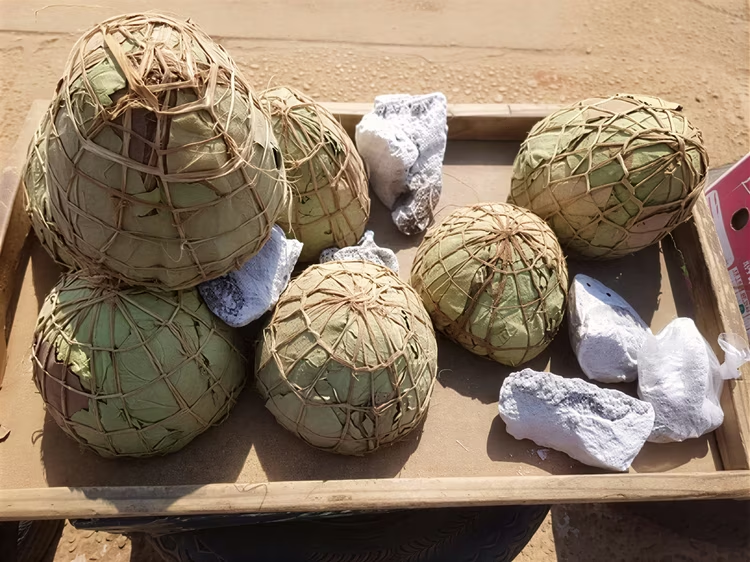
Grown, processed and wrapped into bundles using a production method so old no one is sure who started it. These rocks of salt are the result of an ancient craft that has sustained the residents of Chibwa village, spurred on its economy and passed on a bit of their culture to everywhere the green bundles are consumed.
How Chibwa Salt Is Made
Like nearly everything else in Zambia, the production of Chibwa salt is governed by the seasons. The grass is traditionally known as Kasemembe Mpango, and when night falls, the dew, concentrated with salt, clings to its stems. Eventually, the grass dries together with the salt-filled dew, and from August to October, right before the rainy season, the grass is harvested.
The grass is then treated to heat by being dried in the sun and then burned on a hard surface. In the ashes, the salt remains, and the residue is then filtered through a container with a small hole at the bottom - the water that gently runs through it acting as a filter for the ashes. The liquid that remains is treated with evaporation in a clay pot. When it is completed, now in the shape of a round pot, the clay pot is broken, and a round ball of salt remains. The salt is then wrapped up like a parcel in leaves and tree bark, and used and sold.
Uses of Chibwa Salt
The market for Chibwa salt extends far beyond the bounds of Chibwa village, with the salt believed to have culinary, health and spiritual benefits. As it does not contain iodine, many people prefer the taste of Chibwe salt to other kinds; it is also incredibly helpful for people with conditions like hyperthyroidism that need to avoid foods that contain iodine. Many see it as a useful remedy for high blood pressure, stomach aches and coughs, as well as a vital ingredient for solutions made to treat swollen limbs.
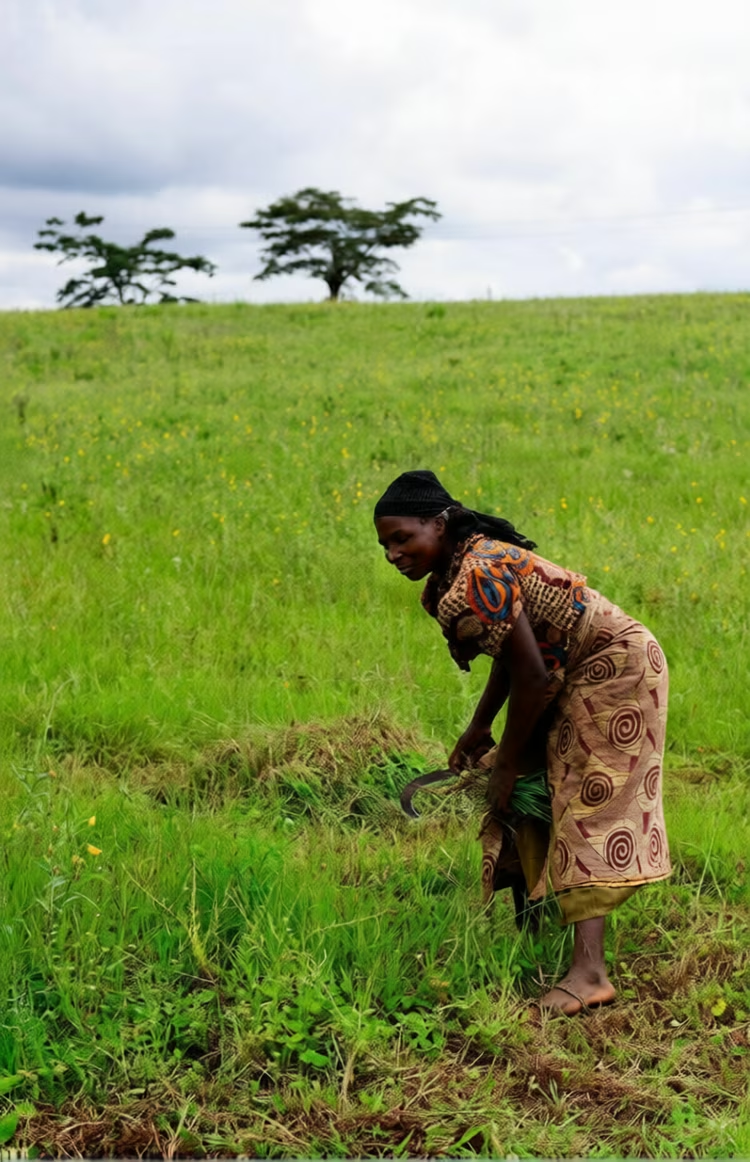
The salt is also believed to be spiritually potent, and some are certain that applying that on materials that are considered to be harmful, such as charms or amulets, takes away any negative aspects of them.
Chibwa Salt's Economic Impact
The benefits of the salt run far beyond its uses for the community of Chibwa village, the sales of it fund their groceries, bills and education. It is a source of financial independence for many, regardless of gender or age, with some residents reporting that the sale of the salt allows them to make around K150 per day.
It is no coincidence that such an asset to the community comes not from any innovation but from knowledge that has been passed down from generation to generation, and one must wonder what the benefit could be to the nation at large if we looked back instead of forward.
Although we have a salt production method of our own, Zambia imports the majority of its salt. In 2024 alone, we imported over 12.5 million dollars' worth of salt.
Preserving Indigenous Knowledge
We are lucky enough that the production of Chibwa salt is one of the aspects of indigenous knowledge that has not been forgotten or discarded. In its case, a pinch of salt reaps a large benefit in both its flavour and its benefit to the banks of the community it is grown in. And we can only hope that in looking back into the other wrapped up parcels our ancestors left us, we can find more things that enrich both our day-to-day lives and ourselves.