In Zambian communities, folktales aren't relics of the past—they're living wisdom passed down through generations. These tales reveal how communities understand danger, recognise hidden value, and maintain sacred bonds with the land. More than entertainment, they remain vital guides for navigating modern life whilst honouring cultural memory.
For many Zambians, folktales are not just stories but living pieces of history. They are reminders of heroes, creatures, and unseen forces that shaped how communities understood the world around them. For many of us, they are tied to childhood evenings when adults gathered to tell stories, passing down knowledge that at the time probably didn't carry any significance.
These stories were not only meant for children. They explained the world as it was lived, encouraged caution, and carried lessons intended to endure across generations. They illustrate how communities preserve their heritage through storytelling and how these stories continue to shape people's lives today.
Lilomba snake creature
Lilomba is known mainly among the people of Northern and Western Zambia. It is described as a creature with a snake body and the face of a human being, a form believed to reflect the identity of the person who created it. Stories surrounding Lilomba carry an eerie atmosphere and are closely associated with dark witchcraft.
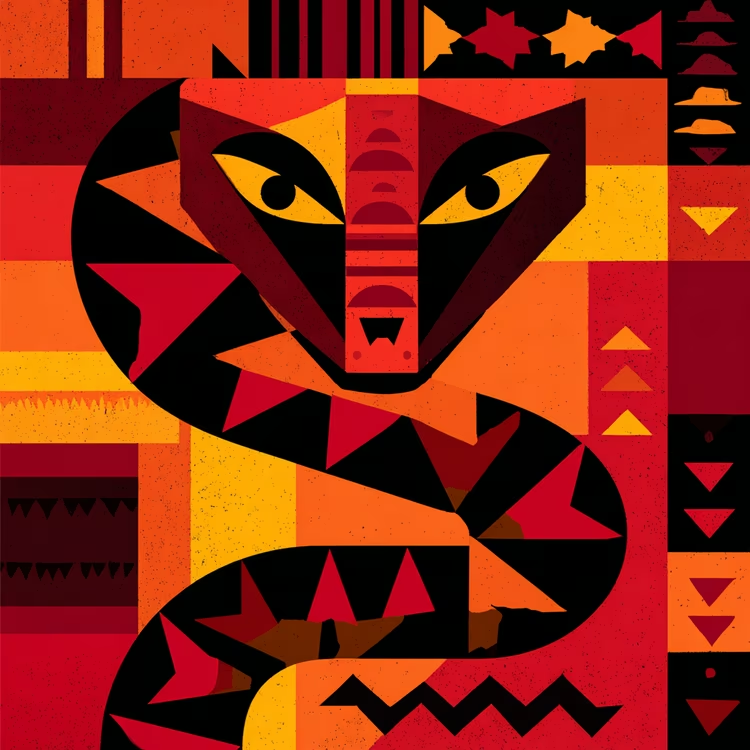
Lilomba is not considered a natural being. It is said to be created by a witch doctor using the owner's fingernail clippings, blood, water, and specific herbs. In many Zambian belief systems, snakes are associated with secrecy, power, and danger. A person who sought to create Lilomba was believed to be driven by hidden intent and a desire to cause harm.
Lilomba remains relevant as a means by which people identify internal threats, whether social, moral, or psychological. The figure reflects a long-standing awareness that danger can come from within trusted spaces, and that vigilance is sometimes necessary to protect collective wellbeing.
Nalishebo and Her Dog
This story begins with a struggle that, while common globally, is culturally significant in many societies: having several children of the same sex. A couple gives birth to three healthy sons, and when the mother becomes pregnant again, they spend long hours praying for a daughter. They follow old advice and traditional hopes, yet when the child is born, it is a dog.
The dog is raised alongside the sons, and when the children are grown, the sons leave home and marry the daughters of a well-known chief. The youngest daughter, Nalishebo, is left with the dog. At first, she experiences this as misfortune. While the other couples prosper, she sees only her companionship with the dog.
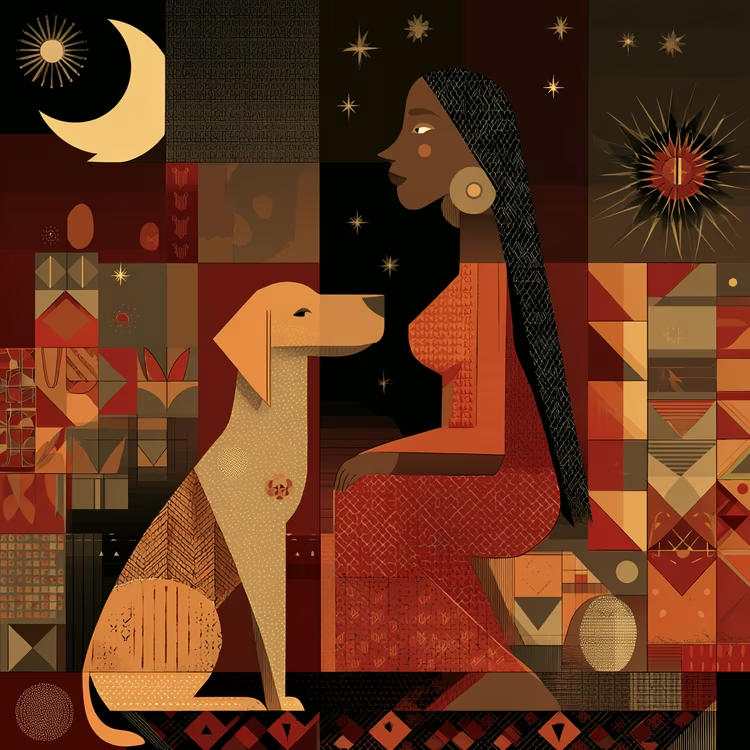
One night, overwhelmed by grief, she speaks to the dog, who listens with loyalty whilst wagging its tail. The following morning, she wakes to find their fields flourishing and their home transformed. This pattern continues until she stays awake to discover the truth. The dog removes its skin and becomes a man who has been working through the night.
When rumours begin to threaten her reputation, Nalishebo burns the dog's skin, allowing him to remain human permanently and become her husband. The story speaks to patience, trust, and the ability to recognise value before it is visible. It reflects the belief that blessings may arrive in unfamiliar forms and reveal themselves only with time.
Lake Kashiba
Lake Kashiba, located in the Itezhi-Tezhi district of Central Province, is more than a body of water—it is considered sacred ground. The lake is associated with the Ila and Tonga people, who regard it as a site of profound spiritual significance and deep historical memory. Known locally as a sunken lake, or kashiba, it is a natural sinkhole with deep-water currents and tunnels that have resisted exploration. Some scuba divers have attempted to reach the bottom and failed, giving rise to the belief that the lake is bottomless. But it is not the physical depth alone that unsettles people—it is what the lake is said to hold.
Local legends speak of the Ichitapa, a creature believed to live in the depths. According to tradition, the Ichitapa can snatch the shadow of a person standing too close to the water's edge, paralysing them before pulling them beneath the surface. Another story warns that fish caught from Lake Kashiba cannot be cooked. No matter how long they remain on the fire, they stay raw—a sign, people say, of the lake's spiritual power and a reminder that some things are not meant to be taken. The most haunting legend, however, tells of an entire village of the Abena Mbushi, the Goat clan, who chose to drown rather than be captured into slavery. It is said they tied themselves together and walked into the lake, where they established an underwater village. On certain days, strange sounds are reported rising from the depths—voices, movement, presence.
Why These Stories Still Matter
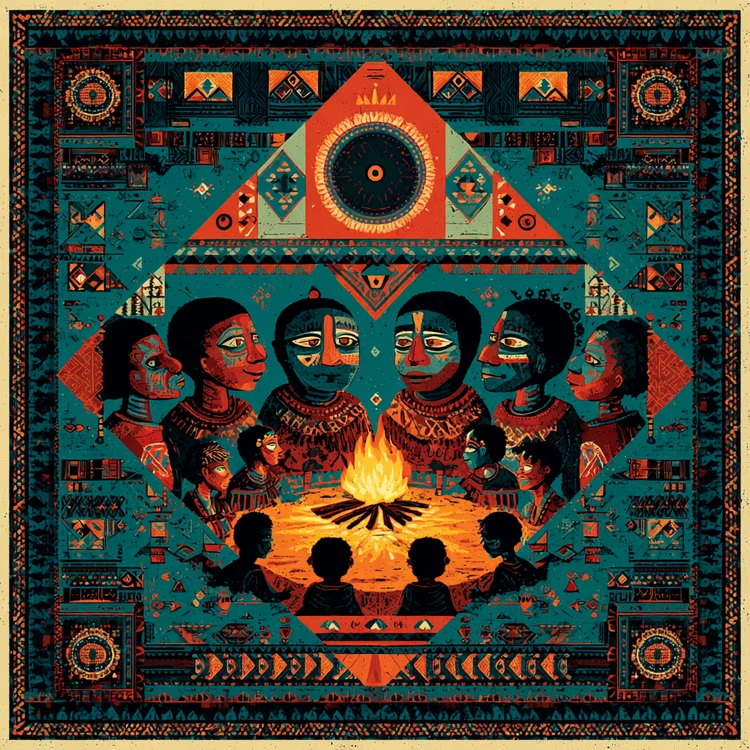
These folktales do more than entertain. They establish boundaries, affirm values, and provide a shared language for navigating uncertainty. In a rapidly changing world, they offer anchors—reminders that wisdom doesn't only come from what is new, but from what has been tested across time. Whether told around a fire or shared in passing, these stories remain vital threads in the fabric of Zambian identity, connecting past and present in ways that continue to guide, warn, and inspire.