We walk past the language of our ancestors every day. It hangs from ceilings as baskets, wraps our waists as chitenge, and glints as beads—seen, but seldom read. In 2019, a cache of Twa leather cloaks was studied by the Women's History Museum of Zambia in a Swedish storeroom: lechwe hide, etched by hand, with each motif a record of life in northern Zambia. The discovery challenges the myth that Africa’s past is only oral. Tonga cisuo baskets carry a lexicon of wind, stars and ritual; Bemba waist beads taught agency and consent through Imbusa rites. When we learn to read these objects, we recover a grammar that still speaks, quietly, in our homes.
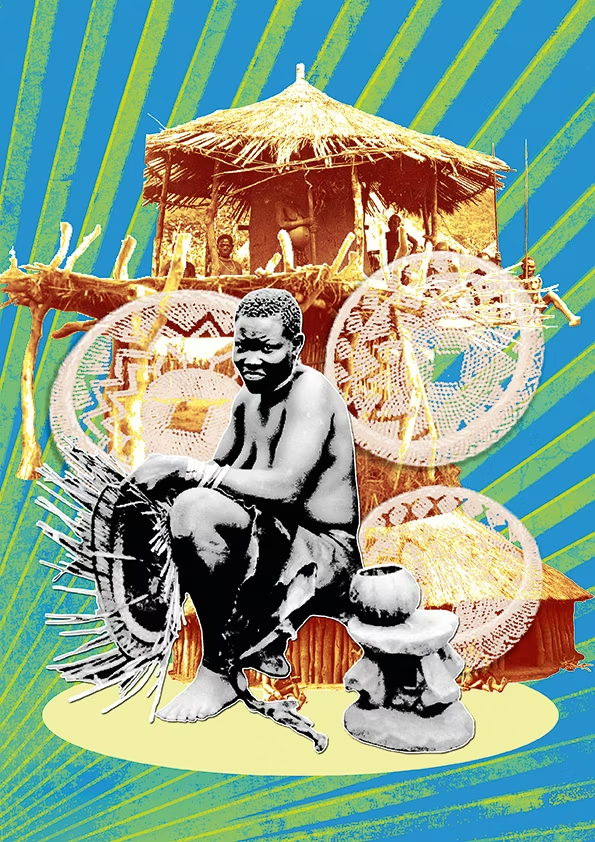
We rarely think about them. Baskets woven with intricate swirls and boxes hang from walls and ceilings. Chitenge fabrics are often wrapped around waists or used to swaddle babies. A rainbow assembly of beads dangles from a brown waist. For function, or even just aesthetics, these things surround us and become the quiet backdrop to our everyday lives.
We see them, but we don’t. We do not think about the hands, wrinkled and smooth, plaiting one strand of grass over another. We do not process the meaning of the colour of each waist bead, nor do we decipher the messages in these designs. For generations before us, this silent language of our ancestors has existed not only to decorate but also to be understood.
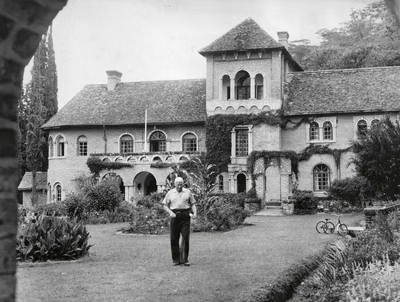
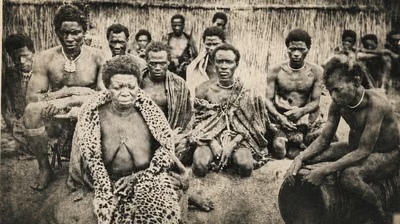
In 2019, the Women’s History Museum of Zambia (WHMZ) travelled to Sweden to study a previously uncatalogued collection from the early 20th century. In a storage room of a Swedish museum, a collection of leather cloaks is housed. Their country of origin? Zambia. Originating from the north of the country, they are named after the Twa (locally referred to as BaTwa) people, who are believed to have produced them. The cloaks were long, and the hide was identified as that of Kobus leche (also known as lechwe), an antelope endemic to parts of Zambia and southern Africa. Each cloak was carefully embellished with intricate, handmade patterns, with each recounting a piece of history and daily life.
In the place where the cloaks originated, there is little to no recollection of them. A craft that, just a century ago, clothed women and shielded them (and the infants they carried) from the elements has left little trace for its descendants.
Swedish ethnographer Eric von Rosen’s approximately 300 pages of meticulous field notes, photos, and sketches reintroduce us to the ancient Twa technique. Men prepared the leather by skinning the antelope, softening it with palm oil, and then drying it in the sun. The women then took up tools forged from natural materials and transformed the hides into garments that were both serviceable and artistically rich, encoded with meaning.
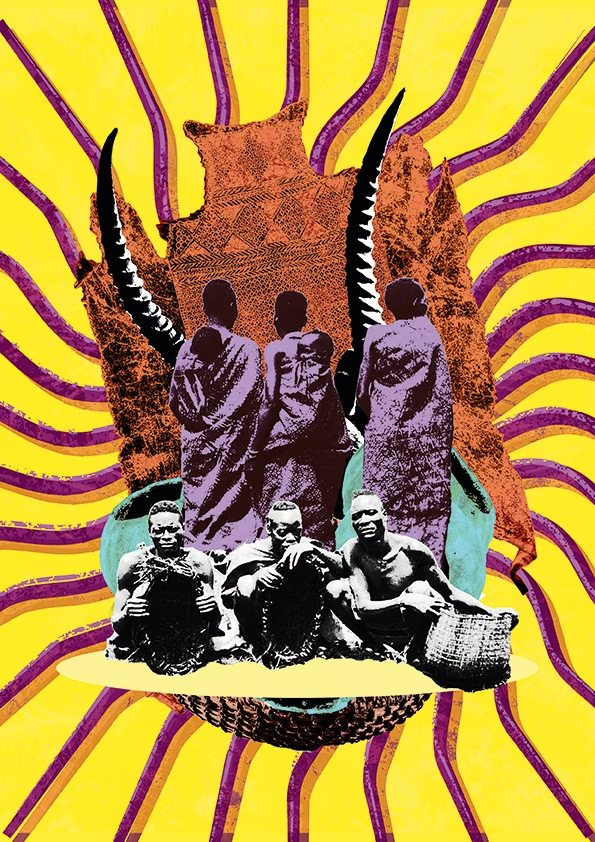
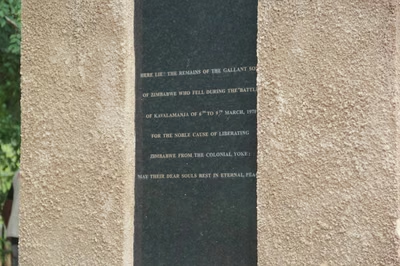
This discovery contradicts the prevailing myths about African history that were established with the advent of colonialism and have persisted since then. This pervasive myth holds that the bulk of African history is purely oral and that, in its reliance on being passed down from mouth to ear, it becomes unverifiable. However, there is a trove of history and knowledge beyond the verbal, some of it in words written on antique slabs and some in the geometric patterns of baTwa leather cloaks, which, once analysed and understood within the correct context, provide invaluable information about their society, culture, and the roles within it.
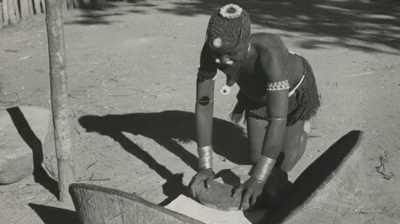
Similarly, cisuo (big) and nsangwa (small) baskets, woven by the Tonga of Southern Province, have become fan-favourite ornaments adorning every surface—from coffee tables to walls to ceilings. They are popular in both the living rooms of Zambia and those overseas. However, when we look beyond the exterior, cisuo is much more than a trendy decoration. The Tonga use cisuo baskets for winnowing maize or carrying produce from fields, and nsangwa for serving mealie meal or roasted groundnuts at home. This underscores that what many consider a decorative item today was historically a daily-use tool.
Weaving has always been a ritual; a repetitive, meditative practice of weaving strand after strand over and under, and over again. The baskets and techniques are passed down from mother to daughter, varying slightly from household to household as the bloodline carved its way through the generations. The ‘ritual’ is both literal and figurative. Some narratives report that creating cisuo involved a blessing from mizumo (spirits). What remains now is the technique of harvesting the spiky green leaves of the ilala palm and the tall riverside matete reeds, then boiling the greenery until it loses all rigidity and becomes soft enough to coil, and finally mixing and preparing natural plant dyes made from the roots and bark of trees like mwiinji. The dyed patterns contrast with and emphasise the shapes against the general lightness of the basket, but in a society with little understanding, the silent language disappears into ‘aesthetic’.
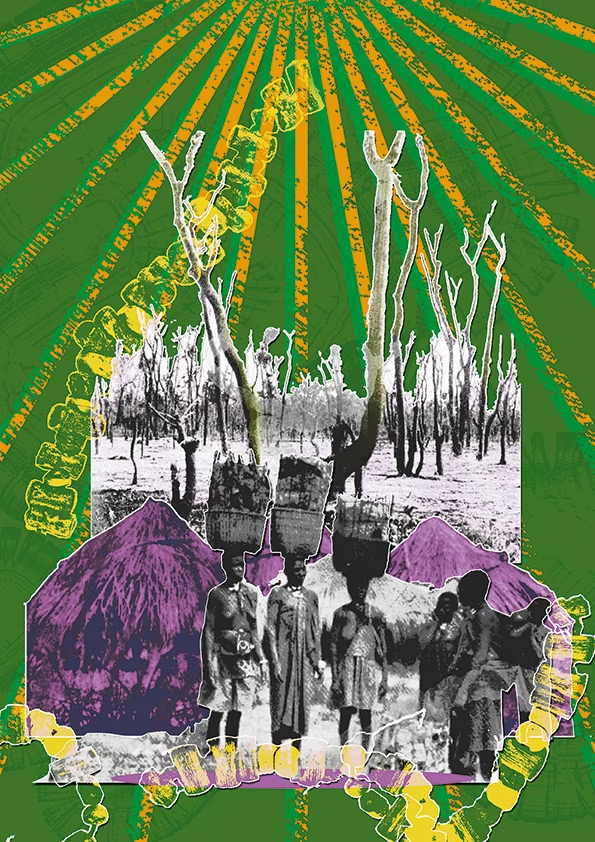
But recorded into each sharp turn and spiral of every basket is a whisper of Tonga spirituality, philosophy and the natural world of the makers. Popolofwa imitates the wings of a butterfly, representing freedom and movement. Iguwo is an airy, ethereal pattern inspired by the wind moving through grass, sometimes swift, sometimes slow. The inimitable night sky over the Zambezi Valley is called upon in the star motif of Nyenyezi, and possibly the eternal presence of ancestors who, much like stars in the night sky, watch over the living. Chisakulo is a comb-shaped pattern associated with the daily rituals of grooming, femininity, and care that are integral to women's lives in Tonga society. And Mpande, a symbol descended from a pendant that once adorned the bodies of kings and queens, represents royalty. All of these records are a woven lexicon for anyone with the desire to learn the language.
Among the treasure trove of languages that have been submerged with time, there is sometimes a lucky tendency for things to bob back to the surface. Such is the case with waist beads. A dialect embraced by various African cultures of women, including the Bemba, has re-emerged, with some young women choosing to adorn their waists with the colourful beading their ancestors did. Some wear it just for the look; the aesthetic appeal is unavoidable. Each string dangles with colour, glints with the sun's shine, and contrasts with the beauty of brown skin. But others still have picked up on the meaning beyond the beauty, a language that was taught long ago.
Ubulungu or chisasa were central to the Imbusa teachings of Bemba women. It was a rite of passage for young women before marriage, during which they were instructed on the roles they would soon assume in the household as wives. A dominant, yet harmful narrative about African women is that they held no sexual agency over their bodies, but through Imbusa teachings, it is revealed that waist beads were the tools used to teach women how to exercise their sexual agency and gave them the power to both advocate for and deny intimacy on their terms.
These beads were hung around waists, on walls, and on marital beds. The beads were strung together by bana cimbusa (the marriage instructor) and the bride's paternal aunt, each taking a bead from their own chisasa and placing it on the bride-to-be. In this way, they passed down wisdom, agency, and the power of consent. This symbolic communication conveyed meaning deeper than words. A symbol has the ability to communicate multiple ideas simultaneously, allowing complex social rules and emotions to be expressed in a single gesture. It becomes the foundation for a morality that continues to hold African societies together. Within this moral system, which recognised that an individual's actions could negatively impact the community, people were less likely to stray from these cultural checks and balances, like the use of waist beads. With the arrival of missionaries came the demonisation of the practice, leading to its decline. This left a gap in the spaces where the beads used to hang, and in the ability of women to advocate for their own sexual agency.
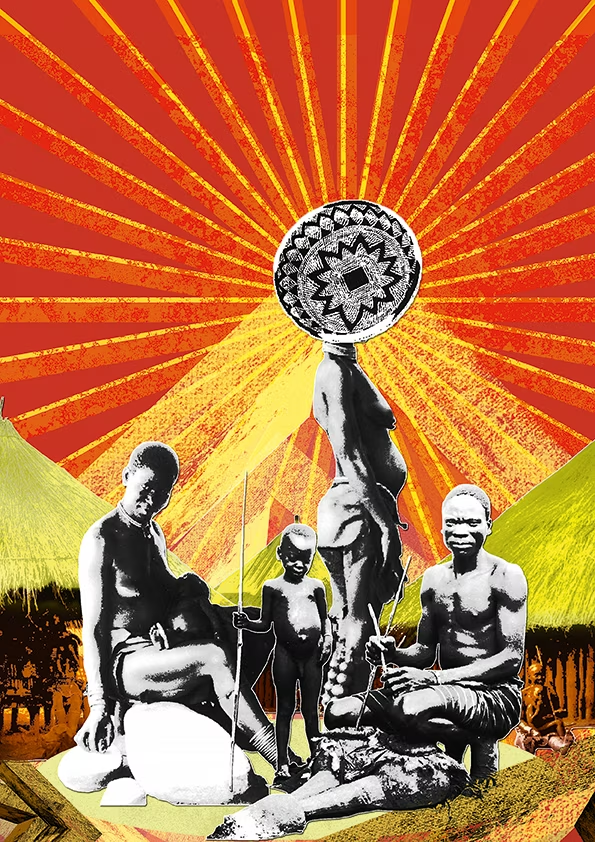
I find myself wondering when the first bride refused to receive chisasa, when the circle was broken between bana cimbusa and the new bride. I fantasise about a version of our history where it never happened, where the gaps were never invented, where we never began to stumble over the words and ideas we once knew so intimately, before we forgot them altogether.
But the beauty of language is that it's never too late to learn. As with the rediscovery of baTwa leather cloaks, often the words we think are lost are just lying in wait for our reclamation to bring them back into being.
And it is evident as a new generation adorns itself with beads again, their clothing different, but the symbols swirling around them speak the same language of agency. It is through the collaborative efforts of Tonga women, utilising the language of their ancestors, that they recognise its commercial worth and turn it into a source of employment opportunities, giving themselves the agency to forge their own financial paths. And it will be evident collectively among the people of Zambia, when we take the time to look beyond the beauty of everyday items and to understand the whispers that they emit, just as they have been waiting for us to hear.
Editor's Note: This article builds upon research developed by the Women’s History Museum of Zambia, particularly the curatorial and research work “Silent Syntax” authored by Banji Chona.