The emerging towns that may hold the blueprint for balanced national development in the decades ahead.
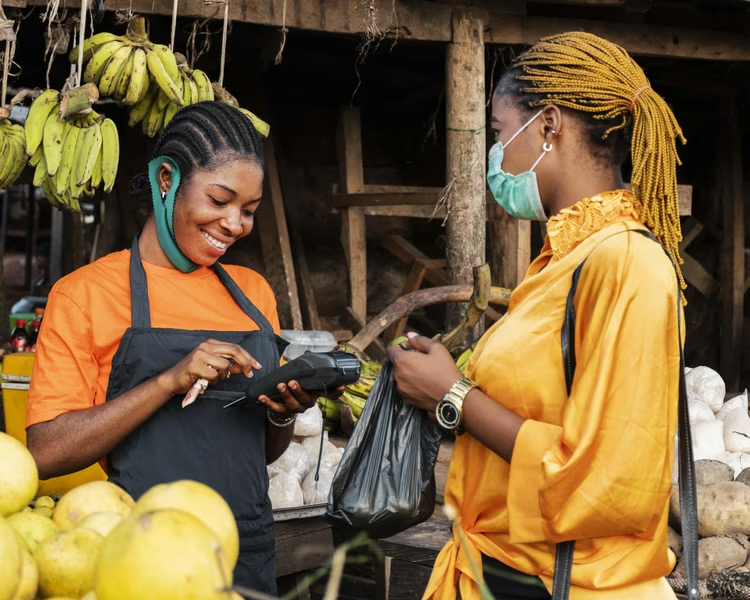
The sun rises over another typical day in Solwezi. Taxis screech to a halt, picking up passengers along the way. Motorbikes weave through clusters of people walking to work from residential areas. Children call out to each other as they run to school, their chatter blending into the familiar rhythm of a town that has long outgrown its reputation as a temporary mining outpost. In markets and commercial areas, men and women set up their stands and shops across from groups of miners in branded uniforms, waiting for shuttles that will take them to offices, workshops, nurseries, and the mine.
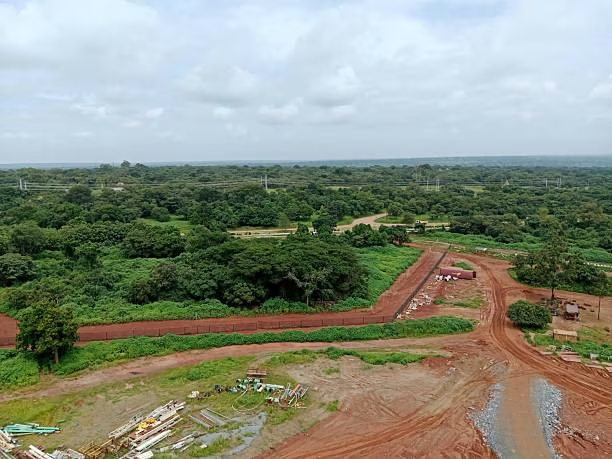
On this patch of land in North-Western Zambia, this wasn't always the case. Modern commercial copper production in the Solwezi area began as early as 1908, catalysing the creation of tens of thousands of jobs we see today, giving rise to today's major mining towns. Mining camps sprang up all over the Copperbelt, attracting contract workers from the neighbouring communities and from across the region who left their families behind. These sites served as temporary housing during the mining season and were often devoid of women and children. While some sites offered cafeteria meals and tuck shops, workers typically brought food and other necessities from home.
Over a hundred years later, towns like Solwezi have evolved into diverse, established communities that support long-term family life. Families move here to stay; teachers and professionals plan multi-year careers; members of traditional communities and the villages dotted around the mines live and work alongside businesses that continue to operate beyond project cycles. Working in the mines is no longer a lonely job. The old idea of a ‘workers only’ environment has given way to more stable structures that allow families to settle in planned residential neighbourhoods, where schools, hospitals, and commerce now stand.
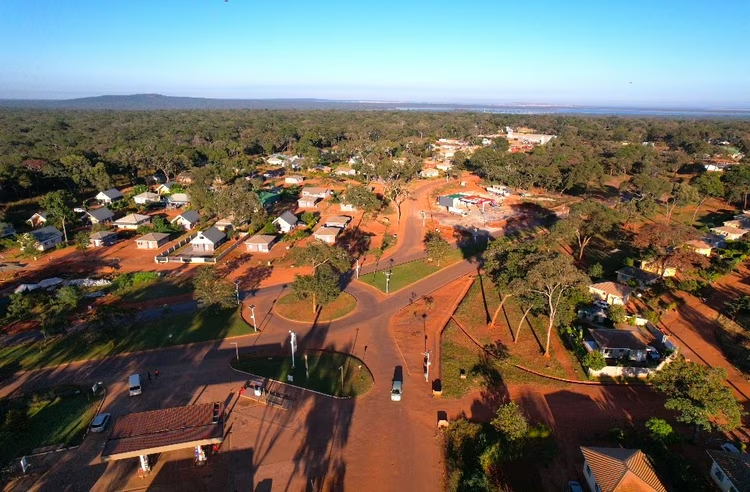
Kalumbila is a prime example of a purpose-built township that functions as a structured urban environment rather than an unplanned settlement. Formerly part of Solwezi District, Kalumbila rapidly transformed from an underdeveloped rural area into a modern mining hub, centred on the discovery of copper and nickel deposits. First Quantum Minerals (FQM), via its subsidiary FQM Trident Limited, owns and operates the Sentinel Copper Mine and the Enterprise Nickel Mine in Kalumbila, North-Western Province.
Following FQM's 2010 acquisition of the mining licences, the township was officially established in 2012 as a purpose-built, self-sufficient hub to support mine employees, alongside the extensive network of suppliers, service providers, and traders who now rely on the town's growth. Kalumbila was designated its own district in 2016 when full-scale production began at the Sentinel Mine. It now encompasses Chief Kakoma’s chiefdom and the area after the Solwezi airport junction. It has since grown into a rapidly expanding community. Major developments include Barrick Gold’s operations at Lumwana Mine; Mutanda Farms; the FQM Trident project; housing services; and modern amenities for employees of Sentinel, Enterprise and Lumwana mines.
Solwezi itself has a mining history spanning more than 100 years, beginning as a modest mining settlement. Whilst it is a provincial capital receiving governmental support, what began as a single tailings project at Bwana Mkubwa mine in the late 1990s has evolved into other operations, including Kansanshi, which began commercial production in 2004, and Barrick Lumwana mine, significant mining operations that attracted thousands of workers and became core parts of Solwezi’s development.
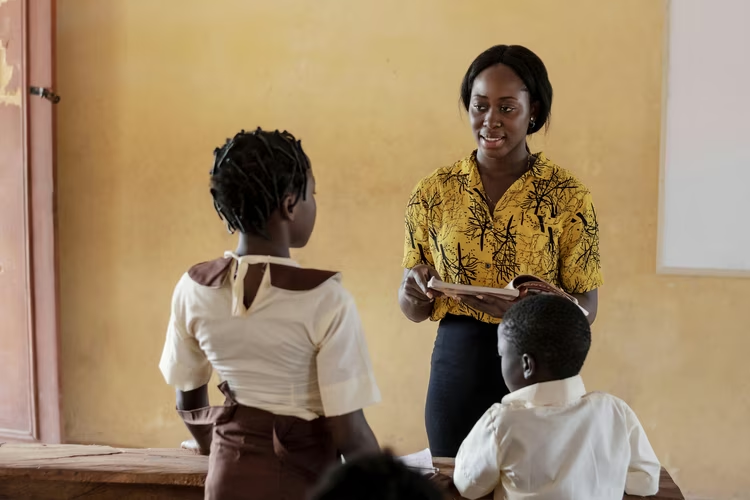
However, these towns don't just support miners; they create and support livelihoods from all walks of life. The schools need teachers, the hospitals need medical staff, and the shops need vendors. Over time, the supporting workforce has grown, not just from workers who come to stay, but from a local community eager to participate in this booming economic activity. It is now a community with its own identity and sense of place. A teacher in Solwezi describes how she believed her posting to the town would be temporary, but living there changed her mind. "I have seen the town growing. There were few shops and restaurants when I first moved here, but now there are many things to do. Solwezi is now my home. I even met my husband here—he works at Kansanshi—and our two children have started going to school."
This ripple effect is not accidental. It is the result of development that benefits residents, businesses, and the wider region, not just the mine. FQM has been a long-term presence in the area, contributing to improvements in road networks, utilities, and community infrastructure. Their sustained involvement over three decades in Zambia has helped support the towns’ steady growth. Although Solwezi and Kalumbila remain tied to global copper prices, diversification of local businesses and services has strengthened resilience. What emerges is a picture of how consistent investment in infrastructure and people can support towns that grow steadily rather than fluctuate with market swings.
Building communities such as Kalumbila and Solwezi requires time and commitment; they are not overnight successes. They need the stability that comes from a long-term vision, years of development, and supportive policies. FQM’s approach has focused on creating conditions that enable long-term community life, recognising that towns must remain functional and cohesive even as mining cycles shift. By pairing infrastructure with social investment, these towns are positioned to stay strong and adaptable in the years ahead.
On a weekday morning in Kalumbila, mine buses move through the paved streets as workers head to their shifts, traders open stalls, and teachers make their way to classrooms. There is nothing dramatic about the scene, and that is precisely what shows how much has changed. This town no longer resembles the underdeveloped rural settlements of the past. It has become a place where people build lives, raise families, and imagine futures rooted in the very ground their predecessors once passed through.
Solwezi and Kalumbila are quiet reminders that mining towns need not disappear when the cycle shifts. With patience, planning, and long-term commitment, they can grow into communities with depth, belonging, and the space for generations to come.