From guiding David Livingstone to the Falls and creatively resisting colonial land grabs under the shrewd Chief Mukuni (Siloka II), the Mukuni Kingdom transformed centuries of strategic resilience into modern-day prosperity.
The Bene-Mukuni are a people of culture and rich history, whose chiefs used their intelligence to form strong alliances and resist the forces of colonisers. Their kingdom was so vast and unexplored that David Livingstone relied on their assistance to reach and document the Mosi-oa-Tunya.
Origins of the Bene-Mukuni
The Bene-Mukuni people migrated from Broken Hill, now known as Kabwe, and arrived at Mosi-oa-Tunya (Victoria Falls) in the late seventeenth century. They lived closer to the Mukuni-Leya people on the Zambian side of the Zambezi.
According to Joanna Lewis, Chief Mukuni (Siloka II) stated that a woman led the Leya people. The Chiefess (Bedyango), who held ritual powers over the land, rain, and fertility, had agreed to “Share her powers” with the ancestors of Mukuni and his followers when they came into the region, to strengthen her defences against adversaries.
They lived among three competing groups: the Lenje, Tonga, and Leya. The groups were vulnerable to outsiders, especially from the Lozi Kingdom.
Bedyango Chiefesses and Leya Kingship
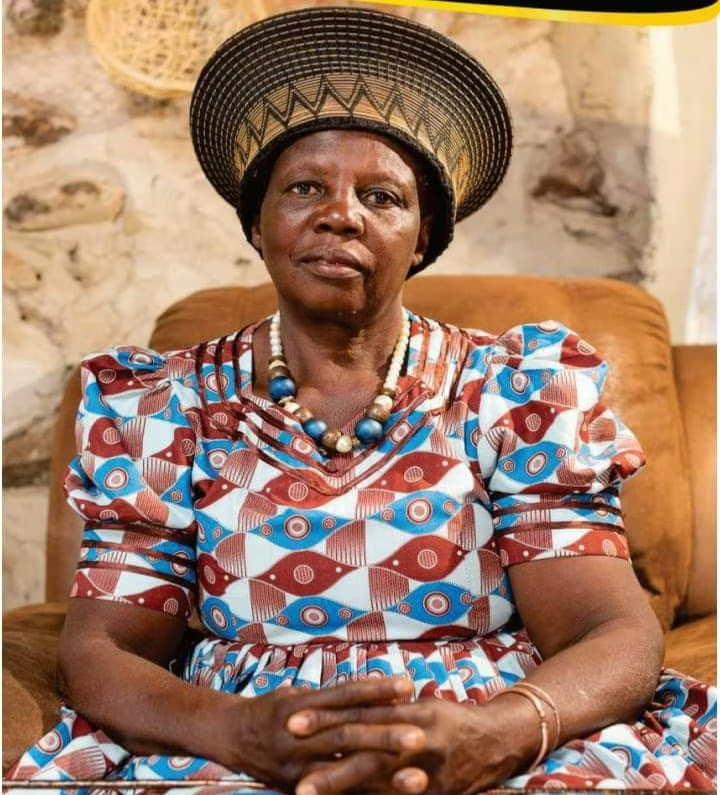
The Leya had been matriarchal since the thirteenth century. Male Chiefs were co-rulers with the bedyango and were supposed to rotate leadership around four dynasties.
The Chiefess was not married to a chief, but assumed control in the absence of a chief and bestowed the chief with the gift of an ibwegome, ‘a living stone to make him brave’. She was chosen to be responsible largely for the sacred sites, fertility ceremonies, and dispensing welfare.
Her role was to learn all the history of the Leya people and of the royal house in particular.
The Mukuni-Leya Under Colonial Rule
At the end of the nineteenth century, the Mukuni-Leya Chieftancy faced severe trauma from the British South African Company (BSAC), which was interested in the area. Over time, the Leya were slowly pushed off their lands and moved to designated sandy reserves.
The town of Livingstone was established away from the Falls, and the Leya lost river-side gardens, grazing, fishing posts, and trading opportunities. Still, the Leya Chieftancy survived.
Chief Mukuni (Siloka II)
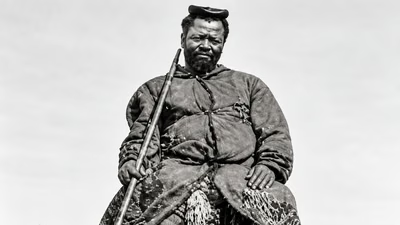
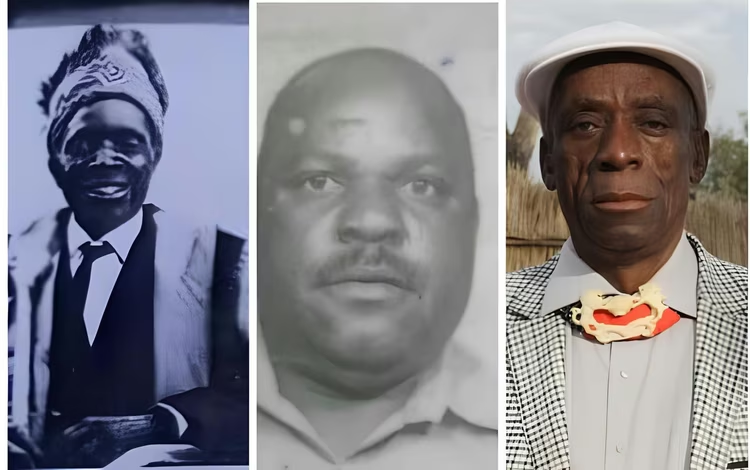
Chief Mukuni (Siloka II) was clever, opportunistic, and creative; his strategic use of history to “make political arguments, new allegiances, and to cement his position in relation to other chiefs was one of the hallmarks of his rule.”
In 1957, he submitted a manuscript to the district administration, which offered a history of his people and how the discovery of the falls by David Livingstone was an outcome of his ancestors’ assistance and kindness.
By the mid-1950s, Chief Mukuni (Siloka II) had entered politics, challenging the colonial government and seeking the Barotse's support in drafting a joint petition calling for the right to secede from Barotseland.
Mukuni Today
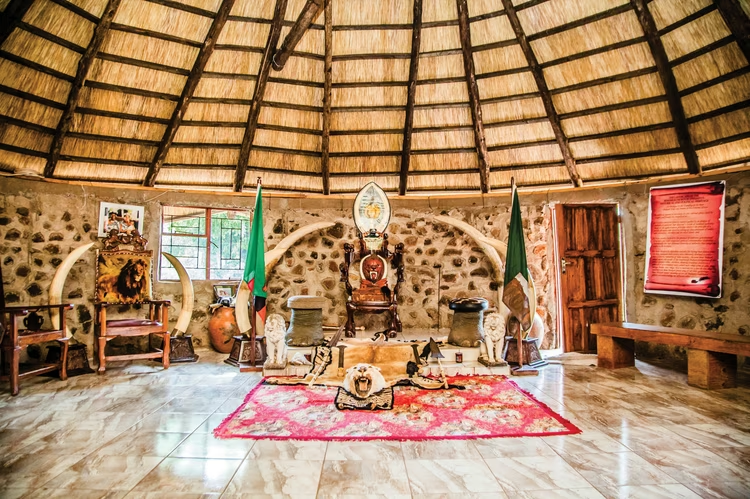
The current Chief Mukuni is one of the wealthiest traditional rulers in Zambia. Their headquarters (Musumba) are located roughly ten miles outside of Livingstone town.
Mukuni village has become very significant with an annual Bene Mukuni ‘traditional’ ceremony, and the chief runs tourist initiatives. They also published their own history in 2013, available in print and online.
The Mukuni Dynasty is a story of resilience and a kingdom that adapted to the changing times and triumphed tremendously.